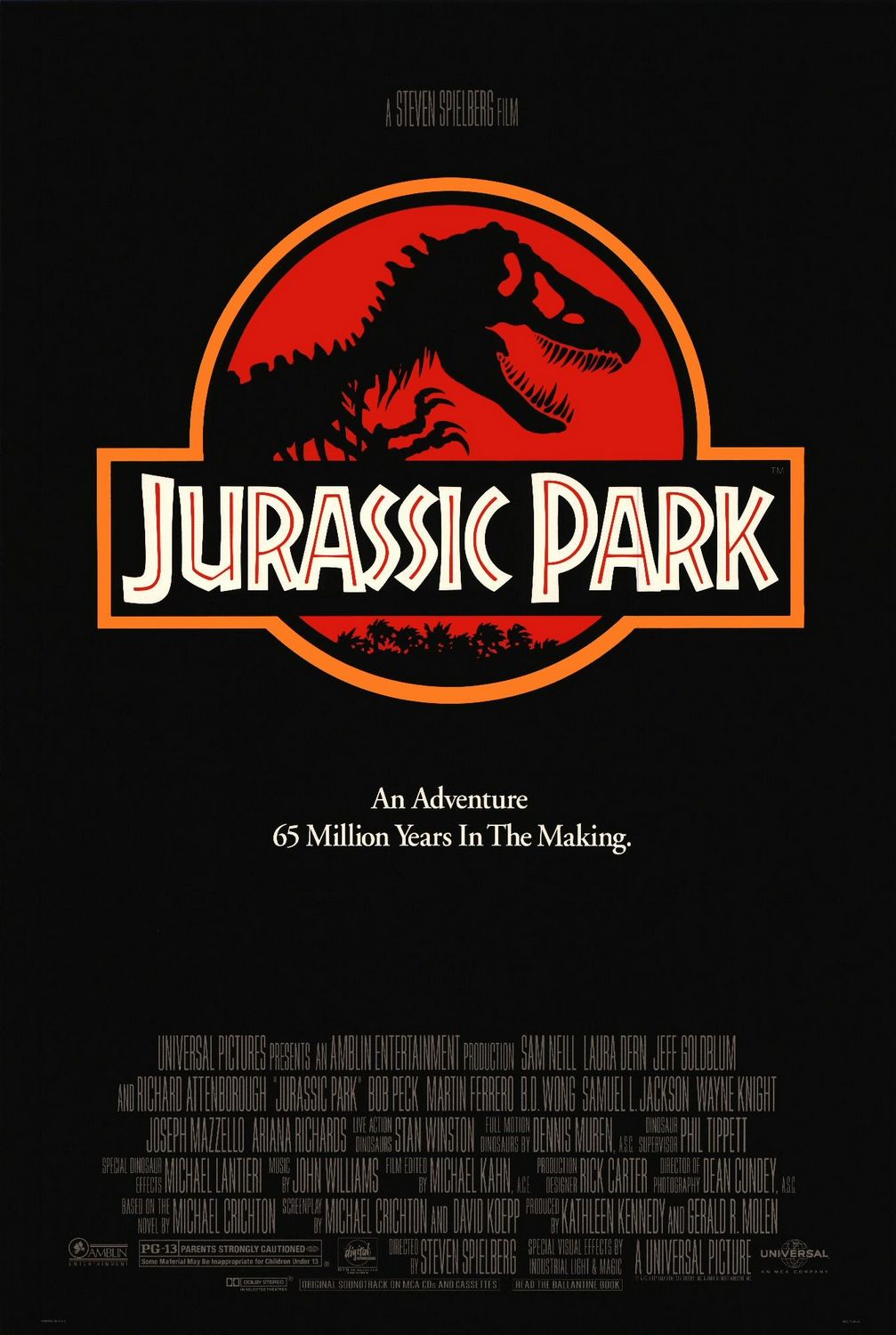
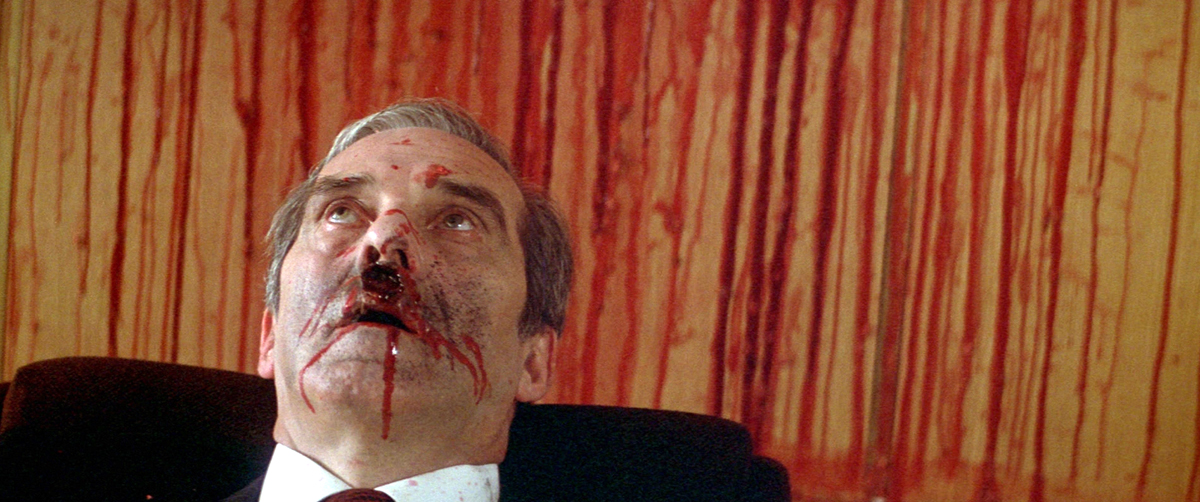
Jurassic Park III (2001)

Director: Joe Johnston

Starring: Sam Neill, William H Macy, Tea Leoni

“No force on earth or heaven could get me on that island.” (Alan Grant, Jurassic Park III)

Some twat (Leoni) sends her son on holiday with her boyfriend, where they both go parasailing over Isla Sorna to try and see some dinosaurs. Clearly not bothering to pay attention to the carnage in Isla Nublar or the incident a few years prior in which a big T-Rex kicked the shit out of San Diego, they somehow seem surprised when things go wrong and they crash-land on the island.

Weeks pass and the twat and her loser ex-husband (Macy) are worried, so they pretend to be millionaires and propose an offer to the original film’s hero, Dr Alan Grant (Neill): be our tour guide as we fly over the island to see some dinosaurs, and we’ll pay you enough money to keep your archaeology gig going for years to come. Grant reluctantly agrees and is understandably pissed off when the plane instead lands on the island and the twat and loser tell him their secret – they’re actually not rich and he’s been roped into helping them find their missing son. This is no longer a research project, it’s a rescue mission… except Grant doesn’t say that because Jeff Goldblum already got to say it in the second film.
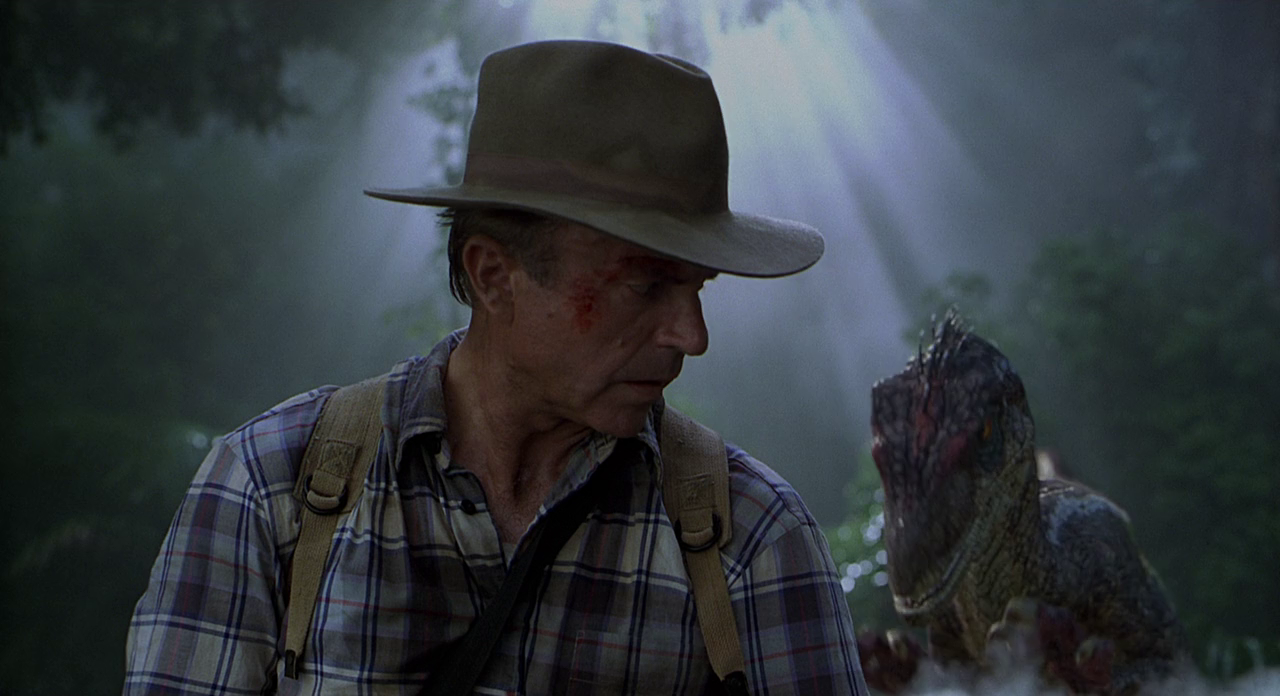
"Yes, you're right, there is some sort of mark on your back. Have you been rolling around in the grass or something?"
“Yes, you’re right, there is some sort of mark on your back. Have you been rolling around in the grass or something?”

If the original Jurassic Park was a spectacle – a unique film at the time that changed the face of big-bidget special effects cinema – and The Lost World was Spielberg’s homage to King Kong, Godzilla et al, Jurassic Park III is basically just a high-budget Lockjaw or Sharktopus. It’s goofy, it’s got some ridiculous moments in it and any thought-provoking social commentary in there (of which there’s very little) is there by complete accent.

The raptors have been given an overhaul this time around, and are so intelligent that it’s getting a bit silly. Now it seems they can talk to each other (in dino-speak, of course), something they oddly chose not to do in the first film when stalking two children through a kitchen, a scenario in which communication could have been helpful. Even more ridiculous is that Grant, by sheer chance, happened to have been given a replica of a raptor’s windpipe earlier in the film and in a key scene late in the film, just as he’s being surrounded by raptors, he blows in it and magically makes noises that not only sound like a raptor, but can actually be understood by them. How in the realm of fuck does that happen?
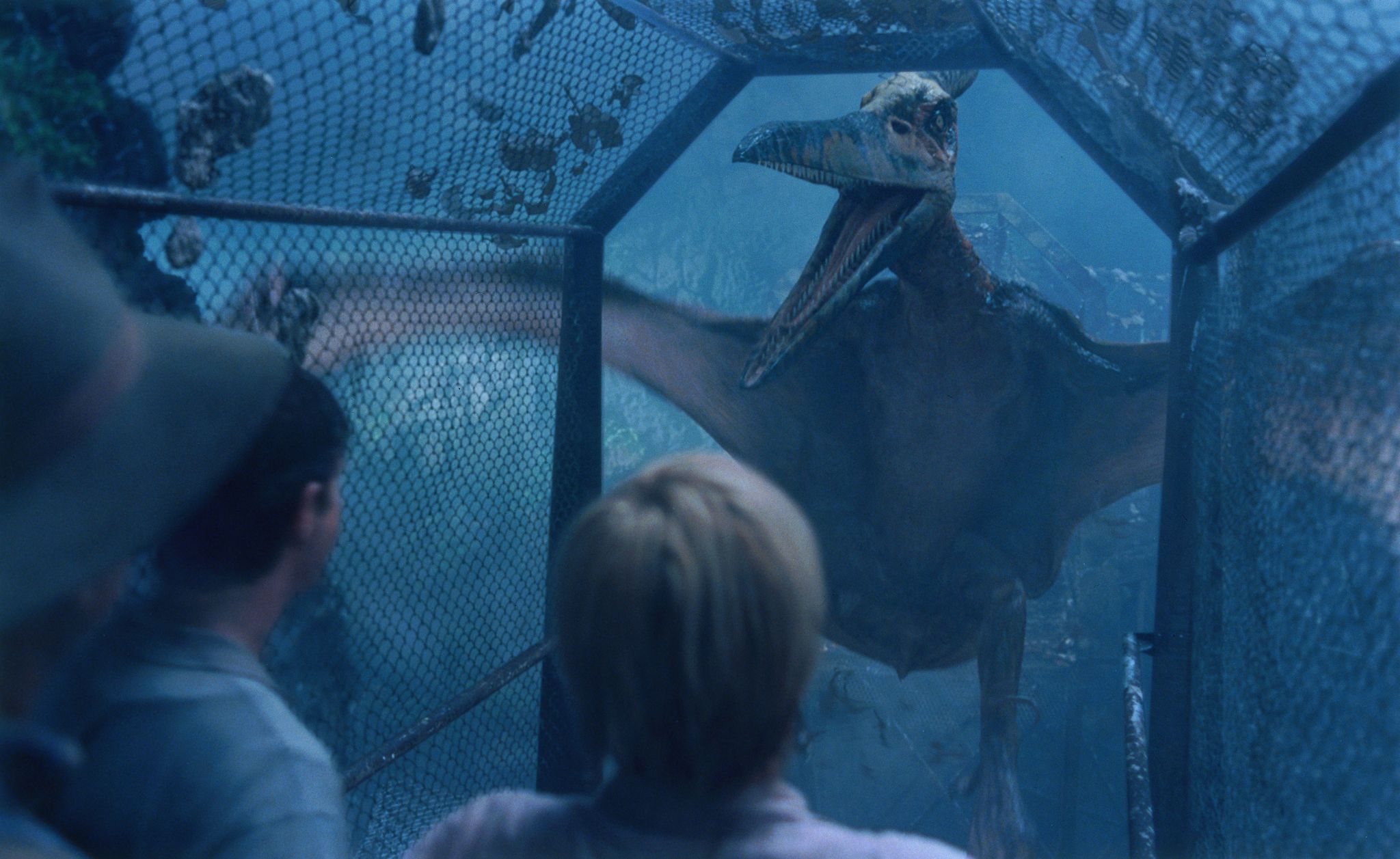
The prehistoric flasher strikes again

That aside, there are some new dinos chucked into the mix here too, which range from awesome (the Spinosaurus may actually be a little bit better than the T-Rex, as proven in the scene where they fight and it breaks the T-Rex’s neck) to disappointing – for years fans of the series wanted to see pterodactyls getting used in action scenes, but it’s all just a bit rubbish when we finally get our wish and are hit with a visually impressive but sloppy aviary scene. Not to mention the usual Jurassic Park name-fail by featuring dinosaurs that didn’t actually exist during the Jurassic period.

The strong trio of Neill, Macy and Leoni aside, the supporting cast have all the charisma of a packet of Monster Munch. Grant’s apprentice Billy is so boring and generic (just look as his name for Christ’s sake) that when he disappears, seemingly left for dead, then magically appears again at the end of the film with no explanation as to how he survived, you think “oh, I forgot about him” even though you only just saw him 20 minutes previously.

"No, Mister Ranger sir, I definitely wasn't starting a fire in the park. I... um... oh, this is awkward"
“No, Mister Ranger sir, I definitely wasn’t starting a fire in the park. I… um… oh, this is awkward”

Meanwhile, the series’ annoying child tradition continues when Grant finds the missing son but this time he’s even more annoying because, having survived in dino-infested jungle for so long, he’s a know-it-all kid rather than your basic screamer. Needless to say, the fact that the film doesn’t end with a raptor picking bits of him out of his teeth and speaking to the others in raptorese while a subtitle says “tastes like CHILDREN hahahaha” is nothing short of an injustice.

Any time I watch a film I consider what lessons I’ve learned from it. The lesson I learned from the original Jurassic Park is that you should never try to play God, no matter how appealing the results may seem. The sequel, meanwhile, taught me that you shouldn’t try to mess around with nature and try to take things out of their natural habitat because things will go wrong. The only thing Jurassic Park III taught me is that if you ever go to a foreign country and can’t speak the language, simply cut a native’s throat out and blow through their windpipe like some sort of obscene flute and you’ll get along fine.

None of the above is to say Jurassic Park III is a terrible film, mind you, it’s entertaining in the same way watching a fight going on outside your window is entertaining – it’s a good laugh and you’ll chuckle away for its short duration but you wouldn’t exactly film it and try to sell it to the Tate Gallery. This is a big-budget creature feature and is simply dumb fun.

trev_newtrev_newtrev_new

The Lost World: Jurassic Park (1997)

Director: Stephen Spielberg

Starring: Jeff Goldblum, Julianne Moore, Pete Postlethwaite, Vince Vaughn, Richard Attenborough

HAMMOND – “Don’t worry, I’m not making the same mistakes again.”
MALCOLM – “No, no, you’re making all new ones.”

If the original Jurassic Park was a love letter to our childhood obsessions with dinosaurs and our desire to one day see one in real life, The Lost World instead takes its inspiration from King Kong and others of its ilk, showing what happens when large beasts are confronted in their natural habitat and how they react when placed in unfamiliar surroundings. Fear is replaced with sympathy, and by the end of the film Spielberg’s big accomplishment this time isn’t making us believe these fearsome creatures exist, but making us actually want them to overcome our own species in order to survive. That’s right, I can get deep when I want to.

"Before we camp out tonight, I have to warn you all that
“Before we camp out tonight, I have to warn you all that I’m a bed wetter”

After the incidents of the first film essentially made the Jurassic Park complex in Isla Nublar a bit of a write-off, The Lost World starts with Ian Malcolm (Goldblum) meeting up with John Hammond (Attenborough) for a little chat. Hammond tells Malcolm that Isla Nublar wasn’t really the main site, and that there was actually another island called Isla Sornar where they bred the dinosaurs and raised them in their natural habitat before moving them over to Jurassic Park. Remember that scene at the start of the first Jurassic Park where they were putting the raptor in the crate? That was at the other island, that was.

Hammond tells Malcolm that Ingen, the company he was in charge of, has punted him and put a weaselly lawyer guy in charge instead. Not dissuaded by this, Hammond wants Malcolm to head to the second island as part of a research group to study the dinosaurs. Oh, and as if that weren’t enough, the sneaky old prick has also invited Malcolm’s scientist girlfriend to join the team and has already sent her there as a way of convincing him to go. Malcolm perhaps puts it best himself, in the first of many one-liners he gets in this film: “this is no longer a research project, it’s a rescue mission”. Little does Hammond know, however, that Ingen has sent its own workers to the island, in an attempt to bring the dinos back to the US and show them at a new Jurassic Park in San Diego. Because the last one worked out so well.

"That's nothing, you should see the size of my sister"
“That’s nothing, you should see the size of my sister”

The Lost World tries its best to outdo the original in every way possible. You liked the bit with the T-Rex? Well now there are two of them! You liked when they were running with the herd? Now there’s a bigger herd and people are trying to catch them! Remember the sick triceratops? There’s a healthy one this time, and it fucks shit up! You liked seeing people interact with the dinosaurs? Well now a whole army turns up at one point to hunt them all down! You wanted a stegosaurus? Job done, and while we’re at it let’s have it wreck loads of shit in the process so it looks more bad-ass.

The problem is, in adding all this extra action there’s less focus on the story, and while most people don’t exactly watch Jurassic Park films for the character development, there’s still something missing this time around in terms of that human element. You still care about Malcolm because he’s familiar to you after the first film, but the other main characters – his annoying daughter, his headstrong girlfriend (Julianne Moore), their photographer (Vince Vaughn), the veteran hunter who wants to bag a T-Rex (Pete Postlethwaite) – are all lacking that certain something and, ultimately, you couldn’t care less whether they survive or end up as part of a T-Rex’s next shite.

"I'll have a cone and a packet of salt & vinegar please"
“I’ll have a cone and a packet of salt & vinegar please”

Speaking of big Rexy, it’s once again the tyrannosaurs who steal the show despite the obligatory raptor scenes. The scene in which two T-Rexes push the team’s trailer off a cliff is impressive stuff, and when a solitary Rex discovers a large group of Ingen workers camping out chaos ensues.

By far the most memorable (and opinion-dividing) moment however is the film’s last fifteen minutes, in which Ingen manage to get a T-Rex back to the US and it starts running riot through the streets of San Diego. This is clearly Spielberg’s attempt at Godzilla and while it’s fun, it’s a bit of a jarring change of tone that doesn’t really sit well with the rest of the film.

The Lost World was never going to better the sheer novelty and innovation offered by the original Jurassic Park, but as sheer spectacle it’s still up there. It loses a little personality and while it’s still good fun to watch it does start to feel more like a generic monster movie by the end… but hey, you haven’t seen anything yet. Just wait until I review the third one.

trev_newtrev_newtrev_newtrev_half_new

Jurassic Park (1993)

Director: Steven Spielberg

Starring: Sam Neill, Laura Dern, Richard Attenborough, Jeff Goldblum

HAMMOND – “All major theme parks have had delays. When they opened Disneyland in 1956, nothing worked!”
MALCOLM – “But John, if the Pirates Of The Caribbean breaks down the pirates don’t eat the tourists.”

My childhood memories of Jurassic Park are a mixture of peaceful moments involving brachiosaurs and a triceratops, and loud noises played over a bright lime green colour.

You see, when it first hit cinemas in 1993 I was ten years old and I, my mum, my dad and my dinosaur-mad brother went to see it. Signs at the cinema warned that, although Jurassic Park was rated PG, there were some scary scenes that would be unsuitable for young children.

Anyone seeing us go into the cinema would think my seven-year-old brother was a potential problem, but in fact the opposite was the case.

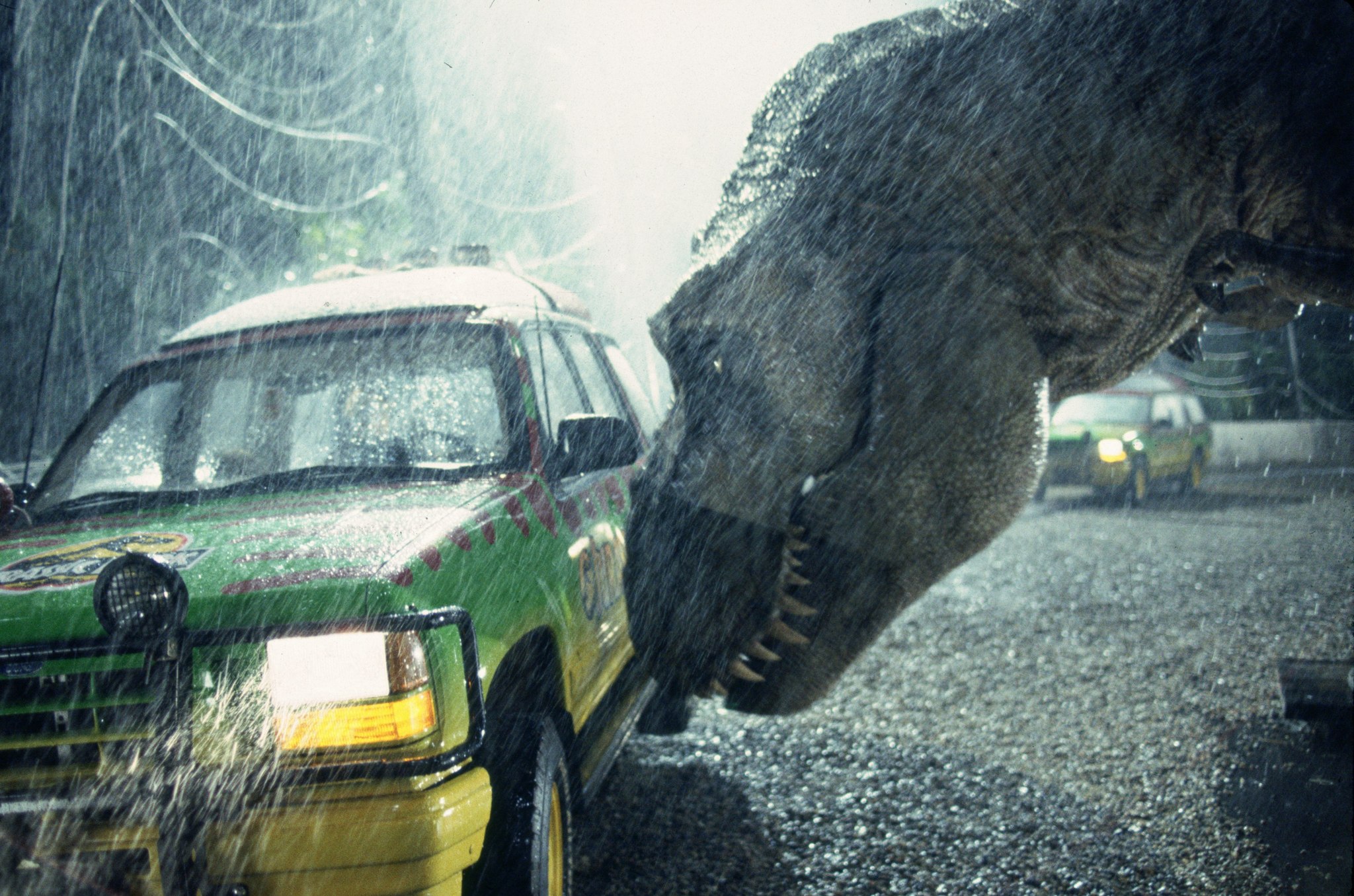
"Look at the side of that car, my dear. I'm very proud of the sides of my cars. I do hope nothing happens to my cars, in particular the sides. I can't stress how important the sides of my cars are."
“Look at the side of that car, my dear. I’m very proud of the sides of my cars. I do hope nothing happens to my cars, in particular the sides. I can’t stress how important the sides of my cars are.”

For want of a better phrase, I was a bit of a pussy when I was younger, whereas at the tender age of seven my brother loved A Nightmare On Elm Street, Child’s Play and the like.

That’s why, when the T-Rex attacked the jeeps in the pouring rain and ate the annoying lawyer, or when the Dilophosaur spat on the double-crossing Dennis Nedry and attacked him in his car, or when the raptors were chasing Tim and Lex in the kitchen, I never saw those scenes – I only heard them, with my lime green t-shirt pulled over my face in fear.

Despite this fear I still loved Jurassic Park, and the majority of 1993 and 1994 was spent playing with the toys (remember the ones that roared when you moved their hand, and the Dino Damage ones that had chunks of flesh you could pull off?), playing the video games (the Mega Drive one let you play as the raptor) and re-watching the VHS over and over again, the smaller telly and lower volume providing me with a safer environment to watch the dodgier scenes. It was a part of my childhood and now, aged 28, I still love it.

"Well, that's the sides fucked"
“Well, that’s the sides fucked”

For the sake of procedure I feel obliged to explain the story of Jurassic Park, this being a review and all, though you really should know it by now.

Eccentric Scottish billionaire John Hammond (Richard Attenborough) has opened up a theme park in a remote tropical island, a theme park that features real life dinosaurs he’s managed to clone using the DNA extracted from blood found in fossilised mosquitoes.

Excited about his park, he invites some guests – palaeontologist Alan Grant (Neill), palaeobotanist Ellie Sattler (Dern), theorist Ian Malcolm (Goldblum) and the aforementioned annoying lawyer – to see the park before it opens and get their expert opinions. Oh, and he’s invited his two grandchildren too, because things definitely won’t go tits-up.

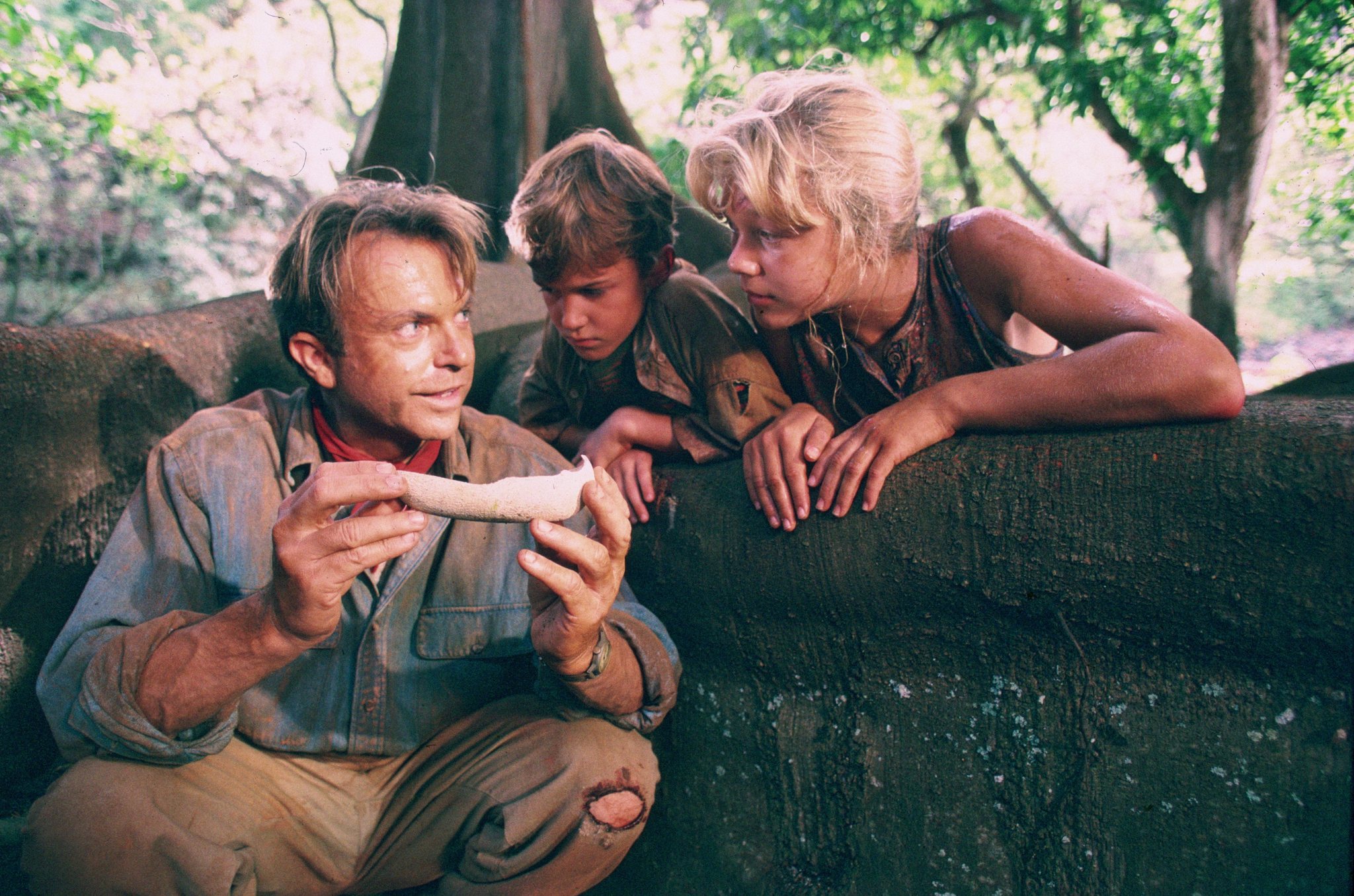
"It's a fossilised penis. It must have fallen out of my pocket when we were being chased"
“It’s a fossilised penis. It must have fallen out of my pocket when we were being chased”

After a while, things go tits-up and, thanks to some underhand subterfuge from park IT nerd Dennis Nedry, the electric fences around the park go down, leaving the dinosaurs free to run riot and do what they feel like. And, somewhat unsurprisingly, what they feel like doing is munching on humans.

It’s up to the gang (who are scattered around the island) to regroup and get the fuck out of Dodge before a raptor puts them between two slices of bread.

Even watching it eighteen years later on Blu-ray, Jurassic Park still looks sensational. There are one or two moments where the CGI now looks ever so slightly dated (most notably the scene with the brachiosaurs where everyone sees the dinosaurs for the first time), but the fact that all of the dinosaur effects are still infinitely more convincing than the tripe churned out today – I’m looking at you Dinoshark, Lockjaw and Mega Piranha – just shows what an incredible achievement this film’s special effects were at the time on computer hardware that nowadays would be, if you’ll pardon the pun, prehistoric.

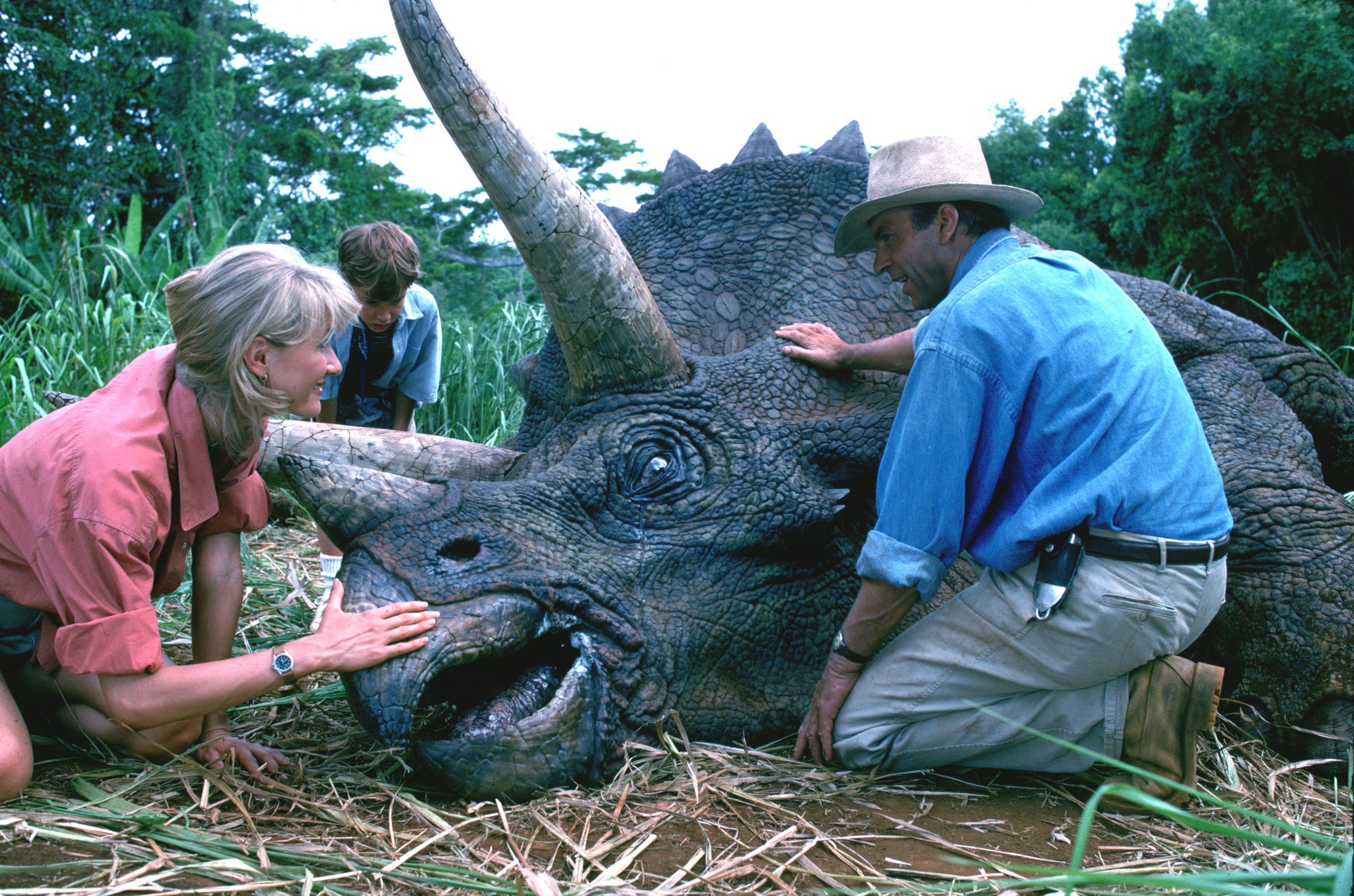
"When you told me we were going to meet your horny friend this wasn't what I had in mind. But hey, every hole's a goal"
“When you told me we were going to meet your horny friend this wasn’t what I had in mind. But hey, every hole’s a goal”

It’s just a perfect film that works on so many levels for all ages. Children get a kick out of seeing people interact with dinosaurs – something we’ve all wanted to do at some point – while adults can appreciate the arguments the characters have over the ethical and moral implications of cloning and disrupting the laws of natural selection by bringing back extinct animals, topics that are still strikingly relevant almost two decades later.

If you’ve never seen Jurassic Park, I feel like crying right in your face then whipping my head left and right so the tears slap across your inexperienced eyes. It’s simply an essential film that everyone with any sense of wonder or imagination has to see.

At the time it was released it was a revelation in filmmaking and its use of CGI changed the way movies were created, while these days it’s become a demonstration that even though its special effects DNA has been cloned and misused so many times since, when used properly it can make for some of the most spectacular cinema ever seen.

trev_newtrev_newtrev_newtrev_newtrev_new

WHERE CAN I GET IT?
Jurassic Park was recently released in a lovely Blu-ray trilogy boxset. UK peeps can get it by clicking here or get the DVD trilogy by clicking here. If you’re a Yankee Doodle Dandy you can get the US Blu-ray trilogy here or the DVD trilogy here.

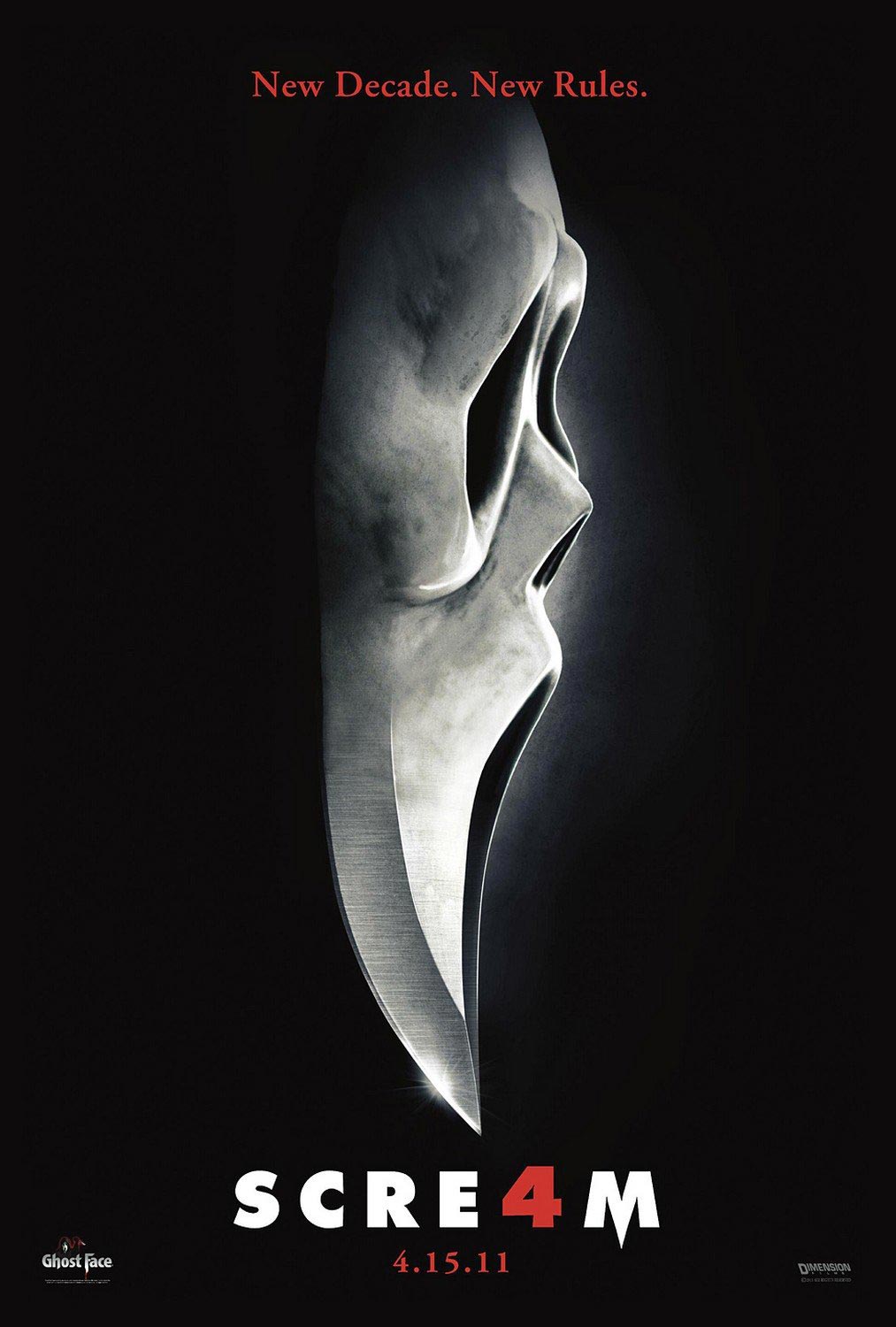
Scream 4 (2011)

Director: Wes Craven

Starring: Neve Campbell, Emma Roberts, Courteney Cox, David Arquette, Hayden Panettiere, Rory Culkin

“All there are now are remakes. It’s the only horror studios green-light. I mean, there are still rules, but the rules have changed. The unexpected is the new cliche.” (Charlie, Scream 4)

A lot has changed in horror cinema since the release of Scream 3 back in 2000. Remakes and ‘torture porn’ fims like Saw and Hostel are now the big box-office hits, and new film monsters like Jigsaw and Samara from The Ring are the ones that get today’s teens pulling their covers over their eyes in fear at night.

What’s more, the clever post-modern ideas made popular by Scream – that the characters in the movie reference the rules and situations in other horror movies – are now freely imitated in many of today’s films, with almost every slasher these days containing one wisecracker going on about how you’re never supposed to say “I’ll be right back”, how the black guy always dies first and so on and so forth.

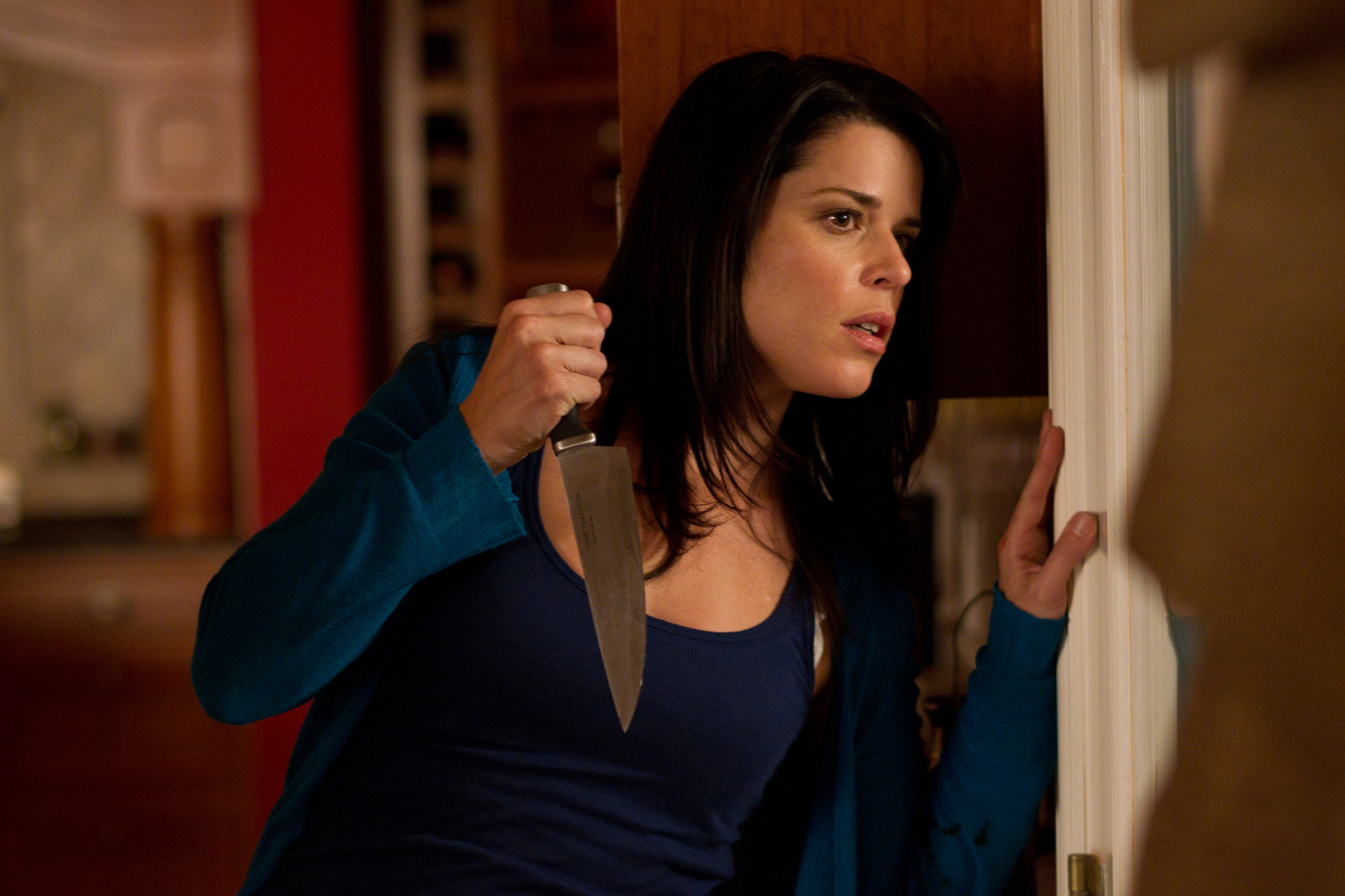
Sidney's fear of steaks made preparing dinner a daily challenge

Scream 4, then, had an uphill battle to be relevant in this new all-knowing, self-referential, nudge-nudge-wink-wink horror landscape, one the Scream series itself essentially created in the first place. It’s impressive, then, that writer Kevin Williamson and director Wes Craven have taken these decade-old characters and ideas and brought them into the 2010s so convincingly, giving them more modern sensibilities but still keeping the elements of what made the original trilogy so popular in the first place.

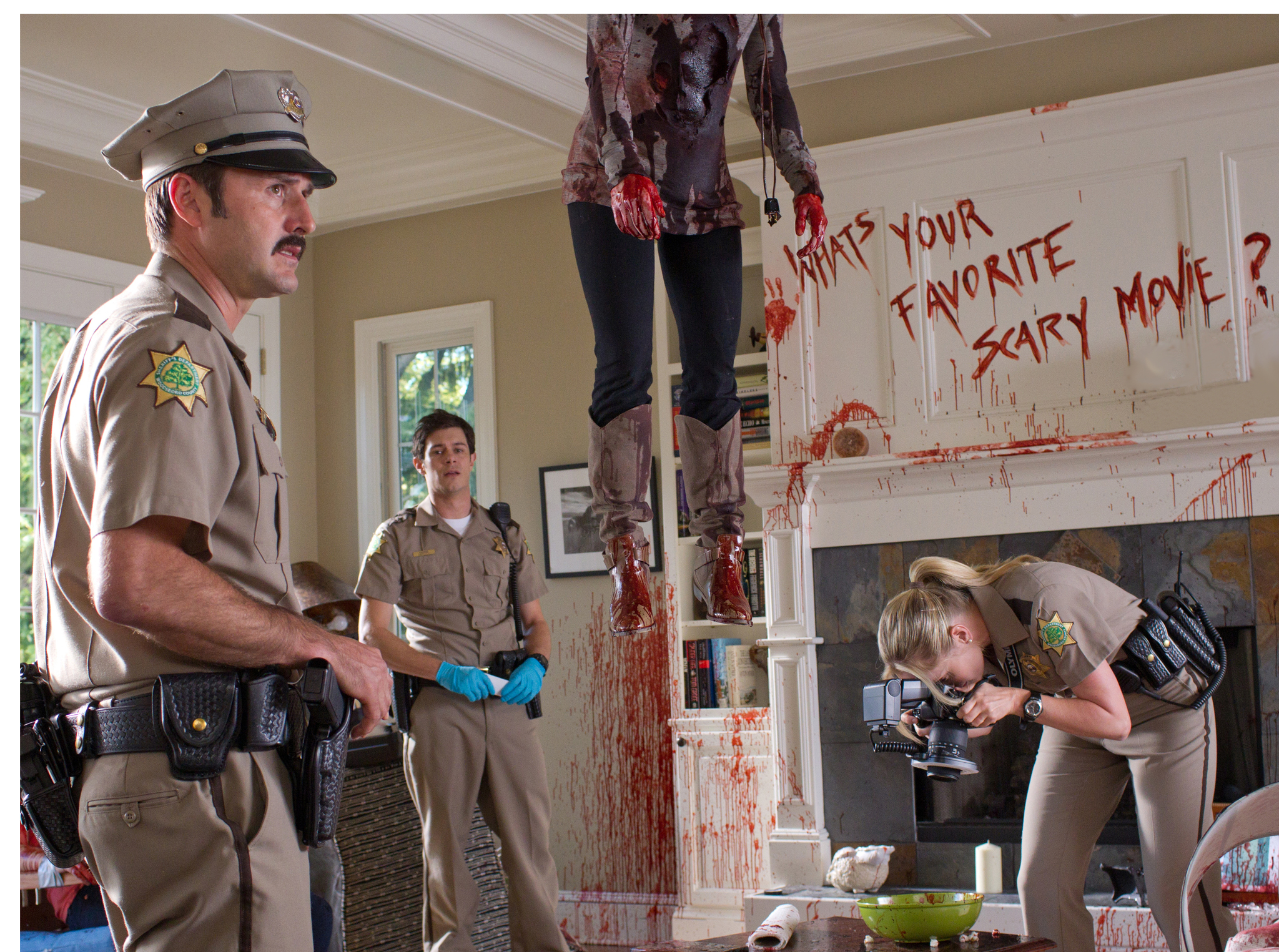
And so the usual “what’s your favourite scary movie” spiel continues, with newer films added to the killer’s trivia repertoire and more graphic threats made over the phone. The killer is made harder to identify now because it’s revealed early on (when someone calls their friend to trick them) that there’s a voice-changing phone app, one that potentially anybody could be using. The film geeks this time are a couple of horror nerds who screen annual movie marathons of the eight Stab films.

The worst forensics squad ever fail to notice the dead body in the room

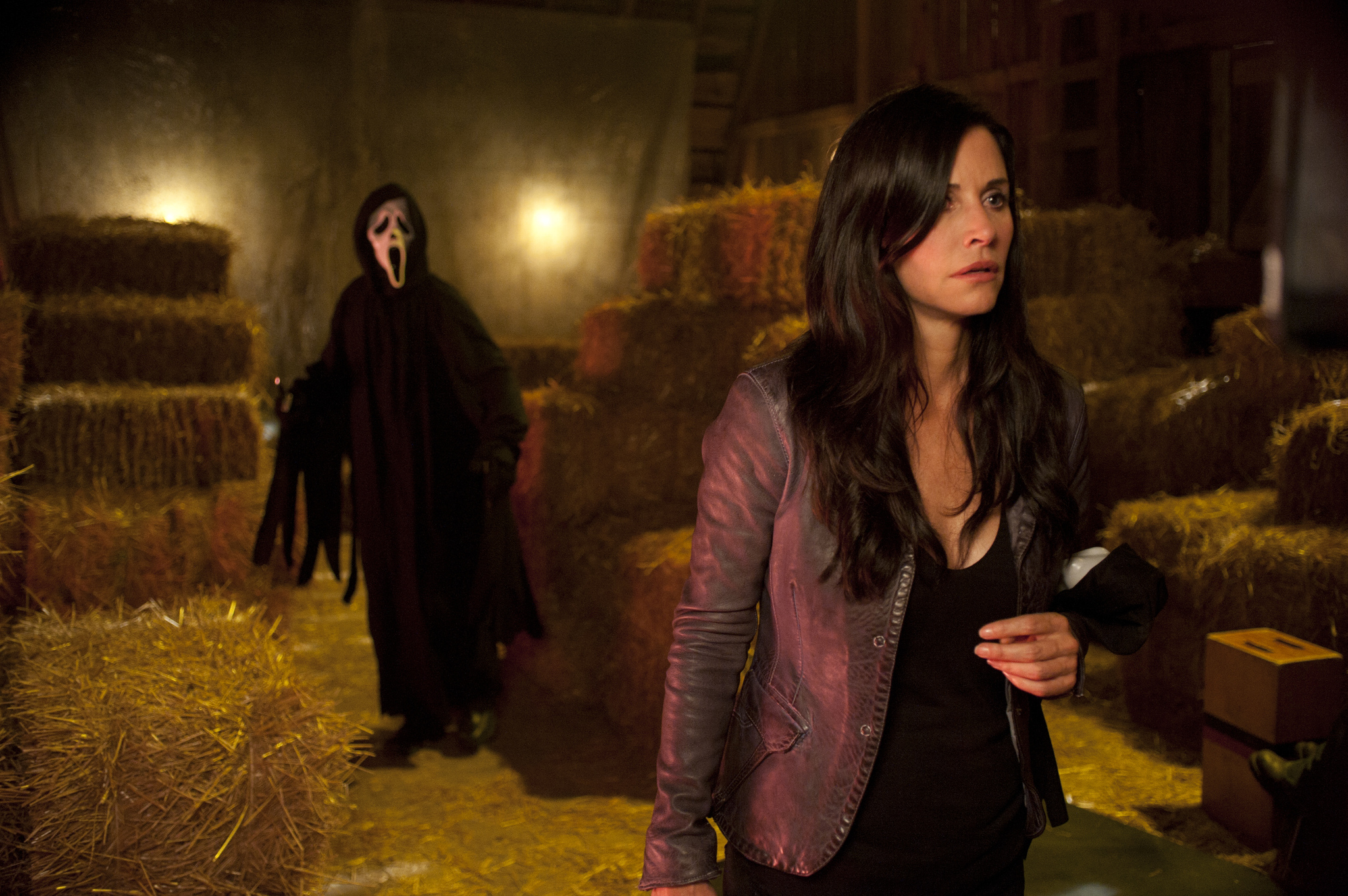
And yes, those classic ‘rules’ once again return, but this time updated for this new generation with new rules about remakes, which Scream 4 seems to focus most of its criticism on – I wonder if the remake of Craven’s A Nighhtmare On Elm Street had something to do with it. Indeed, the whole third act of the movie, without giving too much away, is very much influenced by the deluge of horror films we’ve seen recently, with one humorous moment in particular seeing a distressed Hayden Panetierre answer one of the killer’s phone questions by screaming out a seemingly endless stream of films that have been remade in the past decade, drawing stark attention to the sheer number of them.

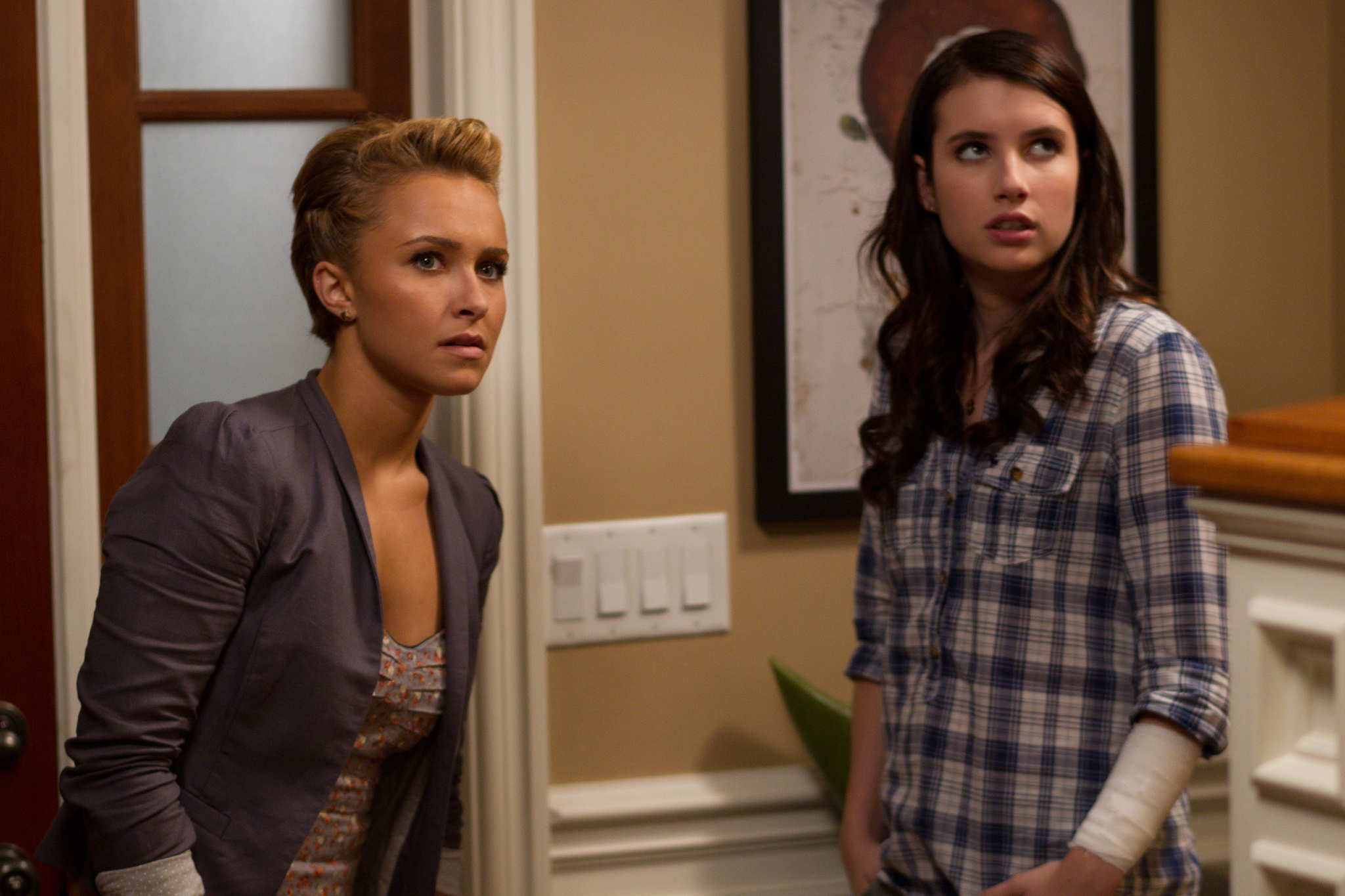
A livid Hayden smells blood as she spots the person who did her hair

While three cast members from the original trilogy – Neve Campbell, David Arquette and Courteney Cox – all return for Scream 4, it’s perhaps unsurprisingly Cox who steals the show. Campbell is her usual drab, miserably-voiced self, while Arquette’s character seems to have shaken off his permanent limp from the previous film and is now the sheriff, essentially making him a bit of a dick. Cox, however, is hilarious as Gale Weathers, suffering writer’s block as she tries to get back in the spotlight while jealously watching on a Sidney (Campbell) has success with a book of her own and her husband Dewey (Arquette) flirts with his new female deputy. Almost all of the best lines belong to Gale, to the extent that it’s almost exciting to see her turn up in another scene because you know something else is coming. I never thought I’d be praising Courteney Cox as the star in a school play, let alone a film, but fair play to her.

When Bob saw his date waiting for him, he suddenly realised she was joking when she said the party was fancy dress

Of course, it wouldn’t be a Scream film without a whodunit plot, and while the red herrings are perhaps a bit too obvious and clearly overacting to make you think it’s them, the real killer’s identity is a nice twist that actually makes sense and results in a great performance from the cast member in question.

It’s worth pointing out that the final act of Scream 4 does assume some prior knowledge of at least the first film in the series at times, so while it’s not essential I’d recommend you at least go into this one having seen at least the original film (if not necessarily all three) because you’ll get more out of Scream 4’s references, particularly those near the end of the film.

While Scream 4 could never be the revelation and genre-changer the original film was, it still does a great job updating the series to address the changes in horror cinema since the trilogy ended. It’s probably the best of the sequels, and well worth a watch if you enjoyed the first Scream.

Halloween (2007)

Director: Rob Zombie

Starring: Malcolm McDowell, Scout Taylor-Compton, Tyler Mane, Sheri Moon Zombie

“These eyes will deceive you, they will destroy you. They will take from you, your innocence, your pride, and eventually your soul. These eyes do not see what you and I see. Behind these eyes one finds only blackness, the absence of light, these are of a psychopath.” (Dr Loomis, Halloween)

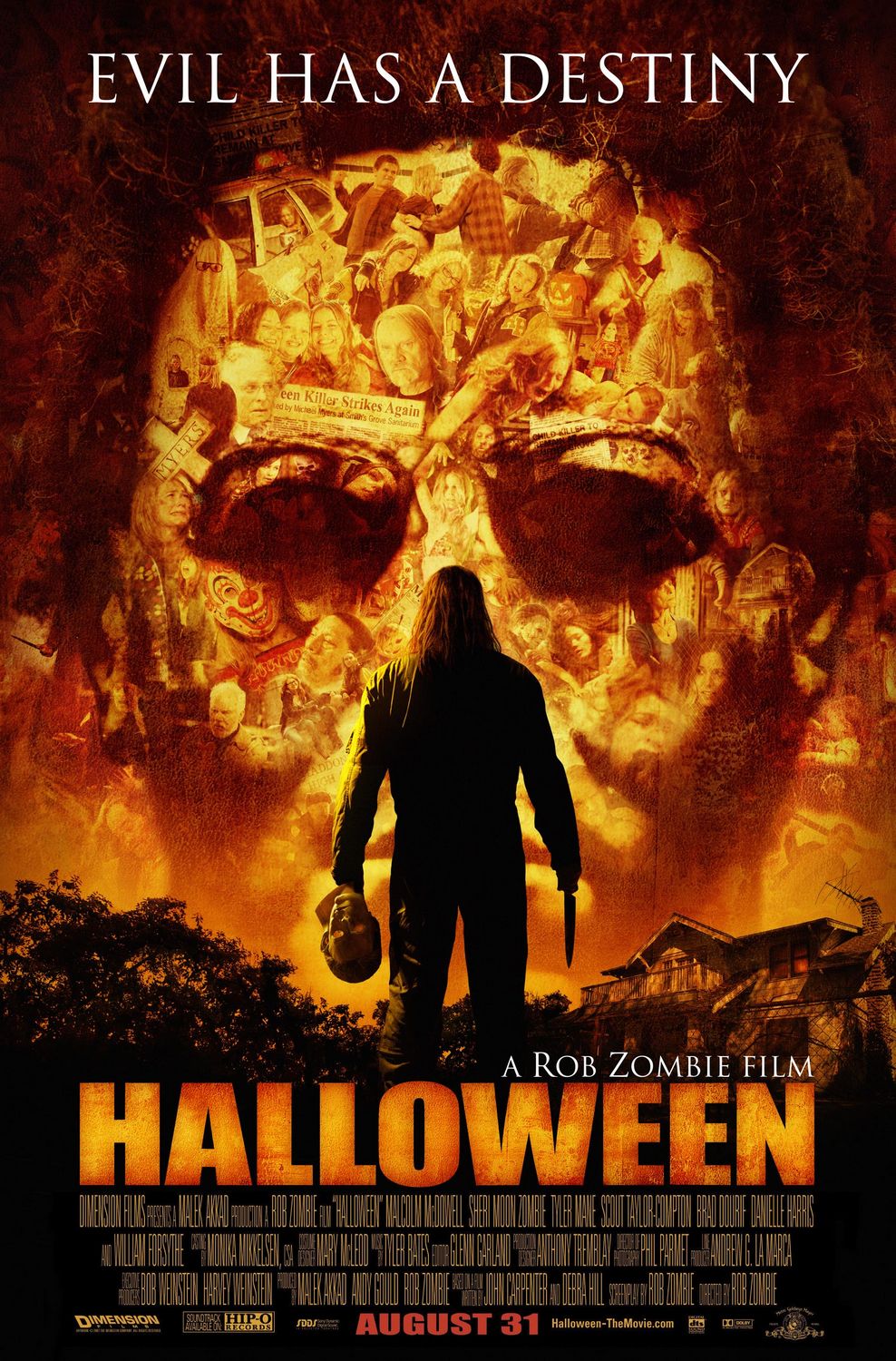
The most effective remakes are not those that simply try to update the original film so it fits in with today’s society and technology, but those that actually attempt to give a unique take on its predecessor and handle the same story in a different way. This is what Rob Zombie’s version of Halloween does, and in doing so it makes it abundantly clear that the filmmaker has an intense respect for John Carpenter’s original.

While the original film focused mainly on Jamie Lee Curtis’s character Laurie Strode and her ordeal throughout the movie, Zombie’s take is very much all about the killer instead. Far more time is spent on Michael Myers – his violent upbringing at the hands of his father, his time at the asylum as he grew up there, his loving mother’s desperate attempts to get through to him and cure him from his psychosis, and his eventual escape years later as a young adult. Rather than going down the “look at what’s happening to this poor girl” route, the message of Zombie’s Halloween is more “look at what this young boy has become”.

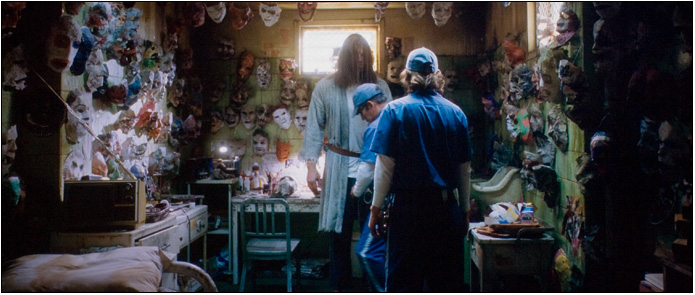
"All these masks and you went with the bleached William Shatner one? No wonder they say you're mental"

This shift of focus isn’t the only difference between the remake and the original, however – Zombie’s version is also far more shocking and visceral. Whereas the few killings in the original film are very ‘clean’, swift and to-the-point, when Myers attacks his victims in the remake it makes for extremely unsettling viewing.

Many films of this generation have similarly grisly and graphic death scenes, but Halloween is impressive in that they never feel glamorised. These killings are raw, they’re shocking. They’re not some big-chested bimbo getting a knife in the tit as she pulls a hammy pained expression, they’re unflinching and realistic – and it’s to Zombie’s credit that they’re presented in this way rather than the ‘torture porn’ many of today’s horror films are accused of offering.

"No you little shit, I'm MALCOLM McDowell. Roddy McDowall was in Planet Of The Apes. I keep telling you this"

The cast for the most part are effective. It would be easy to accuse Zombie of nepotism by casting his wife Sheri Moon as Michael Myers’ mum and also putting his friend Bill Moseley in the film, and it would be similarly simple to suggest the casting of Halloween 4 and 5’s Danielle Harris as one of Laurie’s friends was simply Zombie’s attempt to pander to the fans, but they all put in solid, realistic performances to ensure the film remains as plausible as possible. The addition of strong character actors like Malcolm McDowell (playing the Dr Loomis role almost as well as the late Donald Pleasance did) and Brad Dourif as the sheriff makes for some compelling moments too, particularly when the two are in the same scene.

Oddly, the only real negative performance is that of Scout Taylor-Compton as the ‘heroine’ Laurie Strode. Stepping into Jamie Lee Curtis’s shoes is a big enough feat as it is, but she’s barely even able to do the laces up. It’s not a bad job by any means but it’s almost impressive how forgettable she is and how unimportant Laurie becomes because of this. Indeed, this underwhelming version of Laurie is one of the reasons Michael Myers is the key focal point of the remake rather than the terrified babysitter.

"Right, who's covered up my eyeholes with black card again? It's not funny lads, that's health and safety, that is"

It also helps that the Michael Myers in this film is one of the best in the history of the lengthy Halloween series. This guy isn’t just a simple crazed killer, he’s a proper monster in every sense of the word. Played by the 6’9” Tyler Mane he’s simply terrifying to look at, and that’s just in the asylum scenes before he even escapes and finds the iconic white mask and jumpsuit. Once he does pop them on he’s a truly frightening sight, a Myers with obvious strength to back up his intimidating appearance.

Rob Zombie’s Halloween may not boast the effective simplicity of the original film but it almost makes up for it with its rawness. It’s the original story told in a far more aggressive manner, yet one that still clearly holds Carpenter’s classic in high regard. A success.

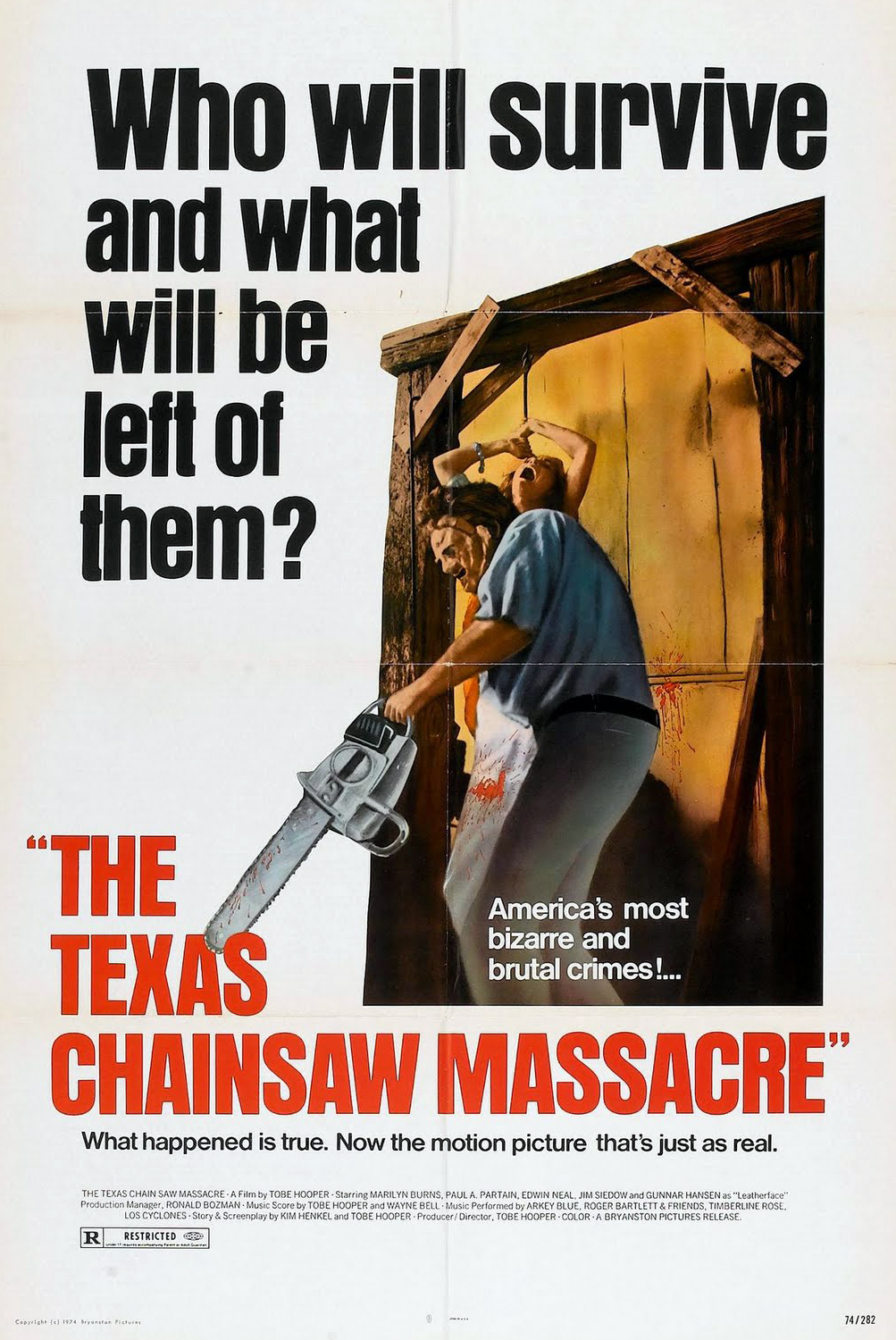
The Texas Chainsaw Massacre (1974)

Director: Tobe Hooper

Starring: Marilyn Burns, Gunnar Hansen, Edwin Neal, Jim Siedow, Paul Partain

“I just can’t take no pleasure in killing. There’s just some things you gotta do. Don’t mean you have to like it.” (The Cook, The Texas Chainsaw Massacre)

Though it was never technically a video nasty, The Texas Chainsaw Massacre was refused a certificate for a theatrical release by the BBFC and as such remained banned for an astonishing 25 years in the UK. It actually wasn’t until 1999 that the film was finally given an 18 certificate and finally got a British cinema run. Quite a result for a film whose director was initially aiming for a PG rating.

This lengthy ban is particularly interesting when you consider that The Texas Chainsaw Massacre is actually fairly tame by today’s standards, at least in terms of graphic content. Indeed, there’s actually very little on-screen violence at all – instead the film relies on the power of suggestion to terrify audiences. In a way its real downfall was that it worked too well.

Say what you will about Leatherface, he could give Gok Wan a run for his money with a sewing machine

The film tells the story of Sally, her brother and their three friends who are taking a trip to Texas to stay at Sally’s grandfather’s house out in the countryside. There have been reports that some ne’er-do-wells have been robbing graves, so after a brief stop at the graveyard to check her granddad’s grave is still intact, Sally and chums head on down the road. They pick up a hitch-hiker who turns out to be a bit mental, but it soon turns out that’s just the start of their problems when they happen upon the Sawyer house.

You see, it soon emerges that all the graverobbings have been committed by a weird, possibly in-bred family who live together in a huge country house decorated with their own macabre creations. There are lamps made with human skin, chandeliers made out of bones and armchairs that quite literally have arms on them. That’s what happens when you live too far from an Ikea.

She couldn't believe how bad The X Factor was this year

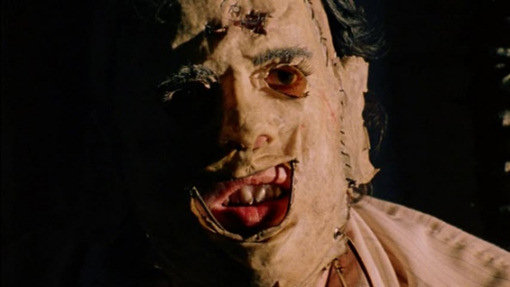
One by one Sally’s friends discover the Sawyer house while out wandering, and one by one they encounter Leatherface, the huge mentally troubled son of the household who’s taken on the “mother” role. Being the “mother”, Leatherface is in charge of preparing the dinner, and being that the family are a bunch of cannibals, that means capturing his new guests and turning them into that night’s dinner.

This leads to some of the more infamous scenes in ’70s horror, including one in which a young chap is smacked in the head with a mallet, his legs convulsing as the skull fragments enter his brain. Then there’s the notorious ‘meathook scene’ in which a girl is dragged into the kitchen and literally hoisted up and onto a meathook through her bare back, then writhes around screaming while Leatherface cuts her boyfriend’s head off with a chainsaw.

Bob's Princess Diana joke didn't go down all that well

Incredibly, despite the gruesome descriptions there is very little blood spilled in these scenes. You never see the hammer hit the head, you never see the meathook going in the back, you never see the chainsaw actually touching anyone. Using the same principle that The Human Centipede would copy 35 years later, the film relies on the audience’s ability to fill in the gaps themselves. Whereas actually seeing a meathook pierce the victim may not have worked out so well because the effect could have been hokey and unrealistic (especially given the film’s shoestring budget), by cutting away just before impact the viewer imagines the worst possible outcome in their head and it becomes far more powerful than it ever could have had it been shown.

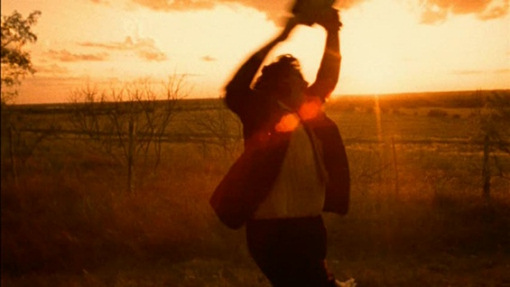
The final scene is almost hypnotic to watch. It's both terrifying and oddly beautiful at the same time

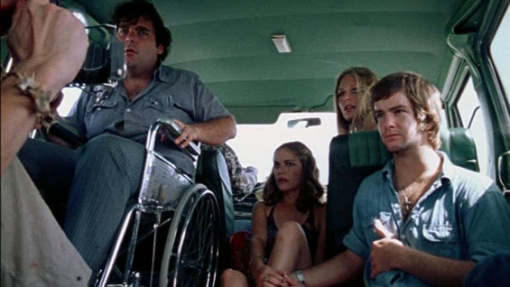
Despite its incredibly low budget (the whole film cost around $83,500 to make) The Texas Chainsaw Massacre is an impressive looking movie at times. It’s clear that director Tobe Hooper (who would go on to do Poltergeist) had a good eye for effective shots at this early stage in his career, and some – such as the van picking up the hitch-hiker and Leatherface’s frustrated tantrum at the end of the movie – are breathtaking.

The cast are also believable too. The five teens each have their own distinct personalities and although it’s clear that Sally and her brother are the main characters and given more opportunity for character development, you can ultimately relate to all five. Meanwhile, the Sawyer family are all as mental as a washing machine filled with bacon and this really comes across well in their performances, particularly Gunnar Hansen as the neglected, scared and yet terrifying Leatherface.

The Texas Chainsaw Massacre is a classic in the horror genre. It may not be to everyone’s tastes, and while it’s tame by today’s standards some many still not like the unrelenting nature of the horror (the final 30 minutes in particular are essentially non-stop screaming, mental torture and noise). If you can stomach the insanity though you’ll find yourself stunned at how such a low budget could produce such an effective film. Essential.

WHERE CAN I BUY IT?
British would-be Texas Chainsaw viewers with a Blu-ray player can get the stunning “Seriously Ultimate” edition for less than a tenner by clicking here, otherwise you can get the three-disc DVD by clicking here. Both have the same features (hours upon hours of great documentaries), but the Blu-ray fits it all on a single disc and naturally looks a lot better too.
American peeps, meanwhile, can get the Blu-ray here and the DVD here.

Scream 3 (2000)

Director: Wes Craven

Starring: Neve Campbell, Courteney Cox, David Arquette, Parker Posey, Patrick Warburton, Lance Henriksen

“Is this simply another sequel? If it is, same rules apply. But if you find yourself dealing with an unexpected backstory and a preponderance of exposition, then the sequel rules do not apply. Because you are not dealing with a sequel, you are dealing with the concluding chapter of a trilogy.” (Randy, Scream 3)

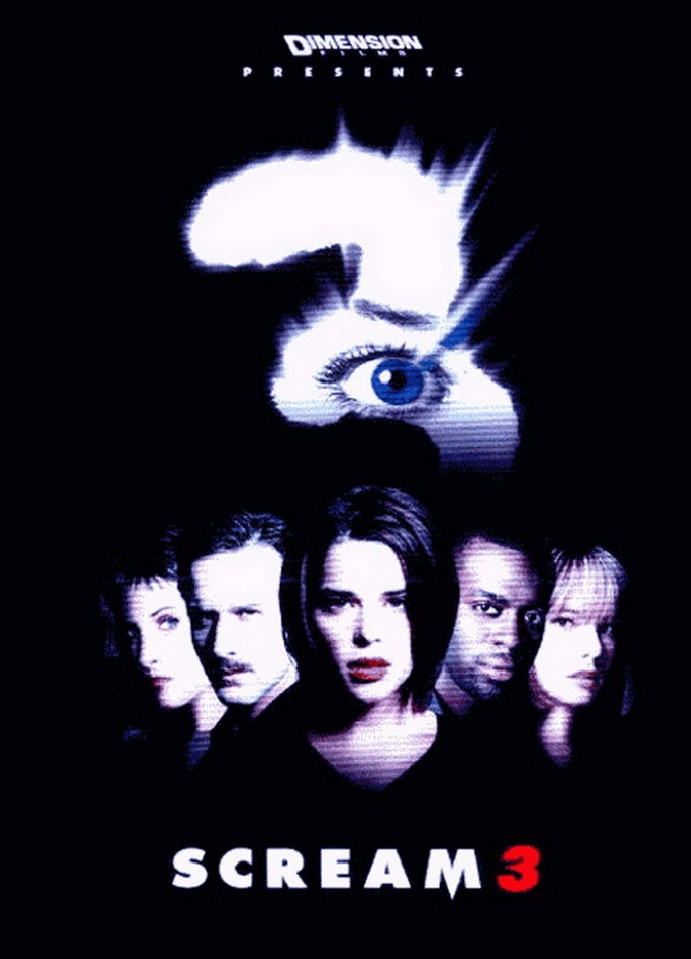
“All I know about movie trilogies is that in the third one, all bets are off”. In a roundabout way, this single line of dialogue attempts to account for Scream 3’s plot but instead sums up everything that’s wrong with it. Gone are the clever references to horror films from the first Scream and the cheeky nods at sequel clichés in its follow-up, replaced by confusing plot points, tired fourth wall references and an ending that’s about as satisfying as using beehives as football boots, with the simple explanation each time that “hey, it’s the third one, we can do any old shite and it’s fair game”.

Sidney couldn't believe the Scottish one had been kicked out of The X Factor

Taking place a couple of years after the events of Scream 2, Sidney Prescott (Neve Campbell) is now living out in the middle of nowhere. Along with her change of address comes a complete change of identity, her name and job altered in an attempt to avoid any more crazed killers who might want to call her up and give her hassle. Ironically, her new job is telephone counselling, in which she helps women over the phone who are suffering from sensitive problems. Guess what happens next?

"I don't care if it's a ghost instead of a woman this time Tiger, you told me you were going to pack this shite in"

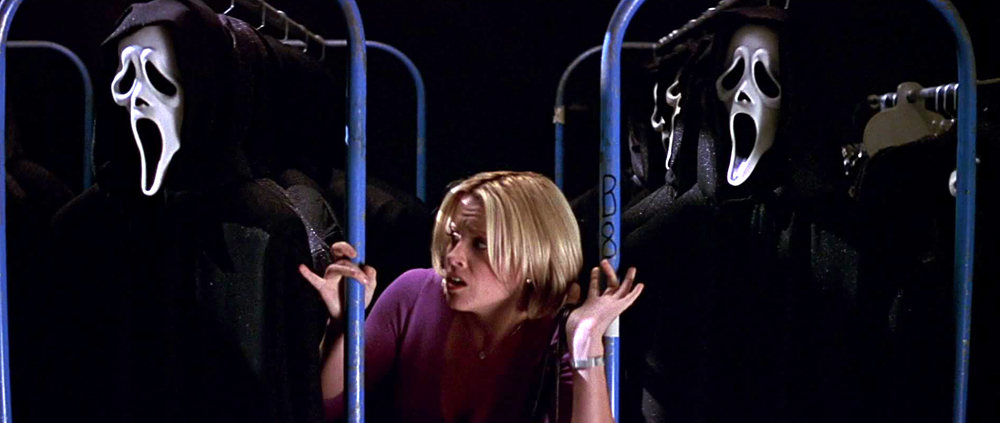
The whole “film within a film” thing from Scream 2 is copied again in Scream 3 but it’s taken to the nth degree by setting the majority of the action on the set of the next Stab movie. All the ‘disposable’ characters are actors playing the real-life Sidney, Gail Weathers and the like, making for a silly sub-plot in which the killer is seemingly killing the actors in the same order the real characters died – a sub-plot that mysteriously disappears halfway through the film when the writers seemingly realise that most of the real characters aren’t actually dead yet.

It’s just a mess, really. The instances of humour are clumsy (look, it’s Jay and Silent Bob taking a tour of the film set! It’s real actors playing fake characters in a fake real film set of a fake movie based on fake real events! And look! It’s Carrie Fisher playing a woman who looks just like Carrie Fisher!) the secondary characters have as much personality as a stapler, the blatant shoehorning of Randy into the film – because he was the only interesting character in the previous two instalments – is unsatisfying and the whole thing in general is just underwhelming.

Stella McCartney's winter range was something of an acquired taste

By far the most disappointing aspect, however, is the ending. The whole point of the Scream movies is trying to figure out the identity of the killer and their motive, but when it’s revealed to be one of the least interesting characters in the film and they then go on a boring rant about something or other that nobody really gives a shit about, then Scream 3’s status as a crushingly inadequate end to an otherwise great trilogy is cemented.

My advice is to watch Scream and Scream 2 back-to-back then pretend the third one didn’t exist. As for Scream 4? Well, that’s for another review…

Scream 2 (1997)

Director: Wes Craven

Starring: Neve Cambell, Courteney Cox, Jamie Kennedy, David Arquette, Liev Schrieber, Sarah Michelle Gellar, Jerry O’Connell, Timothy Olyphant

KILLER – “What’s your favourite scary movie?”
RANDY – “Showgirls.”

After slicing apart the horror genre and aiming knowing winks at many of its foibles in Scream, some felt that there wasn’t much opportunity to do the same in Scream 2 since so much had been covered already. By its very nature though Scream 2 provided Wes Craven and writer Kevin Williamson a chance to poke fun at one very important aspect of horror films that went unchallenged in the first film – sequels.

Set two years after the events of the first film, Scream 2 sees Sidney (Neve Campbell) at college with a bunch of new vict… um, friends. Sidney’s been getting hounded by the press because of a new movie called Stab, a ‘true story’ based on the events of the first film. As if that wasn’t bad enough, some students have been turning up dead too. Could there be a new killer following in the footsteps of the previous ones? Of course there is, it’s Scream 2.

"It's a good job the killer has a chronic case of narcolepsy," thought Susan

While the clever digs at horror convention and the ‘nudge nudge wink wink’ lines aren’t quite as frequent or obvious as they were in the original film, Scream 2 still has a bit of fun with the genre. The most entertaining dialogue-based scene in the first film – in which Randy teaches his fellow students the rules of horror movies – gets its own follow-up in which, during class, Randy and his peers discuss which movie sequels are better than the originals. Clearly they’ve never seen Return Of The Killer Tomatoes.

Don't be too upset, Ms Cox. Some people just didn't like Friends. Granted, this chap seems to be taking it a little bit too far

Much like in the first film, there are also a bunch of cameos stashed away for eagle-eyed viewers. Some are obvious – the Drew Barrymore role of ‘famous person who dies before the opening titles’ is this time taken by Jada Pinkett-Smith and Omar Epps – whereas others are more subtle. Keep an eye out for Heather Graham, Tori Spelling, Luke Wilson and writer Kevin Williamson all making brief appearances.

The ‘film within a film’ subplot also offers the filmmakers the chance to put the boot into another tired horror cliché, this time one propagated by the media – the copycat killer phenomenon. Wes Craven has covered press attitudes toward horror and its influence before in Wes Craven’s New Nightmare, and he’s no easier on the subject here. It’s claimed by the various new reporters throughout the film that the killer is doing this because they’ve been inspired by the Stab movie, a theory that (while understandable in this case, given the Ghostface mask and the like) is ultimately shot down when their true identity and motives are revealed. Take that, journalists!

The killer isn't a vampire, you stupid mare

Speaking of the ending, it’s underwhelming. While the film – much like the first Scream – is essentially a whodunit, with the audience trying to guess which of the supporting characters is the murderer, the revelation here is nowhere near as shocking as it was in the original movie with the same twist getting churned out again. What’s more, the killers’ identity turns out to be disappointingly predictable, as it turns out the guy who had the evil grin and looked like a killer all the way through the film ends up revealing he was the man behind the mask all along. In fact, he was so blatantly a killer that by the end of the film most audiences will have already passed him off as a red herring because he was too obvious.

Scream 2 is fun. It’s by no means as fresh, as mould-breaking or as engaging as the original film and many of the kills are about as tame as an abused pet (throwing someone off a roof off-screen? Come on), but when a film openly admits in its dialogue that sequels are never better then that should come as little surprise. Check out the first film instead and if you enjoyed that then give this a go, it’ll keep you amused throughout its two-hour duration.

Night Of The Living Dead (1968)

Director: George Romero

Starring: Duane Jones, Judith O’Dea, Karl Hardman

“If you have a gun, shoot ’em in the head. That’s a sure way to kill ’em. If you don’t, get yourself a club or a torch. Beat ’em or burn ’em. They go up pretty easy. ” (Sheriff McClelland, Night Of The Living Dead)

Although the idea of the dead coming back to life had been covered a number of times before the release of Night Of The Living Dead, it was George Romero’s low-budget 1968 flick that essentially laid down the rules of the modern zombie movie and kicked off what is (along with the slasher) easily one of the most oft-produced subgenres in horror.

"That's the last time I buy a tombstone and refuse to pay the £5 home delivery"

It starts with Barbara and her brother Johnny heading to a cemetery in Pittsburgh to visit their mother’s grave. There they’re confronted by a man who stumbles over to them and attacks Johnny, killing him, before chasing Barbara. Managing to escape, she finds solace in a small cottage in the middle of the countryside, but is shortly joined by another chap, a black man called Ben. Soon many other similarly stumbling maniacs join the crazy man outside and a small army of shuffling ne’er-do-wells begins to gather around the cottage.

I don't know, some people just can't spread jam properly

As Barbara and Ben are joined by a few more people who’ve been hiding in the house’s basement, they manage to get the radio and TV working and tune into the emergency news broadcasts. They learn that the dead have started coming to life and are eating the living. Any people they eat in turn become one of these ‘ghouls’ (they’re never actually called zombies at any point during the movie). And thus the modern zombie film is born.

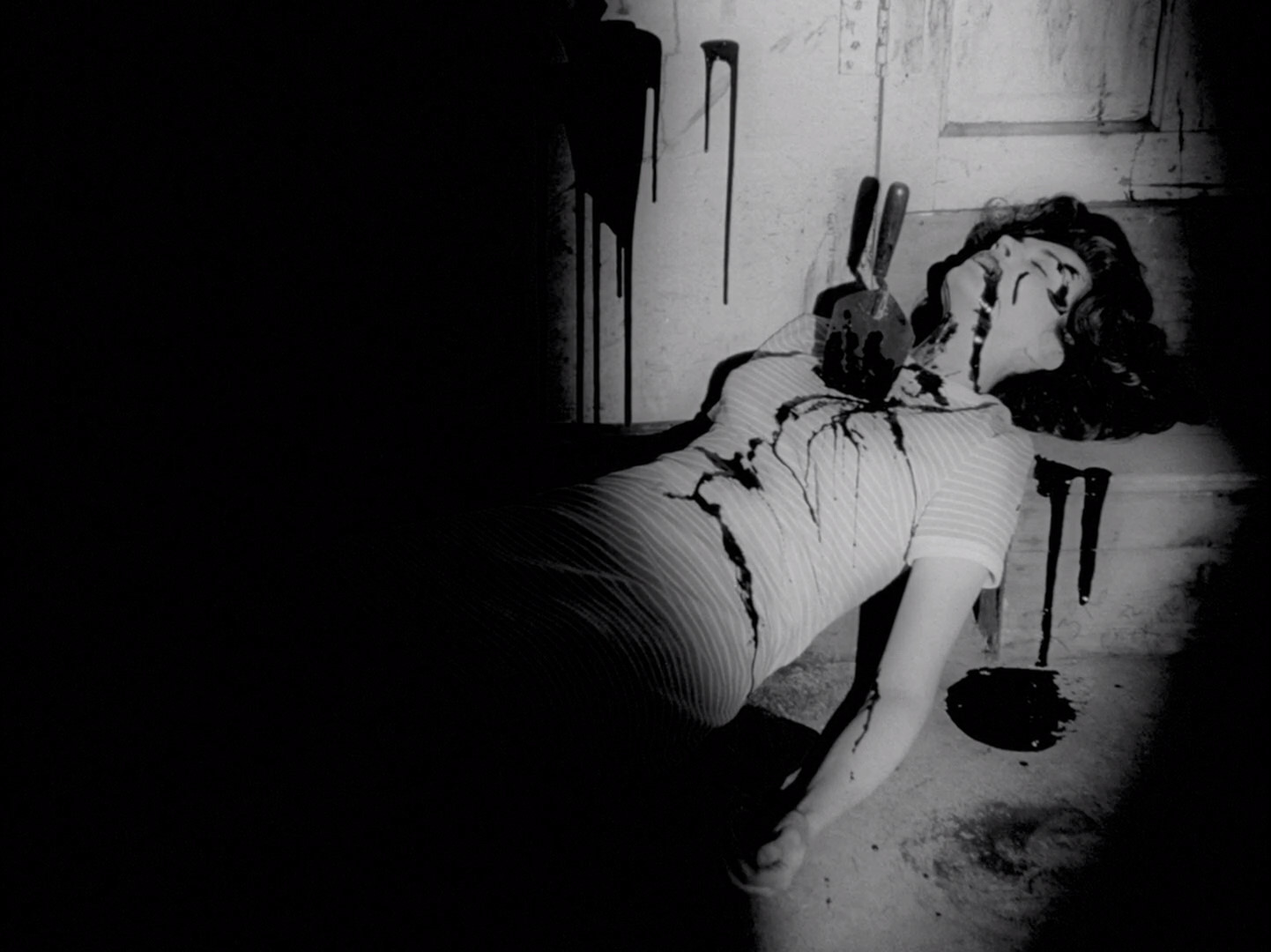
Two things spring to mind while watching Night Of The Living Dead – the first is how surprisingly grim and graphic it is given the era in which it was filmed, and the second is writer/director George Romero’s fairly obvious commentary on how we interact with one another. The former is the most immediate – considering the furore surrounding some of the now-tame taboos broken by Hitchcock’s Psycho (such as the shot looking inside a toilet bowl and the suggestion of a clothed unmarried couple sharing a bed), to have a film only eight years later showing hundreds of mindless ghouls, some completely naked, eating flesh and entrails must have caused outrage at the time. Indeed, many of the scenes that stunned in 1968 still have the power to shock in 2011, in particular one involving a young girl and a trowel.

The KFC in Hull wasn't quite up to the franchise's normally high standards

The latter is more subtle but lingers longer after the credits. Each instalment of Romero’s original Dead trilogy (Night/Dawn/Day) is laced with social commentary, and while it’s laid on thickest in Night’s sequel Dawn Of The Dead there’s still plenty being preached by Romero here. As those in the house discuss their escape plan, it all starts to fall apart as arguments begin and fights break out. It’s clear what Romero’s telling us – even with faced with the bleakest of situations it’s still difficult at times for people to work together harmoniously. In a way, the biggest threat to the human race isn’t the dangers outside, it’s the human race itself and our inability to trust each other.

This point wouldn’t come across nearly as well had it not been for the fantastic cast of unknowns who make up the occupants of the house. They all have their own very clear and distinct personalities and these personalities clash just as you’d expect. In your head you’ll form your opinions quickly, defining each of the characters – the good honest guy, the bastard who deserves to die, the one who means well but deep down you know isn’t strong enough to survive – and it’s a true testament to the cast’s abilities that every single character’s fate is of interest to the viewer.

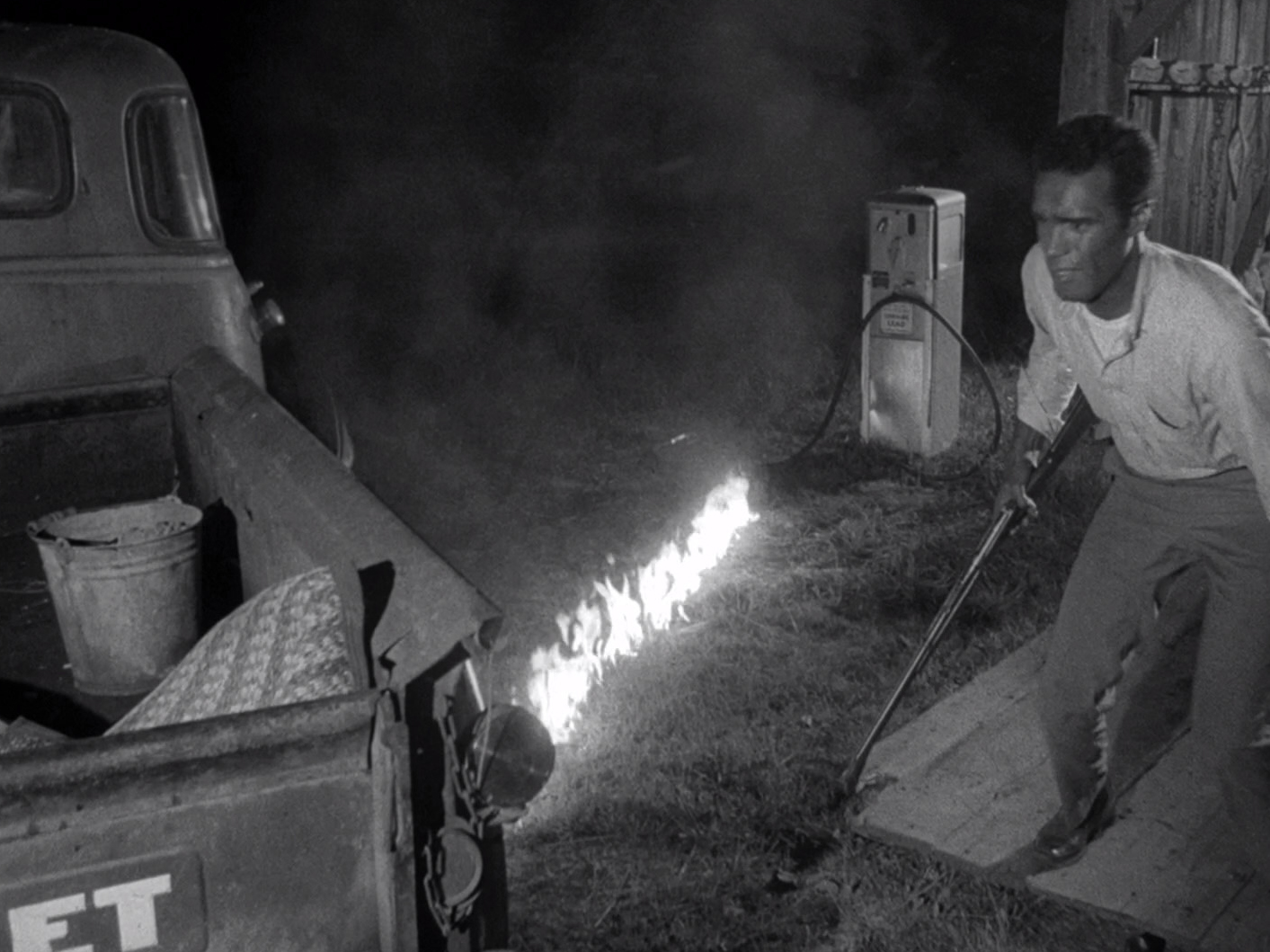
Good old Ben. Nice to see someone knows what they're doing in this film

You may wonder why I felt the need to mention Ben’s colour earlier in the review. Indeed, you might already have a Word document open, ready to scribe your no-doubt carefully-worded statement accusing me of all sorts of discriminatory shenanigans. The reason Ben’s colour is so important is that Night Of The Living Dead is one of the first mainstream movies that featured a black man as the hero.

Don’t forget, this was nearly 45 years ago, a time when non-whites were very much considered a lesser class and the blaxpoitation boom was still a few years away, so black audiences were barely seeing their colour represented on the big screen at all, let alone in lead roles. As a result, for Night Of The Living Dead to feature a black man as the protagonist in a movie aimed at mainstream audiences was a huge decision at the time, one that nowadays wouldn’t have us batting an eyelid (which, of course, shows the progress we’ve made since).

Then there’s the controversial and powerful ending, with its strong double-meaning barely hiding its racial undertones. Make no mistake, this is more than a mindless monster movie.

Night Of The Living Dead is a true classic, a film that any self-respecting horror fan has to see at least once. It’s aged incredibly well and still packs a punch 45 years later, and Romero’s not-so-subtle social undercurrents should give budding sociologists something to sink their teeth into too.

The Final Conflict (1981)

Director: Graham Baker

Starring: Sam Neill, Rossano Brazzi, Lisa Harrow, Don Gordon

“Your pain on the cross was but a splinter compared to the agony of my father. Cast out of heaven, the fallen angel, banished, reviled. I will drive deeper the thorns into your rancid carcass, you profaner of vices. Cursed Nazarene. Satan, I will avenge thy torment, by destroying the Christ forever.” (Damien, The Final Conflict)

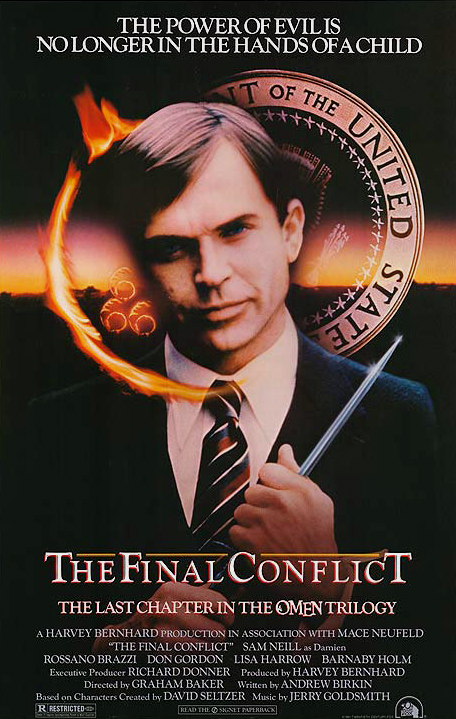
It can’t be denied that Damien Thorn has done well for himself given the circumstances. After being born as the Antichrist and surviving his adopted father’s attempt to murder him in The Omen and later doing the same with his uncle in Omen II, by the start of The Final Conflict the now-adult Damien (Sam Neill) has become CEO of Thorn Industries and the American Ambassador for Great Britain. Not bad for the son of the devil.

"I'm not really the Antichrist. It's just a movie. I did go to Jurassic Park, though"

As you may expect by the film’s title however, shit’s about to go down for Damien, and said faecal matter comes in the form of the Nazarene, the second coming of Christ. Damien figures out that Christ is due to be reborn on 24 March 1982, so he orders one of his disciples to kill all the baby boys born on that date.

Meanwhile, a group of monks have managed to get hold of the seven holy daggers that are to be used to kill the Antichrist, and so they set about trying to kill Damien. In short, things could be going better for D-Tho.

"Yes, my pram's got all the latest features. The only thing it can't survive is car impact but that seems unlikely"

Sam Neill is undoubtedly the star of the show. This is the first Omen movie in which Damien starts fully aware of who he is and what he’s capable of, and at times Neill’s performance is unsettling to say the least. It also helps that his character is a complete prick (it goes with the territory, after all) – he seduces a journalist trying to get close to him, while at the same time turning her young son into one of his disciples and getting him to do errands for him.

Stan realised too late that someone had switched his cocaine with gunpowder

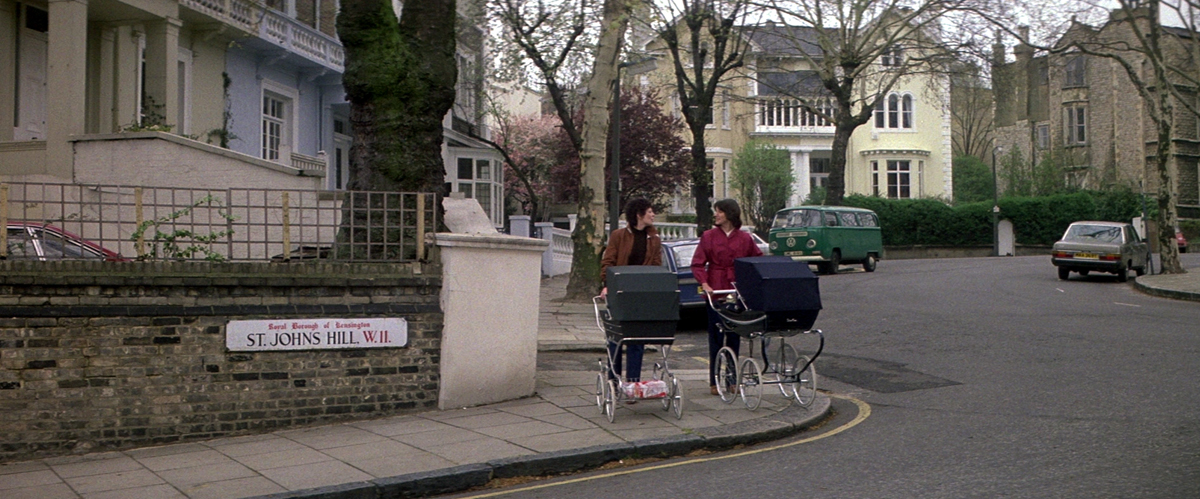
That aside however, The Final Conflict is disappointing. It’s a hell of a slow burner – it’ll be half an hour before anything of note starts to happen – and the scenes clearly intended to be the chilling high points are so sloppily handled that they’re fairly ineffective. A car slamming into a baby’s pram should be a shocking moment, but the film is almost impressive in how dull it manages to make what should be a memorable scene.

Rather than the gripping climax to the Omen series it should be, The Final Conflict is a bit of a damp squib. It’s not a terrible film by any means but it’s so devoid of anything truly gripping or memorable that it’s ultimately a bit of an underwhelming end to an otherwise great trilogy.