Planet Of The Apes (1968)

Director: Franklin J Schaffner

Starring: Charlton Heston, Roddy McDowall, Linda Harrison, Kim Hunter, Maurice Evans

“Get your stinking paws off me, you damned dirty ape!” (Taylor, Planet Of The Apes)

The last time I saw a film with an ape riding a horse the police came to my house, confiscated it and fined me £1000. I wasn’t willing to take the same chance again so I did plenty of research beforehand to ensure Planet Of The Apes was above board.

Planet of the Apes is one of those movies that most people know a lot about but many haven’t seen. Many know the twist ending, partly due to the numerous spoofs of it that have emerged over the past years with the likes of The Simpsons and Kevin Smith taking their own crack at it. Yet not many people who haven’t watched it are aware that there’s actually a lot more to this film than Charlton Heston being kidnapped by apes, escaping and then realising where he is. It’s rife with social commentary and other such shenanigans.

"NO OFFICER, I'M NOT HIDING TWO MONKEYS IN MY HOUSE. Right, get in the fucking cupboard you pair of monkey pricks"

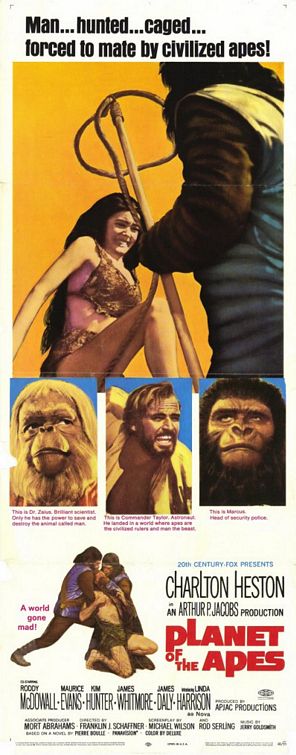
An astronaut crew crash-lands on a mysterious planet 2000 years in the future. Commander George Taylor (Heston) is captured by a group of intelligent apes, who believe that they are the dominant species and man is the beast. Two chimp scientists are startled however to realise that Taylor can speak (unlike the other humans on the planet) and so they attempt to help him gain his freedom.

The first fifteen minutes are fairly boring, reminiscent of the sci-fi b-movies of the 50’s where a crew of two or three men crash-land on a planet then look at all the strange things on said planet. Thankfully Taylor’s crewmembers are disposed of quickly (leaving us in no doubt as to who the star is here) and the film begins to swing in a wildly different direction when he’s kidnapped by apes on horses.

"He called us what? Pricks? I'll give him a piece of my monkey mind"

Taylor is thrown into a cage alongside some fellow humans, and soon realises that such is the bitter irony of this new world, the humans can’t speak and the apes can, meaning their roles are reversed somewhat. The apes see the humans are mere pets, mindless animals incapable of communication. Conveniently, Taylor’s voicebox was damaged while he was being kidnapped so he can’t speak when he’s initially captured.

I would say that to give more away would be spoiling it but let’s face it, we all have a rough idea where this is going. We know he’s eventually going to speak and that all hell’s going to break loose. We know he’s going to be seen as some freak of nature and he’s going to end up splitting the apes into those that believe he’s from another planet and those that don’t. And if you don’t, well, you do now.

One frustrating annoyance is the character of Nova, played by Linda Harrison. As a love interest she’s pretty weak, mainly due to the fact that she’s mute and doesn’t really seem to understand what Taylor is saying. Indeed, it almost feels wrong to me whenever he tries to instil some sort of romance in her, because she doesn’t really know what he’s doing. It’s pretty close to animal porn in my opinion (and, as noted above, I would know).

Doctor Zaius, Doctor Zaius, ooh ooh ooh Doctor Zaius (Doctor Zaius Doctor Zaius)

One cliché we do expect with mute characters in films, however, is that in a dramatic scene near the end (usually when the hero’s getting the shit kicked out of him) they’ll suddenly talk, or at least make some kind of “ugh” sound. This isn’t the case here. You keep waiting for it, but once the credits hit you think “well what was the point of her?”. Unsurprisingly, this was corrected in the sequel.

Heston gives a performance that’s as needlessly dramatic as you’d expect from a ’60s sci-fi film, regardless of its otherwise high budget. In the scenes where he can speak, every line’s chewed and spat out through gritted teeth in order to make him seem like a gritty hero who takes no shit. Her annoying lack of chat aside, Linda Harrison does do a good job and at times you believe she actually is mute. And despite the makeup, the ape actors are still extremely convincing, in particular Maurice Evans as Dr Zaius and Roddy McDowall as Cornelius.

If you still haven’t seen it Planet Of The Apes is highly recommended, as long as you don’t mind overdramatic sci-fi. The make-up effects on the apes have stood the test of time, and they look as impressive more than 40 years on as they did back when they were created. It’s therefore still somewhat believable (within reason), as opposed to merely a historic landmark in film history that our generation can look back at and giggle at how cheap it all looked. If you’re after a good science fiction film with moral undertones and spectacular cinematography for its time, then Planet Of The Apes is the one for you. Besides, it’s got monkeys on fucking horses.

Amityville 3D (1983)

Director: Richard Fleischer

Starring: Tony Roberts, Tess Harper, Meg Ryan

LISA – “I hear you bought yourself a haunted house, John.”
JOHN – “I just bought the house, not the ghost.”

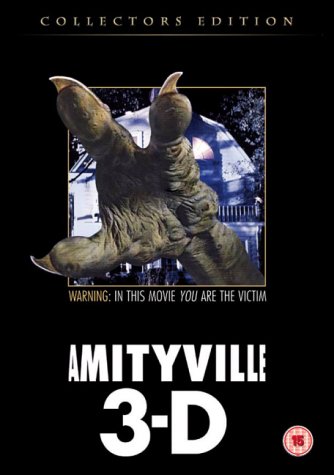
(Note – This review is based on the Sanctuary Region 2, 3D version of the film (pictured on the right), so any references to the 3D effects may not necessarily apply to the version you watch. The film is also available in a 2D version, which inevitably affects how entertaining the film is. That said, on with the review.)

Put quite simply, had Amityville 3D not been in 3D it would be quite the stinker. As it is however, it’s actually quite entertaining to watch and some of the scenes of sheer tedium (including the frankly overly-repetitive discussions on whether or not the house is evil) aren’t quite as boring due to the distraction of the 3D effect.

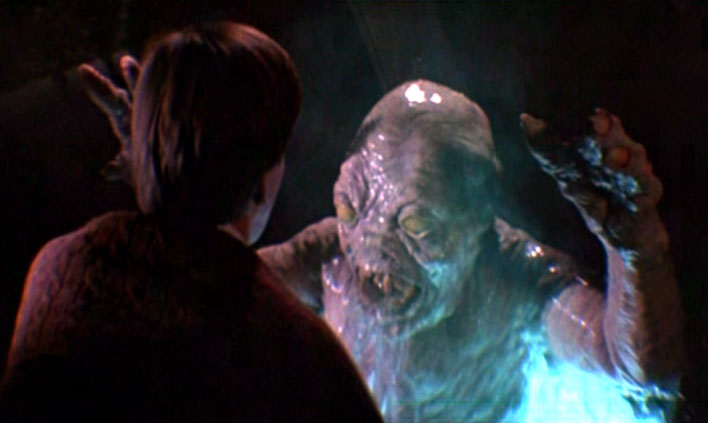
Don't really remember there being monsters in the first one

3D aside, this third instalment in the Amityville series is a pretty run-of-the-mill, scare-free ghost story which makes little or no sense and never really makes you care for the actors. Indeed, most of the film will be taken up by you either saying how good or bad the last 3D bit was or, if you’re watching the 2D version, guessing which bits would have been in 3D (answer: all of them).

The plot isn’t too different from that of the original film. A couple of fake psychics are kicked out of the old Amityville house by John Baxter (a paranormal scam investigator) for trying to trick people into thinking they can contact their dead relatives. This leaves the house empty for Baxter to buy it and move in. Naturally, strange goings-on then begin to happen to everyone around Baxter (including his ex-wife and daughter), but he’s not having any of it and he’s determined to move in. Cue numerous people entering the house on their own and meeting grisly deaths.

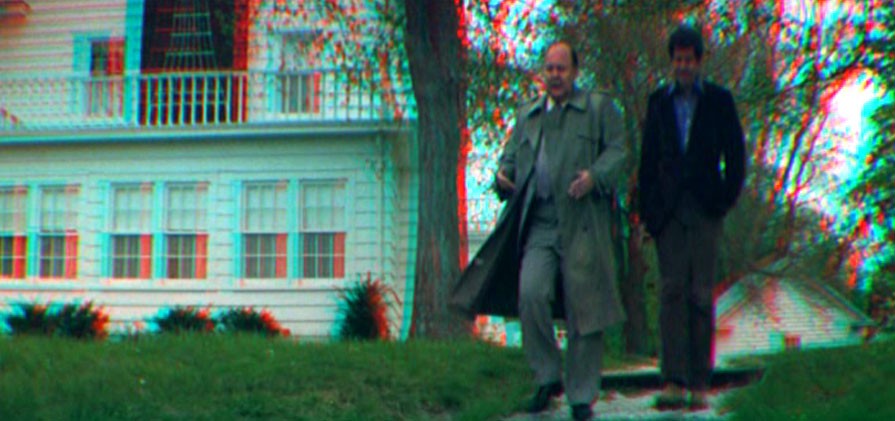
Got a pair of 3D glasses? Give the image a click and try it out

There are, quite simply, no scares to be had whatsoever in Amityville 3D. Some of you watching in 3D may jump ever so slightly the first time a fly comes towards you, but after that it’s pretty ineffective.

There aren’t too many deaths here either, yet what’s there is reasonably inventive. “Death By Flies” is quite good if a little confusing (how can flies kill you?) and “Death By Accidentally Setting Your Car On Fire” is pleasing to watch, but the real star is easily “Death By Getting Pulled Into A Hole In The Floor Of The Basement By A Random Monster”.

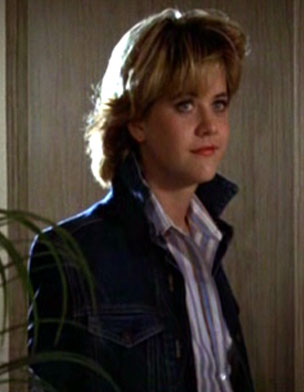
Look! It's a young Meg Ryan in one of her first acting gigs

The 3D technique used here is the classic “red and blue glasses” effort. Of course, this means it’s not true 3D and instead the actors still look 2D, albeit on different 3D planes. It looks a bit like there are cardboard cut-outs walking about in a pop-up book. It’s still pretty cool looking, though the closer things get to you the poorer the effect becomes. Its ironic that the most effective examples of the 3D effect are scenes where very little is happening other than dialogue.

If you can get a hold of the 3D version of Amityville 3D, it’s highly recommended if only for the cheesy fun you get watching it with the full 3D effect. However, if all you can get is the 2D version, do not under any circumstances expect anything approaching a decent film. The characters are flat and dull, the scares are almost non-existent and the effects are poor at best. In 3D though, it’s enough of a distraction to prove enjoyable.

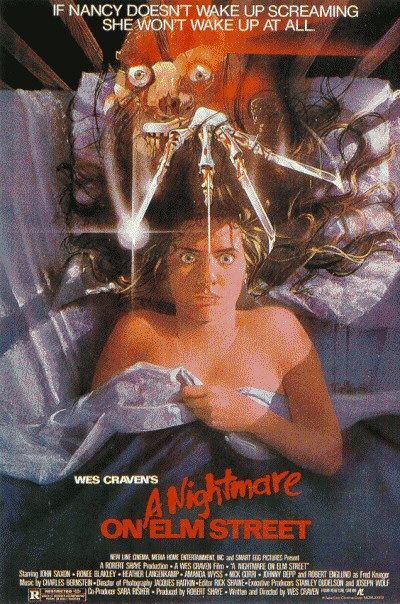
A Nightmare On Elm Street (1984)

Director: Wes Craven

Starring: Robert Englund, Heather Langenkamp, Johnny Depp, John Saxon

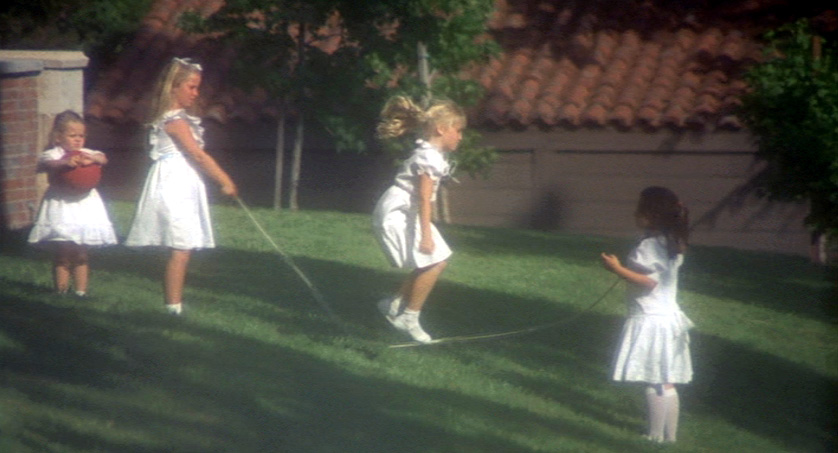
“One, two, Freddy’s coming for you…” (freaky as fuck children, A Nightmare On Elm Street)

It’s unfair for me to give a fair and objective review of this film because it was such a big part of my childhood. The majority of my years as a wee boy were spent shitting myself at the very sight of Freddy Krueger (unlike my fearless younger brother who idolised him). The Nightmare films affected me so much that they remain the basis for my love of horror to this day. Quite simply: no Nightmare On Elm Street, no That Was A Bit Mental. So it’s to blame if you think this site is pish. Therefore, anyone expecting this film to get any less than a full 5 out of 5 can stop dreaming (as it were) and just accept it. I fucking love this film, and I always will until the day I die. Now let’s dissect it.

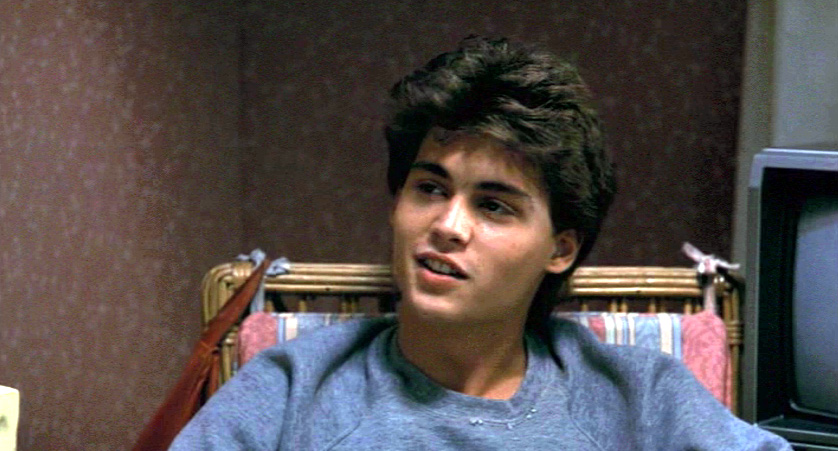
Johnny Depp in his first ever role. Awwww

Nancy and a couple of her other high school friends have started sharing the same bad dream about an impolite chap named Fred Krueger. Mr Krueger has a glove with long razors for fingernails, which must be an inconvenience when he has to use toilet paper. Naturally, he’s not a happy man (not necessarily because of the toilet paper though) and terrorises Nancy and her friends every time they dream about him. Once Nancy’s friends start dying in their sleep, however, it soon becomes clear that whatever Freddy does to you in your dream affects you in real life, and if he kills you in your dream you’re fucked in real life too. It’s up to Nancy and her boyfriend Glen to figure out how to stop Freddy before all the Elm Street children die in their sleep.

Freddy's makeup was a little nastier than it was in later films

Everyone talks about how the original Friday the 13th isn’t scary anymore because (with the exception of Kevin Bacon’s death and the ending) you’re pretty much warned about all the deaths in advance (the shadow of the axe against the curtain before it’s slapped into someone’s head, for example). A Nightmare On Elm Street, on the other hand, still provides the odd chill to those who have yet to watch it; be it Freddy bursting out of a mirror, Tina’s death or Glen’s unfortunate bedroom experience. It’s safe to say that 27 years after its release, despite showing its age a little in terms of special effects, A Nightmare On Elm Street can still hold its own fright-wise against much of the emotionless bullshit that’s being released in cinemas these days.

This scene actually merges slow motion into normal speed without the viewer noticing

Part of this is also down to the film’s concept in general. It’s often hard to care much about slasher films because not many of us have been chased down a street by someone wielding a knife (unless you’ve spend a Friday night in Glasgow of course). Everybody has nightmares though, and everybody knows how powerless they feel when they’re having them, so building a film around that idea was a genius move by Wes Craven.

Of course, this film would be nothing without Freddy Krueger, one of the greatest horror characters in history. The idea of a dodgy chap burnt alive by the parents of the children he killed who now seeks revenge is great, and the innuendo and suggestions that he may have been more than simply a child murderer adds an underlying sense of nastiness without ever actually confirming anything.

Gore fans will be reasonably happy with A Nightmare On Elm Street because there’s a good deal of the red stuff spattered throughout the film, most notably during the famous first kill where Freddy drags the helpless Tina onto the ceiling. Plus Freddy seems intent on causing himself harm in every scene he appears in, be it by slicing his fingers off or cutting his stomach open. Quite gory then. The deaths are also extremely inventive, given the film’s low budget. It’s a credit to the special effects crew that the aforementioned ceiling death is very surprising when it happens, because you don’t expect to see something as cool as that happening in a film that seems fairly cheaply made. Here’s the scene if you haven’t seen it before:

The acting is possibly the one area where the film could theoretically lose some points. As much as I love this film I have to admit that it’s undeniably ’80s and most of the actors (with the exception of Johnny Depp, Robert Englund and John Saxon) either play their roles in an over-the-top manner or simply are’t convincing enough. As a lead actress, Heather Langenkamp is simply not good enough in this film and her shonky delivery of her lines tends to take the viewer out of Craven’s world and throw them back into reality. This is more due to her inexperience as an actress when she starred in this, however: indeed, her later roles in the third and seventh Nightmare films were much more believable as she gained maturity as an actress.

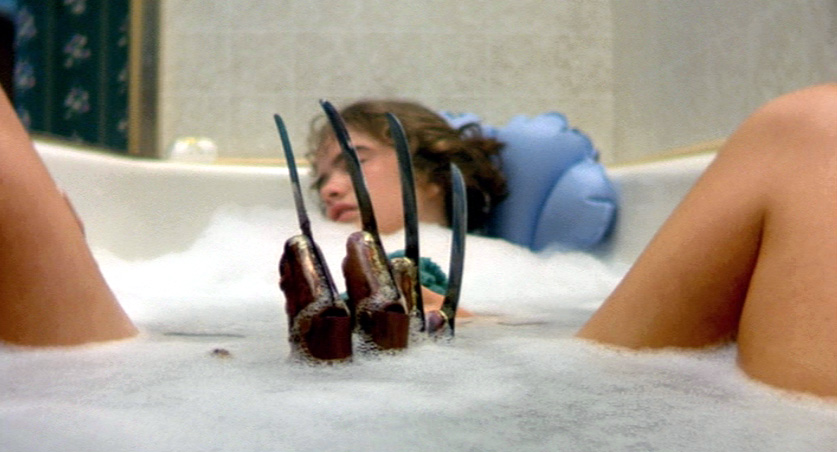
A product recall for Marks & Spencer's new line of bath mitts was inevitable

Maybe I’m being biased, maybe I’m being nostalgic, but I am of the honest opinion that anyone who hasn’t seen A Nightmare On Elm Street before they died better have a good reason like being Amish or something. Not many horror films can be considered classics but in my opinion among the true classics you have your Dawn Of The Dead, you have your Halloween, you have your Friday The 13th and you have your Nightmare On Elm Street. Yes, the acting is poor and the fashion is sometimes scarier than Freddy himself (witness the camp might of Johnny Depp’s crop-top and bouffant hairdo), but these are merely documents of the film’s history.

Does anyone question Nosferatu‘s lack of sound? No, because all films at that time were silent. Therefore, should anyone question A Nightmare On Elm Street‘s dodgy acting and dodgier clothes? No, because all ’80s slasher films had Oxfam wardrobes and stars who couldn’t act their way out of a nutsack. It comes with the territory. What doesn’t however, and makes A Nightmare On Elm Street better than its countless competitors is that it’s a clever, well-directed horror with great special effects for its budget and inventive deaths that involve more than just someone else getting their throat slit every five minutes. If you haven’t seen it, take it from me and remedy that situation. Here’s the trailer to help drive the point home:

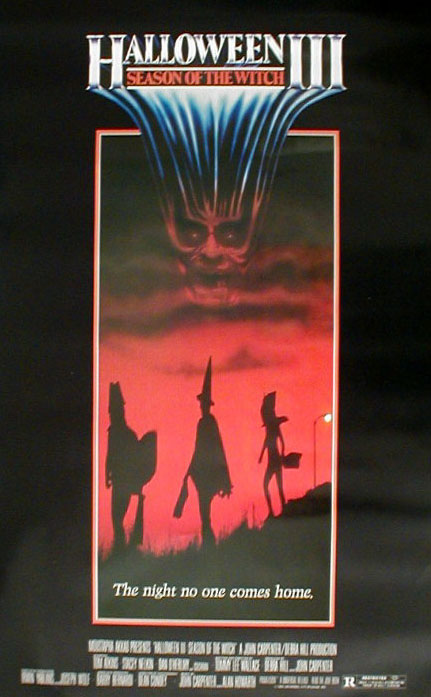
Halloween III: Season Of The Witch (1982)

Director: Tommy Lee Wallace

Starring: Tom Atkins, Dan O’Herlihy, Stacey Nelkin

“Halloween, the festival of Samhain. The last great one took place 3000 years ago, when the hills ran red with the blood of animals and children.” (Conal Cochran, Halloween III)

Despite the success of the first two Halloween films, rather than sticking with the same formula the third movie went in a completely direction and scrapped Michael Myers, opting instead to tell a completely different story altogther. It was a move that in my opinion paid off, even if it’s a film that’s not really remembered these days.

Indeed, had this been simply named Season Of The Witch and not contained the word ‘Halloween’ in the title, it would have probably received a much better response from horror fans. As it is however many people tend to see this as the bastard son of the series despite the fact that, lack of Myers aside, it’s one of the stronger Halloween films.

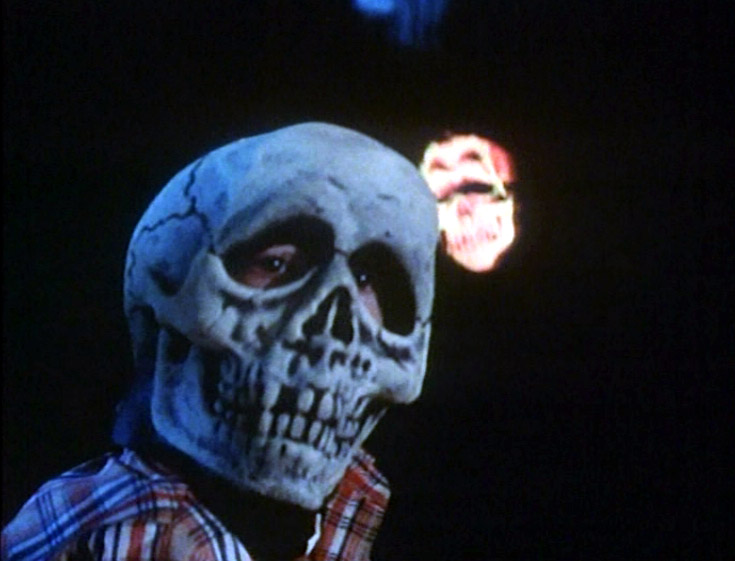
Ashley Olsen's eating disorder wasn't getting any better

A hospital patient is brutally murdered and his attacker dies soon after when his car blows up. Dr Dan Challis witnesses these events and decides to investigate, along with the daughter of the murdered man. They soon discover that Silver Shamrock (a Halloween mask-making company), led by the evil Conal Cochran, is plotting to revive the original idea of Halloween: mass murder. How does Cochran plan to do this? By triggering all the masks they’ve sold to kill whoever is wearing them at a certain time on Halloween. Now that’s a quality idea.

From the opening credits we know we’re still in Halloween territory, despite that key missing ingredient of Mr Myers. As a crude pumpkin is drawn on screen using an old computer (probably an old BBC Micro or something) the music is reminiscent of John Carpenter’s score from the first two films.

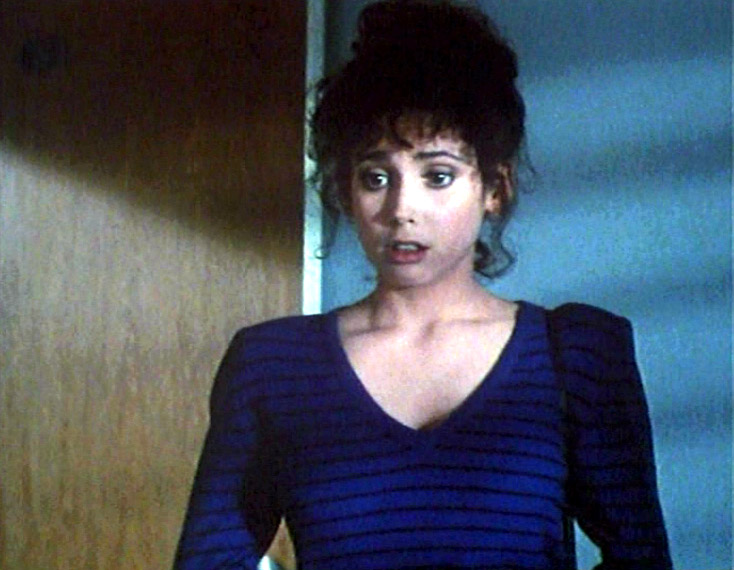
It was the hottest curry Susan had ever eaten

The idea of how Cochran plans to kill the children of America is also sheer brilliance. Using the addictive power of hype to control these impressionable children and lead them Pied Piper-like to their eventual demise is a stroke of genius which really should be used more often in films. It isn’t for the simple fact that the killing of children is still fairly taboo in cinema plots, so when Halloween III‘s most grisly death involves an eight-year-old boy it’s ruddy effective stuff.

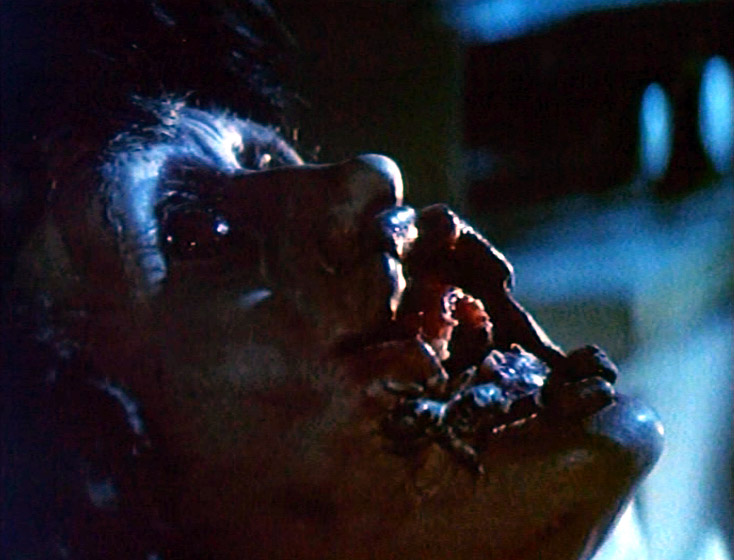
There are some nice death scenes throughout, including a genuinely jump-inducing scene in a motel room (with a grotesque aftermath) and the infamous, aforementioned child death. Needless to say this is a very uncomfortable moment to watch, and while some may complain about it, I instead feel it’s a very powerful image and is perfectly handled.

There's nothing more disturbing than walking in on your partner having sex with a Coke bottle

Tom Atkins is great in every film he appears in and here he is no different. The fact that he looks like a normal Joe and not a well-built stereotypical “hero” figure allows us to connect with him on a better level than we would with, say, Busta Rhymes in the later Halloween: Resurrection. At times his acting borders on over-theatrics, but it’s so cheesy and typically ’80s that you can’t help but love it.

As for evil super-villain Conal Cochran (well, he must be a super-villain if he plans on killing every child in the country), Dan O’Herlihy plays him as well as possible given the script he has to work with. After all, no human being on this planet could successfully manage to explain how the masks are powered with rock from Stonehenge without some hint of cheese and scenery-chewing involved.

In all, Halloween III is top class ’80s horror. As long as you go into it with an open mind you should enjoy it. This is not really a Halloween film, so don’t expect one. Block Michael Myers out of your mind for 92 minutes, settle down with some Doritos and Coke, and enjoy a good slice of ’80s terror. You won’t regret it.

Ghostwatch (1992)

Director: Lesley Manning

Starring: Michael Parkinson, Sarah Greene, Craig Charles, Michelle & Cherise Wesson

“What big eyes you have… what big eyes you have.” (Susie, Ghostwatch)

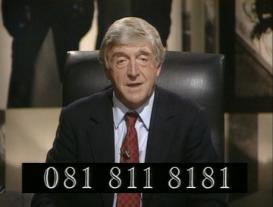
Picture the scene. It’s Halloween night, 1992, and the BBC has decided to present a live, hour-long broadcast from the most haunted house in Britain in an attempt to catch the first live, on-camera footage of ghostly events taking place. Well-respected presenter Michael Parkinson is hosting proceedings at a nearby studio, accompanied by parapsychologist Lin Pascoe (there to give an expert’s view), and TV host Mike Smith manning the call centre and taking calls from the public if they see anything odd.

But the real focus of the show is the outside broadcast live from the haunted house, as popular children’s presenter (and real-life wife of Mike Smith) Sarah Greene plans to spend the night with the Early family, who are being terrorised by a ghost going by the name of Pipes (so called because the noise he initially made sounds like old central heating pipes clanking and warming up). Finally, outside the house will be comedian and star of popular sci-fi sitcom Red Dwarf, Craig Charles, who will be interviewing witnesses and generally adding some comic relief to what should be an otherwise nervy night. They are all expecting to have a laugh with the audience and make light of the situation, but that’s until things start to go wrong. The eldest daughter’s voice is taken over by Pipes, photo frames fly off the wall and Pipes starts taking over the studio.

Except he doesn’t really. The whole thing was a fake broadcast filmed in the style of Orson Welle’s famous War Of The Worlds radio drama, presented as genuine in order to terrify the audience into thinking it’s really happening. It was perhaps too successful, because it ended up with the dubious honour of being the first TV programme to genuinely inflict post-traumatic stress symptoms in children, and caused one mentally unstable viewer to kill himself.

As a result, the BBC has never shown Ghostwatch again in the eighteen years since it was released for fear of the same thing happening again, but it’s now available on DVD and while the acting is a little less credible these days it’s still a spooky little tale.

I vaguely remember Ghostwatch’s first broadcast in 1992. I never saw it at the time (I was only 9 and still kept my distance from ‘scary’ things), but my uncle phoned up my house, convinced it was real. These days it’s fair to say that Ghostwatch is not the most convincing ‘hoax’ of all time, primarily due to the poor acting ability of the actresses playing the mother and her two daughters. Despite the generally believable performances from the actual TV presenters playing themselves, these two actresses still manage to bring you back to reality as you realise this isn’t possibly genuine, simply because nobody talks like they do. The eldest daughter and mother in particular are unconvincing.

Can you spot the ghostly figure of Pipes?

However, for those who missed the opening titles and tuned in halfway through, this could have very easily passed as a genuine piece of reality TV. Hindsight makes it difficult to determine whether people would have been gullible enough to buy it, because when I recently watched it I was fully aware that it was fake and was looking for signs of this. Perhaps it didn’t even enter the minds of people watching it at the time – bear in mind this was the early 90’s, long before the wave of both reality TV and famous hoaxes such as The Blair Witch Project, The Last Broadcast and (in my opinion) Living TV’s Most Haunted.

Nevertheless, there is no denying that regardless of its believability, it’s extremely well-produced and successfully mimics the format of real-life TV broadcasts long before Chris Morris and Armando Ianucci attempted it with spoof news shows The Day Today and Brass Eye.

The tension is well-built with the initially slight unease of members of the public phoning in and claiming they’ve seen a shadowy figure in some footage that was played earlier. This progresses to some subliminal appearances of a strange person in the background, in a number of blink-and-you’ll-miss-him shots. Eventually it all comes to a head, the audience gets the most blatant sighting of the figure, and from then on the viewers are hooked as all hell breaks loose.

To say any more would cruelly spoil things, and this truly is a DVD that has to be watched with as little knowledge of events as possible, but the internet is buzzing with those who have already seen it and are comparing sightings of the ghost, trying to get the definitive list of how many times he appears (the correct answer? Nine in total).

Ghostwatch may not be everybody’s cup of tea – the acting is occasionally dodgy, the ending is ridiculous and the whole thing smells faintly of cheese. But anyone willing to let that slide and consider that nearly two decades ago this scared the hell out of a gullible country (and unfortunately led to a suicide) will thoroughly enjoy watching this. If possible, watch it in a large group and play Spot The Ghost.

In short, Ghostwatch inspired a hell of a lot of ‘fake’ reality programmes that followed, and for this reason alone should be worth a view. At its best it’s a fantastic study in the human mind and how it deals with subliminal imagery and belief. At its worst it’s a bloody good ghost story. It’s a win-win situation!

Here’s a feature on Ghostwatch from Channel 4’s 100 Greatest Scary Moments, which helps explain why it’s so enjoyable:

Blood Feast (1963) (Video Nasty review #2)

Director: Herschell Gordon Lewis

Starring: Mal Arnold, William Kerwin

“Have you ever had… an EGYPTIAN FEAST?” (Ramses, Blood Feast)

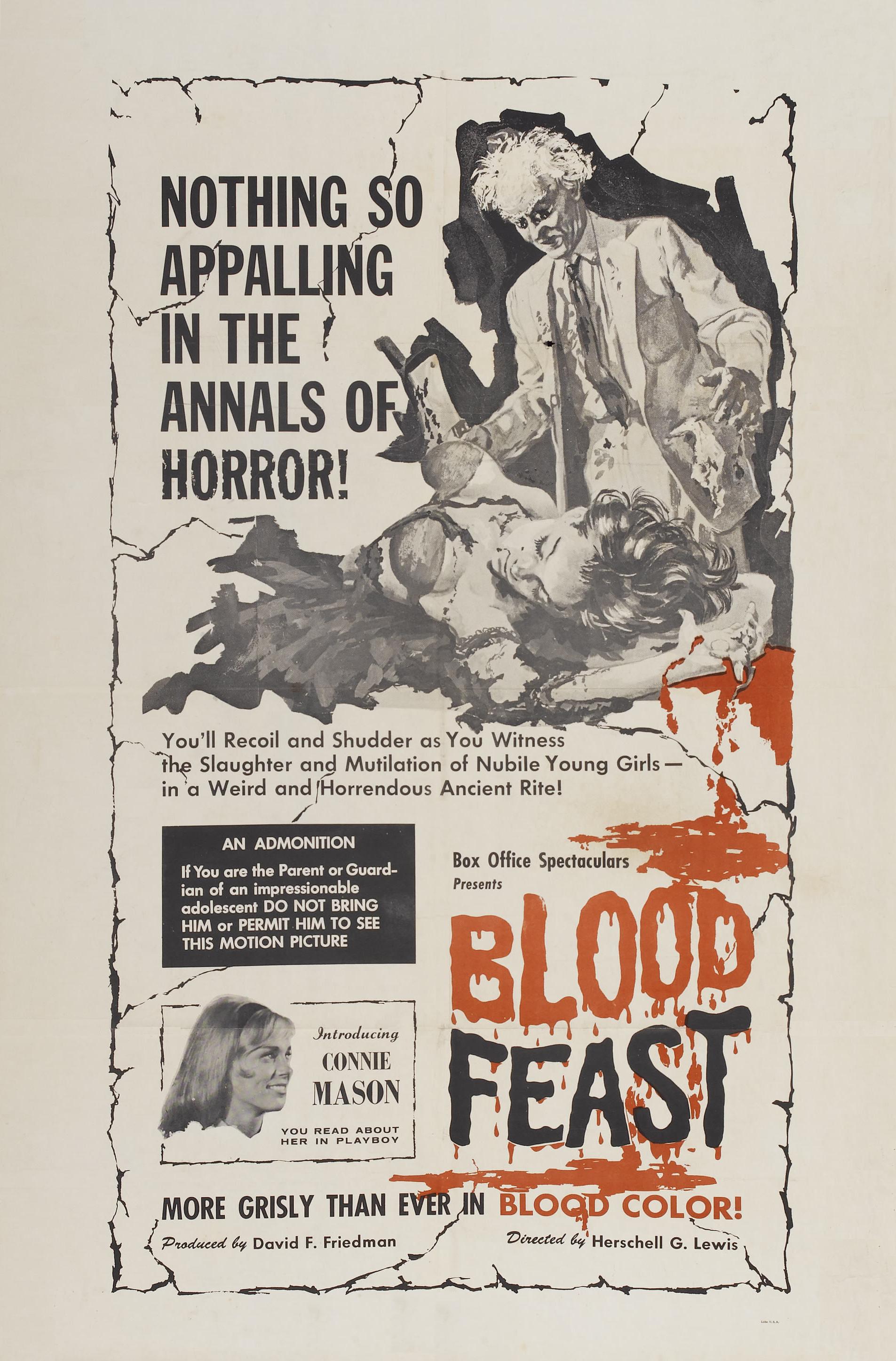
Herschell Gordon Lewis is often referred to as the Grandfather of Gore. He was the first filmmaker to make a truly bloody movie, at a time when the likes of Psycho and The Birds were shocking mainstream audiences with their relatively bloodless terror. While nowadays we’d think nothing of a horror film where someone dies a bloody death, in 1963 it was a shocking sight.

It’s surprising then to see just how far Blood Feast goes, considering many credit it as the first ever gory movie. Eyeballs are stabbed, tongues and hearts are pulled out and heads are bashed in, leaving brains scattered on the floor. The effects aren’t very convincing (the blood is the reddest thing you’ll ever see) but it’s probably a good thing because it makes the film more entertaining. Had it had the realism of something like Saw or Hostel it would have been disturbing rather than enjoyable.

That's no way to do your lipstick, you daft mare

The plot’s fairly kooky. Ramses is an Egyptian caterer who has been asked by a wealthy woman to provide an Egyptian-themed feast for her daughter’s birthday party. Ramses is happy to help, mainly because he’s been killing lasses left, right and centre to prepare for an ancient Egyptian ritual in which he wants to bring an Egyptian goddess to life, and he reckons the party will be a great time to do it.

Despite the gore effects, the most entertaining aspect of Blood Feast is the bad acting. And when I say it’s bad I mean it’s absolutely atrocious. From the killer’s terrible accent and seeming inability to say a sentence properly (not to mention his laughably bizarre silver hair and eyebrows) to the mother of one victim who sound like she’s laughing when she cries, the performances are incredibly terrible. By far the worst/best of the bunch though is the chap playing one victim’s boyfriend, whose abysmal attempt at showing grief makes him possibly the worst actor I’ve ever seen. Here, see for yourself (if you think he’s bad at the start, wait until you see him when the police turn up):

The script’s great too. From the unfortunate euphemisms (talking about the murder case, one detective tells his partner “well Frank, it looks like one of those long, hard ones”) to some truly bizarre reactions (“Ramses was the killer we’ve been looking for, Mrs Fremont.” “Oh dear, the guests will have to eat hamburgers for dinner”) there are plenty of chuckles to be had.

Blood Feast is well worth seeing for a laugh, and at a brisk 68 minutes it won’t take up too much of your time. The gore is satisfying if unrealistic, but the acting is so bad that you’ll be laughing too much to care.

HOW NASTY IS IT? – I can understand how it would have been considered nasty back in the day but given how horrifiying the likes of Saw are these days this is laughably tame by comparison now.

AVAILABILITY – It’s now available uncut in the UK, but it’s out of print. There’s an uncut American disc which is region-free (so it plays on UK players), is cheap (about a fiver) and has good extras. If you fancy it then you can click here to buy it from Amazon UK and I’ll get 40p or something for recommending it. So not only can you enjoy a laughably bad film, you can also help me rob Amazon of some of the profit. Finally, as ever, here’s the trailer:

The Ring Virus (1999)

Director: Dong-Bin Kim

Starring: Eun-Kyung Shin, Doonah Bae

“The time has passed! We are winner the game!” (Choi, The Ring Virus)

You’re probably aware of The Ring, the American remake of the Japanese blockbuster Ringu, but before that Korea had a crack at it with The Ring Virus, a film that is interesting if a little disappointing.

The plot is similar to that of the original version of the film. A female journalist decides to investigate the deaths of four teenagers who mysteriously died at the same time. It emerges that they all watched a strange video tape exactly seven days before their deaths. Intrigued, the journalist watches the tape (as does her ex-lover and her daughter) and thus begins a race against time to solve the tape’s hidden secret.

Obviously being a Korean film the character names have changed. Female Journalist Reiko Asakawa/Rachel Keller is now Sun-ju, her ex-husband Ryuji/Noah is now Choi Yeol and the creepy Sadako/Samara has been renamed Eun-suh. Replace the annoying too-smart-for-his-own-good son with an annoying too-smart-for-her-own-good daughter and your Korean remake is complete.

Bob wasn't a fan of Vanessa Feltz's Playboy photoshoot.

The whole film gives off a strangely calm vibe, as if your death at the end of your seven-day deadline isn’t actually that bad. Whereas Ringu/The Ring had corpses with faces displaying either sheer terror or grotesquely warped features, the dead folk in The Ring Virus seem to just sit there bored.

The characters are also ultimately unlikeable. In Ringu, Ryuji (the main male character) doubted the existence of the tape but took little persuasion to be convinced, and in The Ring, Noah didn’t believe it until he saw himself smudged in a security camera, The Ring Virus has Choi Yeol, the most annoying prick in the history of film. I don’t care if he is the hero male, I will never like this man.

A trick like this will make you the life and soul of any party.

The Korean version of the cursed tape looks like shit (however the accompanying sound effects are excellent, much better than the “bees” sound from the Ringu tape and the sound of Samara singing in the US remake tape. It also stays faithful to the book by providing a message at the end that says “if you watch this tape, seven days later you will die. To prevent the curse you must…” with the end taped over by a TV programme. While that happened in the book, the Japanese and US film versions left it out.

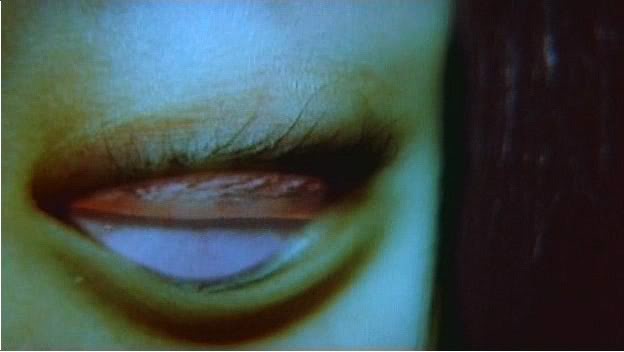
The ending of the Japanese film is also intact, and is actually handled slightly better until the bit where the ghost shows the “eye”. You know that trick where someone turns their eyelid inside out? That’s all they’ve really done here. It really isn’t horrific in anyway and instead of being a great ending to a interesting film it ends up as a weak ending to a boring film that’s badly acted on top of it.

"Don't worry, I'm sure they'll make another Alvin & The Chipmunks film".

Basically, the whole film lacks emotion. Even as the final famous death takes place, the victim does not look scared for his life. Instead, he seems somewhat bored with the whole thing and is probably imagining what his next TV or movie role will be (and judging by the quality of his acting throughout, he’d be lucky to star in a tampon commercial).

In all, The Ring Virus is an adequate and by-the-books attempt at adapting the Ringu storyline, but when you have a book and two films out there that do the same job infinitely better, this really isn’t worth wasting your time with. It’s worth a watch if you’re interested in seeing a different take on the source material, but of the three versions of The Ring this is by far the weakest.

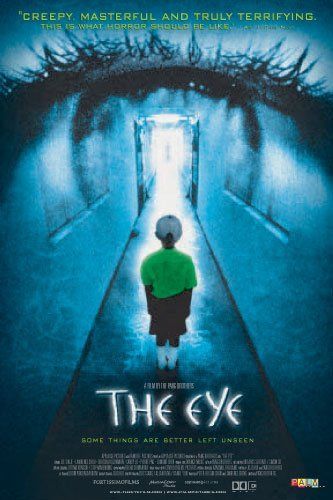
The Eye (2002)

Directors: Oxide & Danny Pang

Starring: Angelica Lee, Lawrence Chou

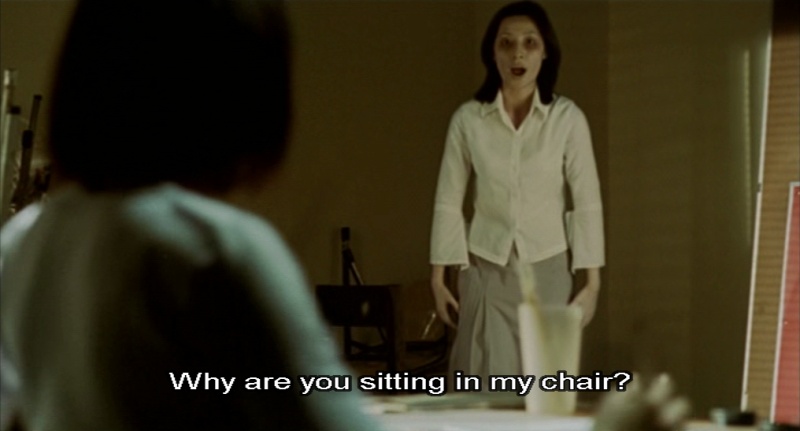
“Why are you sitting in my chair?” (mental scary ghost, The Eye)

Poor old Mun, she’s blind as a fucking bat. Her luck soon changes though when she’s given a cornea transplant, finally allowing her to see the world. Problem is, she’s seeing it through the eyes of some psycho bint who claimed she could see ghosts, then hung herself because nobody liked her. Cue a lot of scary set-pieces as Mun tries to figure out exactly what’s going on and learn a bit more about the nutter whose eyes she’s been lumbered with while being mercilessly abused by numerous ghosts.

Forget an eye transplant, it’s a new arsehole you’ll be wanting after you’ve seen this. There are a number of memorable scenes in this film that are so pant-crappingly creepy I couldn’t even begin to describe without thinking about them and instinctively tightening the old bumcheeks. And even if I could describe them safely without fear, I wouldn’t dare for fear of wasting the surprise. Needless to say, if you’ve already seen the film, all I need to do is give a list of words and each one should send a chill down your spine.

Elevator. Meat. Calligraphy. Report Card. And, if you’re perceptive and noticed it, train.

Similarly, a number of sentences that would sound normal under any other circumstances now have different connotations after seeing The Eye. Nobody can say to me “I’m freezing” or “why are you sitting in my chair” any more without me going crazy and wildly swinging a stool at them. Let’s not beat about the bush – assuming you’re using the correct horror-viewing formula of “no lights + maximum sound”, The Eye is one extremely scary film.

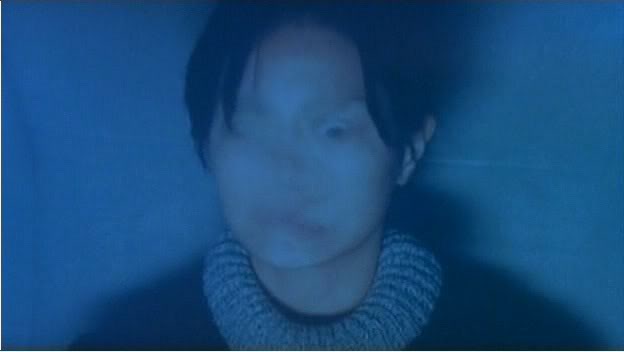
It’s got quite a few jumpy moments, two of which happen before the film even starts (the intro burns out as if the projector has broken, then there’s a loud bang and you see a faceless version of the heroine. Then there’s a loud scream and an evil red face booms onto the screen followed by the warning “SIT TIGHT”). The majority of the frights, however, take place in the first half of the film. Once Mun realises what’s going on, the rest of the film becomes more of a mystery story as she and the hapless geek Dr Wah run all over Asia trying to find out about her eye donor. This is a shame because it’s this second half where the film starts to fall apart a little. The final fifteen minutes then try to go more for a big action-packed finale, but it doesn’t really suit the mood of the film.

Mere seconds later in this scene something happens that makes you shit yourself.

That aside, The Eye contains one of the scariest scenes I’ve seen in a very long time. Many people reviewing this film online have referred to the now famous elevator scene, which is certainly very tense, but by far the scariest scene, especially when watched at a deafening volume with the lights out as I first watched it, is the scene in which Mun, having recently regained her sight, takes a calligraphy lesson to learn how to write properly. I won’t say any more about it but needless to say, I have not been terrified like that for quite some time.

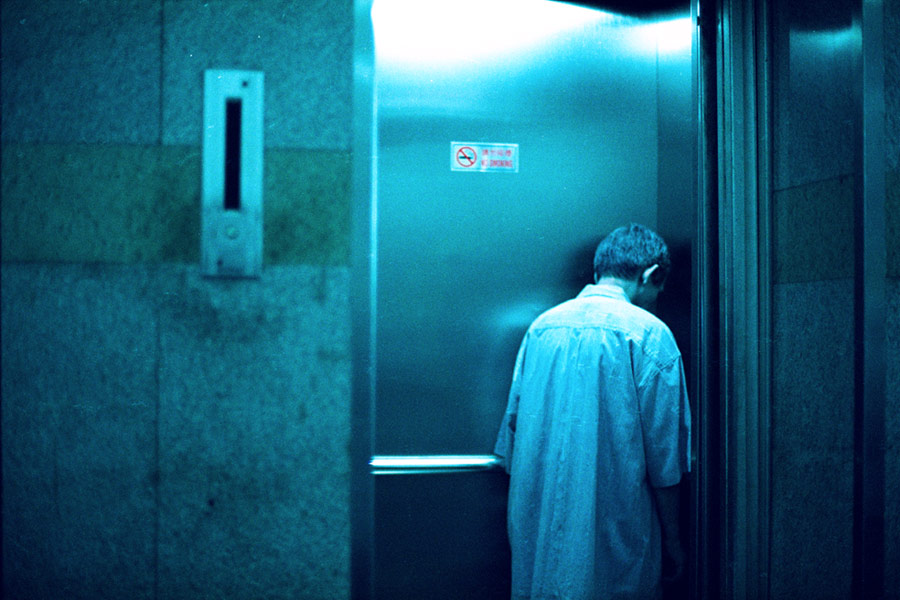
Do not, under any circumstances, go into a lift if you see this chap.

The soundtrack is a bit of a mixed bag, because there are some moments when it’s absolutely terrible (such as the scene where Dr Wah thinks Mun’s sister is hitting on her), but whenever a ghost turns up and the tension builds there’s a little musical sting which also builds in tension and volume as the ghost approaches (check out the scene with the woman and child ghost entering the restaurant with the meat to see what I mean… as she approaches, the music swells). So while the music is great at some points, it’s ridiculously cheesy and shite at others.

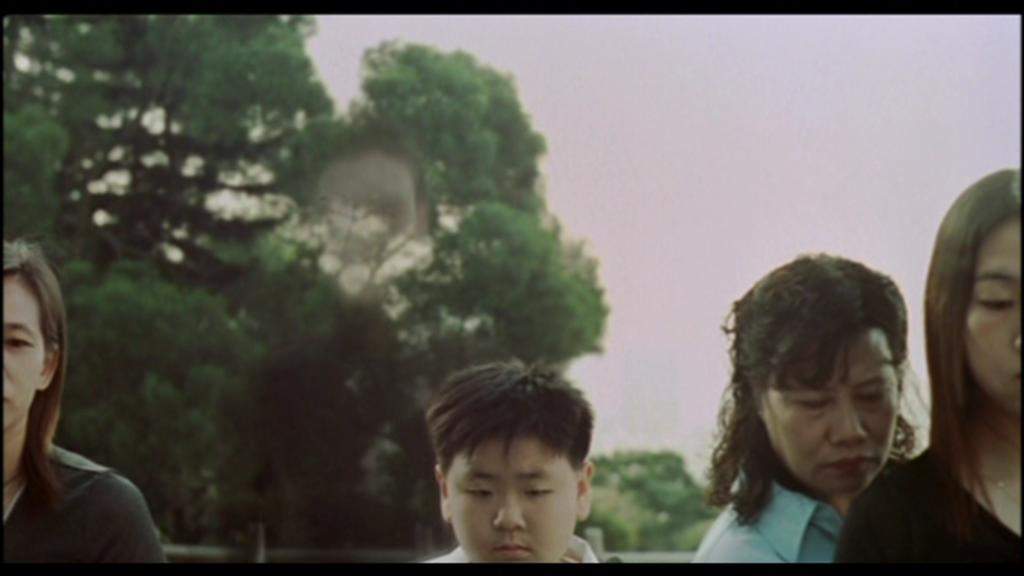
By far the cleverest thing about The Eye however is its biggest secret, something that the film doesn’t even address. There are actually ghosts hidden throughout the film. Some of them are pretty obvious as they’re part of the plot (the woman in the hospital, the calligraphy ghost etc), but others you won’t see unless you look for them. They’re tucked away in the background and you may only acknowledge them on a subliminal level.

Awww, here's a lovely scene in WAIT A FUCKING MINUTE WHAT'S THAT FACE IN THE WINDOW

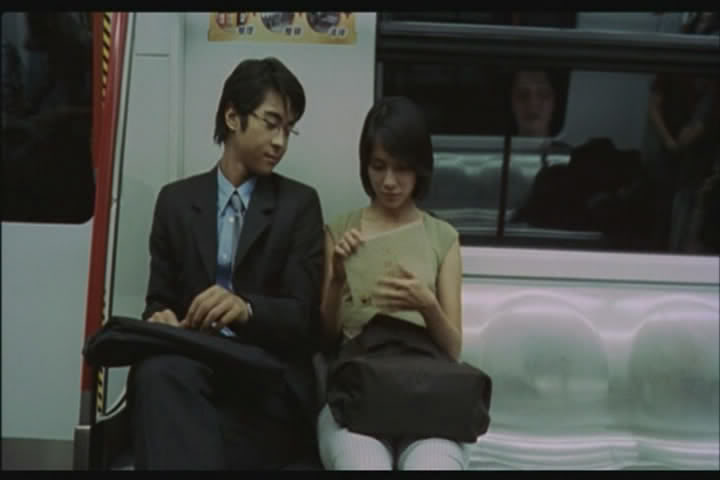
Perhaps the most effective example of this, and one that will send a shiver down your fucking SOUL should you happen to spot it unexpectedly like I did, is during the scene where Mun and Dr Wah are sitting on a train (the scene where Mun looks at the photo of her and Ying Ying). When the train enters a tunnel the face of a ghost can be seen in the window.

Since the ghost isn’t mentioned again and there isn’t a big deal made about it, it’s perhaps the most chilling moment of the film for me. It’s particularly effective when you watch the film with a group of friends and they didn’t notice it. Just rewind the film after you’ve watched it and freak the shite out of them.

The Eye is a great film that I’d thoroughly recommended. While the final act fails to live up to the rest of the film, the use of some terrifying scare scenes, a lot of good ghost appearances and a plot that can actually be followed (something that is often lost in translation with Asian films) make for an excellent fright flick that you really should see now.

Video Nasties: progress update

As you can tell if you glance to the right-hand side of this blog (and if you can’t see anything, click the blog title at the top to get to the home page and see the right-hand column), I’ve conveniently listed all 72 “video nasty” films that were banned by the Director of Public Prosecutions in the UK.

This charming chap is from Zombie Flesh Eaters, which is one of the first nasties I'll be reviewing (probably next week at some point).

As I’ve said in a previous post, this blog was initially set up for two reasons: to review horror films and more off-the-wall non-horror films, and as a checklist where I can watch and review all 72 video nasties.

I’ve been gathering them for a few weeks now and I now have around 50 of the 72 films, with the aim of having them all by the end of the month. As I watch them and review them, I’ll fill in links to their reviews on the list so that, eventually, the whole list will consist of 72 orange links to reviews, at which point I’ll have done what I set out to do and all will be well with the world.

Of course, once I’ve reviewed them all the blog won’t die, I’ll continue to review non-nasty films to keep things interesting.

Battle Royale II: Requiem (2003)

Directors: Kinji Fukasaku, Kenta Fukasaku

Starring: Tatsuya Fujiwara, Ai Maeda, Riki Takeuchi

“The thing people fear most isn’t dying, it’s being forgotten.” (Kitano, Battle Royale II)

I went into Battle Royale II desperately worried that I wouldn’t like it. All I’d heard from the (limited) number of reviews from the lucky people who had seen it at film festivals and the like was that it was a terrible film that embarrassed the honour of the original. As I love the original film to death, therefore, a shit sequel would have devastated me. As it was however, there was no need to worry: while it’ll never be as good as the original, Battle Royale II is an enjoyable film from start to finish.

Set three years after the first movie, the survivor (I won’t spoil who it is in case you haven’t seen it) has set up the terrorist group Wild Seven, in an attempt to bring down the adults of Japan. Wanted for a large-scale terrorist attack (suspiciously reminiscent of September 11) in which two towers in Japan are blown up, the Wild Seven terrorist group escape and take refuge in an offshore island. The Japanese government quickly passes the “Battle Royale II” Act, and another class of ninth graders is randomly selected to take part. This time the rules are different: instead of killing each other, the class of 42 must travel to the island where Wild Seven are hiding and kill the previous survivor. Once he dies, the game is over.

I was glad that they kept a number of key qualities and properties from the first film that made it so appealing: the dramatic orchestral soundtrack, the innocence of the children, the evil teacher that explains the rules while killing some slackers at the start to show it’s not a game, and the famous death count (the message at the bottom that comes up after a death saying, for example, “Boy #7 Yoshitoki Kuninobu dead. 41 to go”).

Instead of taking away many of the original’s qualities then, Battle Royale II instead builds on them with new rules. The boys are now paired with their correspondingly-numbered female classmates on the class register, and their explosive collars are linked. So if Boy #1 (Aoi Takuma) dies, Girl #1 (Asakura Nao) will find her collar is beeping. After 30 seconds or so it will explode, as in the first film, and you can forget all about her. This also happens when partners stray 50 metres from each other so if you and your partner don’t stick together you’ll be sticking to the walls instead.

This addition to the rules is cleverer than you would initially think. Not only does it allow for spectacular set pieces and forced teamwork, it also kills the “nameless” characters twice as quickly, leaving us with the important ones earlier on in the film, therefore giving us more time to relate to them and find out more about their personalities. While the original film had a wide variety of interesting characters, most of the pupils in the sequel are fairly generic so their quick removal is no big loss.

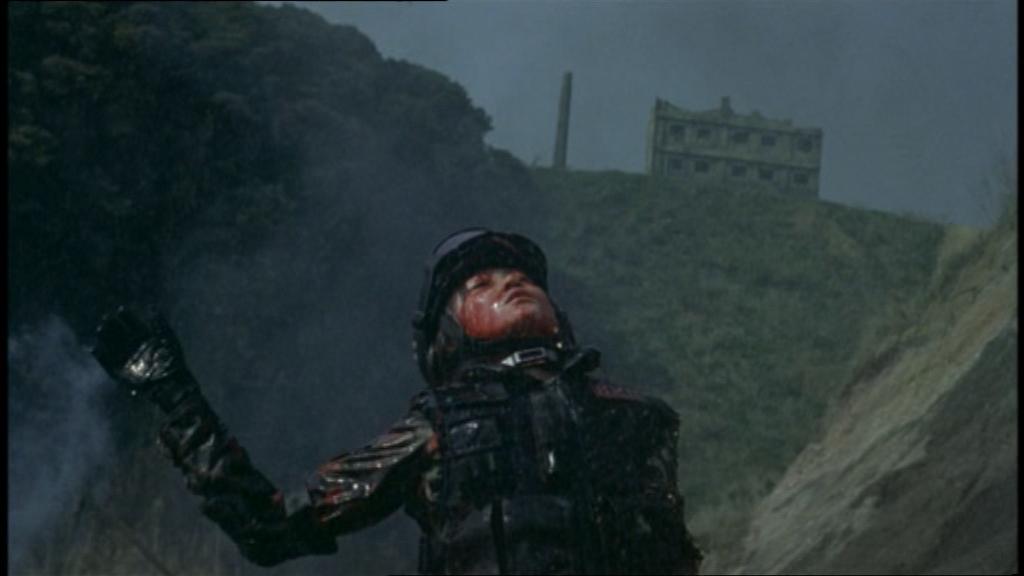
Despite the similarities to the original however this is a very different film, which becomes clear about 25 minutes in when the pupils storm an island on a boat Omaha Beach style, at which point 12 of them are killed in one go. There’s no methodical one-at-a-time chipping away of the pupil list here, and by about the half-way point of the film the whole concept of the Battle Royale game has been practically abandoned and it becomes more of a war movie with the students teaming up with the Wild Seven terrorist group and swarms of adult special forces soldiers coming in and getting gunned down in huge numbers. The whole second half therefore has a feel very different from that of the original film, and though it may not be to everyone’s tastes, it cannot be denied that Battle Royale II is far more action-packed than its predecessor.

Many were worried by the death of director Fukasaku shortly after production began and the decision to hand the rest of the film over to his inexperienced son. However, much as I hate to say it (because I respected Fukasaku’s work) this film blows the original out of the water in terms of visual style and camera work. The battle scenes are fantastic, with the erratic camera movements perfectly conveying the unpredictability and confusion of war. These scenes have a gritty, almost documentary-like feeling to the action, making it much easier to believe the students’ fear.

It even outdoes the original in the ‘mental school teacher’ role, thanks to Takeuchi Riki and his over-the-top performance. In any other film this guy would be considered ridiculous (see Takashi Miike’s gangster film Dead Or Alive, in which he pulls a gem out of his chest and causes the world to explode, to see what I mean), but in this he seems suited to the role as a teacher gone mad. Add to that cameo appearances from Takeshi Kitano (the original teacher), the girl who played Noriko from the first film and even the little smiley girl with the doll from the original and you’ve got a fantastic film for fans and Battle Royale virgins alike.

I warn you though that, from what I can tell by online opinion, I’m very much in the minority when it comes to this sequel. Many others think this is a dismal film and a rubbish follow-up to a classic original. Whether that’s because they were expecting more of the same or it just didn’t click with them isn’t known, but it’s worth bearing in mind that just because I like it doesn’t mean it’s any good. I do like some proper shite, after all. All I’m saying is watch it, but don’t spend a lot of money to do so.

(Note: the trailer below spoils who survived in the original film)