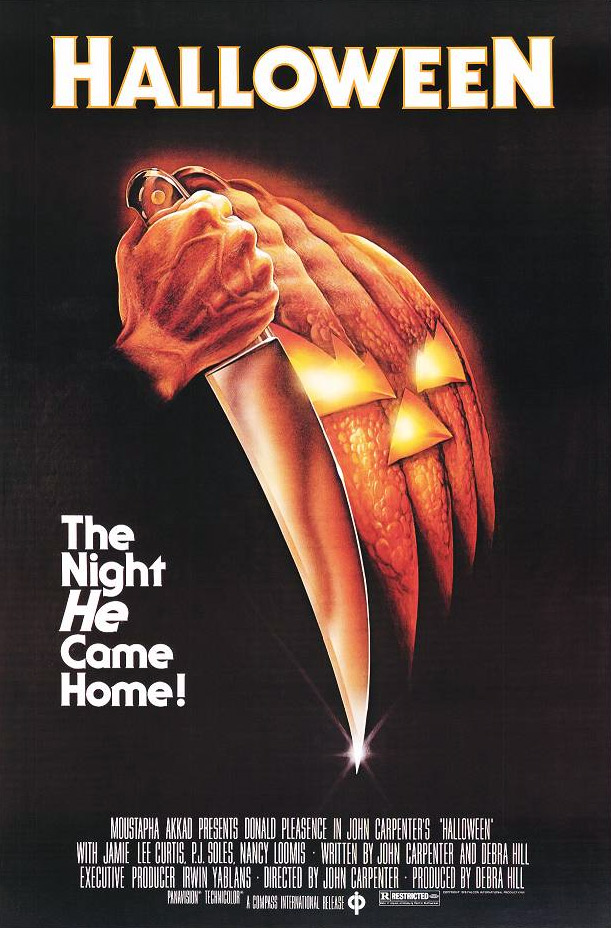
Halloween (1978)

Director: John Carpenter

Starring: Jamie Lee Curtis, Donald Pleasance, PJ Soles, Nancy Loomis

“I spent eight years trying to reach him, and then another seven trying to keep him locked up because I realized what was living behind that boy’s eyes was purely and simply evil.” (Dr Loomis, Halloween)

There are a sacred handful of films that will forever be considered horror classics, films that revolutionised the genre and influenced the creation of countless others that followed in its wake. Look inside the wallets of Night Of The Living Dead, Psycho, The Exorcist and The Texas Chain Saw Massacre and you’ll find they’re all card-carrying members of this elite club, but John Carpenter’s Halloween was the one who went to the printing shop and had the cards designed. Shite metaphors aside, the influence Halloween had on horror is one that continues to this day, largely because it was the first film to successfully introduce the slasher genre to the mainstream public.
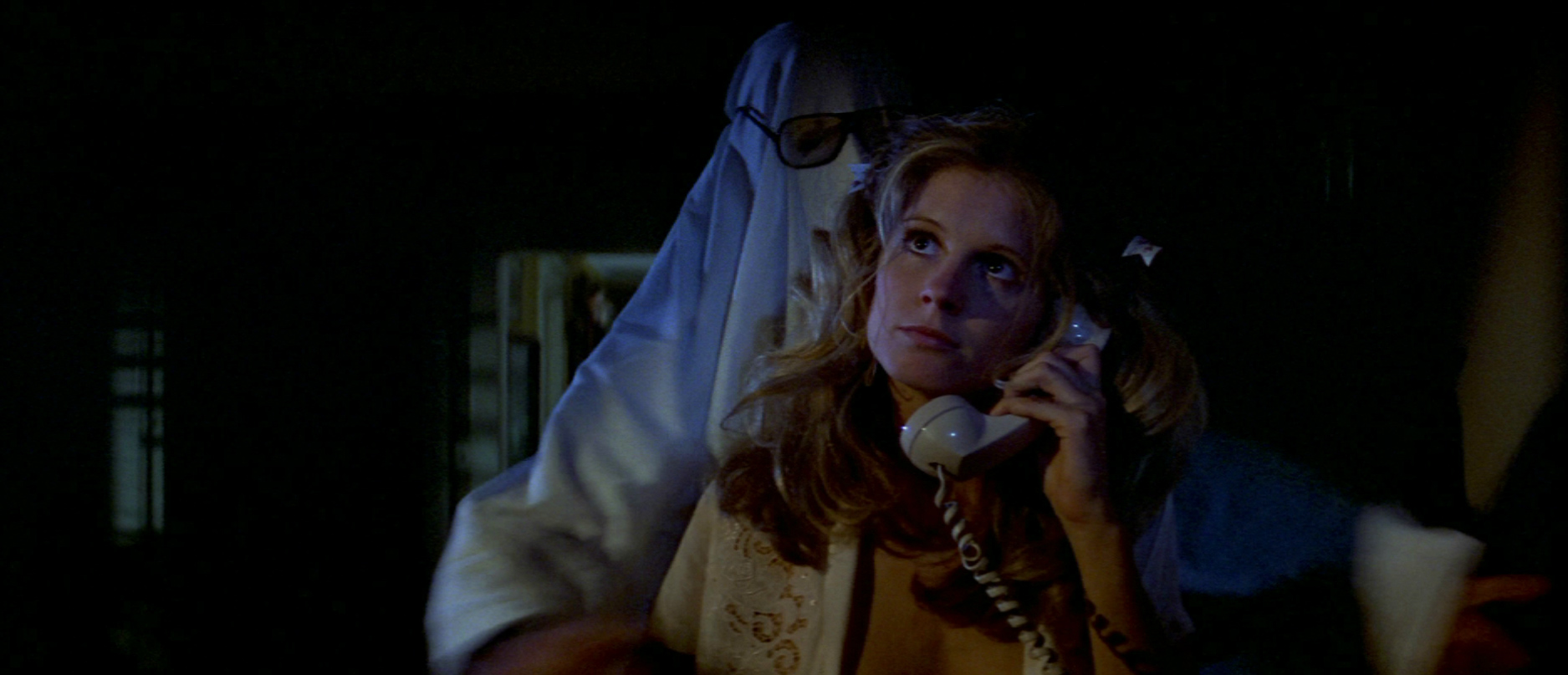
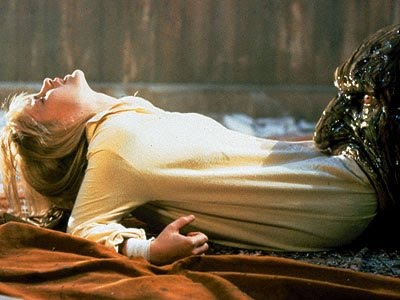
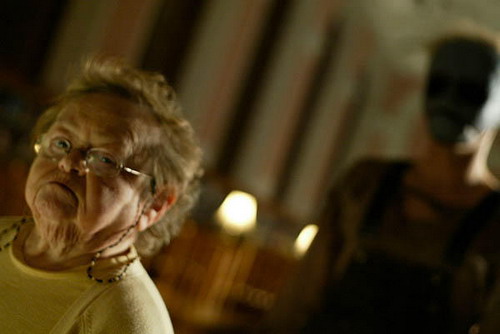
Woody Allen wasn't very inconspicuous when he tried to be a ghost

While it’s often wrongly credited as the first ever slasher movie (the likes of Black Christmas, The Driller Killer and The Texas Chain Saw Massacre came before it), there’s no denying that Halloween was the first to nail it and the one that would inspire the endless stream of low-budget slashers that followed it (a stream that would flow right through to the present day). Its simple premise – a babysitter stalked by a faceless, unstoppable killer – made it easy for the viewer to relate and as such made it terrifying to the teenage audiences that came in their droves to see it. Simply put, Halloween changed horror cinema forever.

It tells the story of Michael Myers, a young boy who suddenly snaps one Halloween. Putting on a clown mask, Michael grabs a kitchen knife and goes upstairs, stabbing his older sister over and over. When his parents get home and find that young Mike’s turned his sister into a human colander, he’s sent to a mental asylum for the rest of his life.

That lamb vindaloo was coming back on young Michael. That's right, we make jokes about boys shitting themselves here

Naturally, someone sitting in a cell of 90 minutes would make for a fairly shit movie, so Michael (now aged 21 when we catch up with him) has the common courtesy to escape the asylum and head back to his home town of Haddonfield to raise some hell again.

Halloween is bloody impressive given its shoestring budget. Jamie Lee Curtis and the actresses playing her friends had to go to a charity shop to buy their own outfits, director John Carpenter also composed the music on a cheapo piano and synthesiser, the cast are complete unknowns (other than Donald Pleasance, who plays Michael’s doctor Sam Loomis) and there isn’t a special effect to be seen throughout. Yet despite (or perhaps because of) this, it’s one of those rarities – a horror film that remains genuinely scary more than 30 years later.
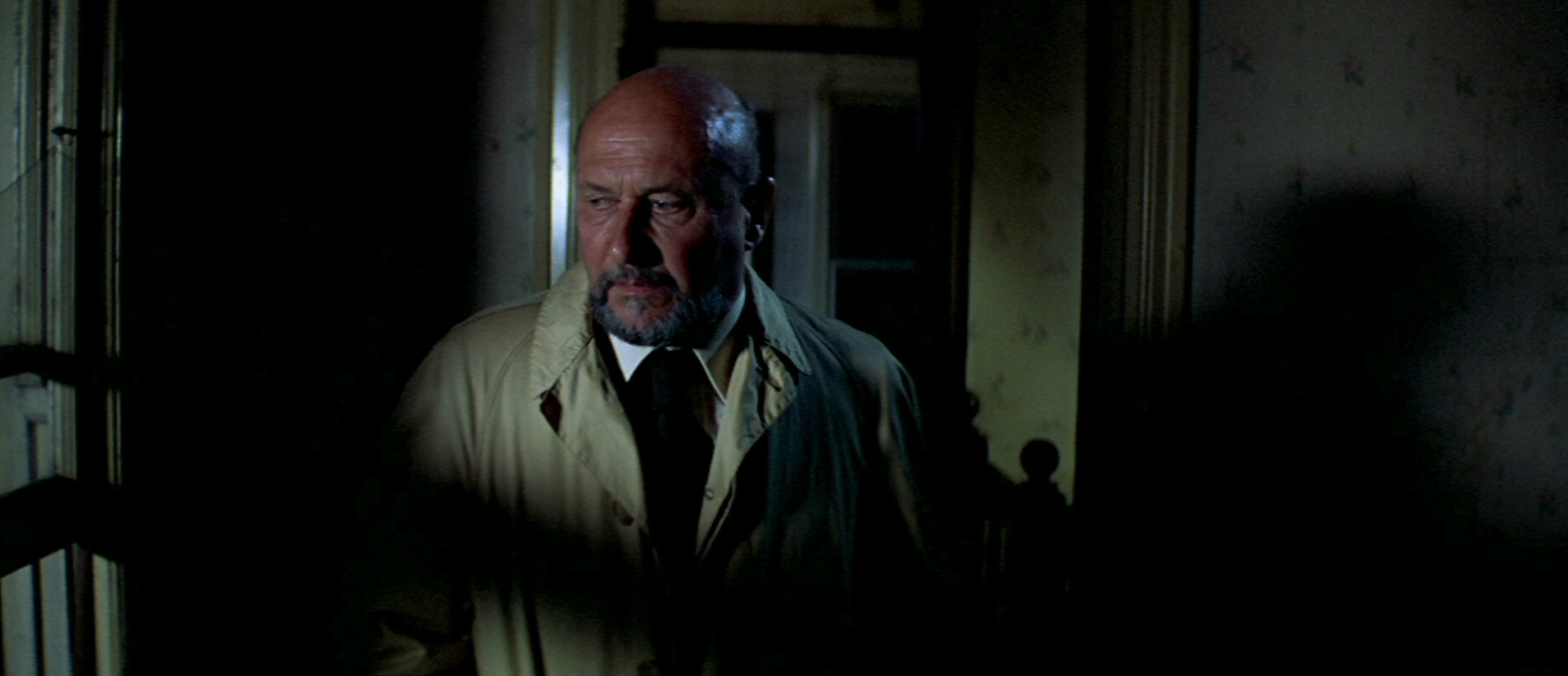
The awesome Donald Pleasance would appear in five Halloween movies in total

Michael Myers is the perfect bogeyman. With his expressionless white mask (a painted William Shatner mask, incidentally) it’s impossible to tell what he’s thinking. He doesn’t just kill like Jason or other slasher villains do, he stalks his prey, watching them and waiting for the right moment to attack, catching them off guard then studying how they react as they die. He’s chilling.

Even his mere presence in the background is enough to cause a fright, a fact taken advantage of by John Carpenter’s clever direction. During some indoor scenes there are occasional subtle glimpses of the white mask outside the window as he stands in the darkness. This keeps the audience on edge and puts them in the odd position of actually hoping to see complete darkness outside. What other film makes its viewers NOT afraid of the dark?

"I really need to get this wardrobe fixed"

Halloween may be near-perfect but there are one or two tiny elements that make it fall just short. While the young Jamie Lee Curtis is fantastically believable in the lead role of Laurie – giving a real girl-next-door feeling that greatly adds to the film’s authenticity – and PJ Soles is funny as her friend Lynda, the same can’t be said for the third member of the group, Annie (played by Nancy Loomis). She’s so wooden they might as well have put a charity shop skirt on a table and wheeled it alongside the other two, and while her character’s fairly unimportant in the grand scheme of things, she’s the sole reminder that we’re dealing with a low budget film here. Her stupidly hammy facial expressions during her strangulation scene are ridiculous, cheesy garbage and as a result she ruins what should have been a classic moment in horror cinema.

This is made up for by the amazing Donald Pleasance, who steals the show as Dr Sam Loomis. The only real star in the film, Pleasance only signed up for the movie because his daughter was a big fan of Carpenter’s previous movie, Assault On Precinct 13, but it’s a good job he did because it’s difficult to imagine anyone else in the role.

While it could be argued that the point of film reviews is to give opinions on – among other things – the likes of plot development, to say much more about Halloween would be to spoil it. It’s the sort of film where, if you’ve been lucky enough to come this far without finding out what happens, you should track it down as soon as possible and enjoy it. All you really need to know is that it’s a true horror classic and is essential viewing for any fan of the genre.

WHERE CAN I GET IT?
There are loads of ways to get Halloween so here are a bunch of links:
UK DVD

UK Blu-ray
UK DVD box set (Halloween 1-5 and H20)
US DVD
US Blu-ray

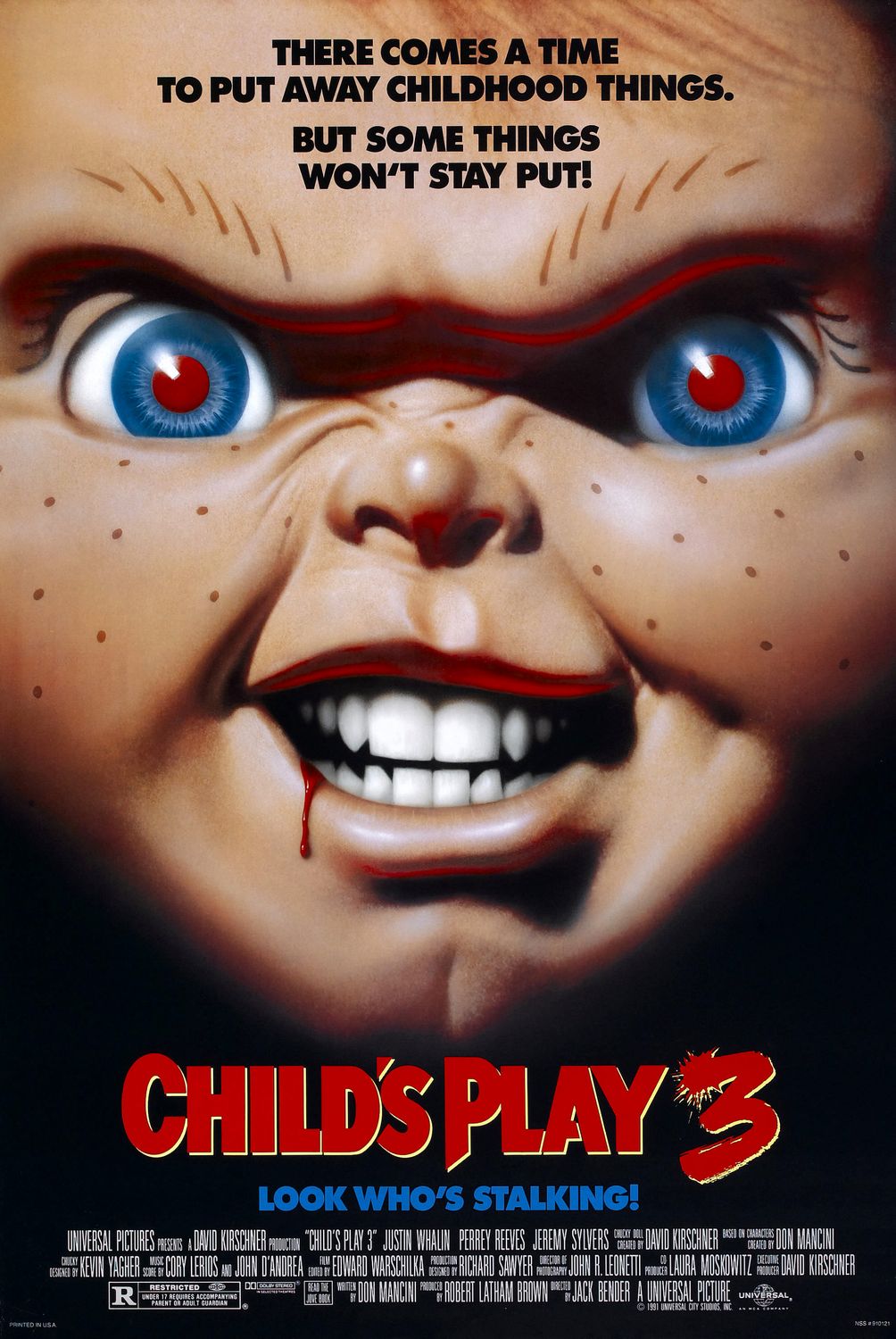
Child’s Play 3 (1991)

Director: Jack Bender

Starring: Justin Whalin, Perrey Reeves, Jeremy Sylvers, voice of Brad Dourif

“You know what they say, you just can’t keep a Good Guy down.” (Chucky, Child’s Play 3)

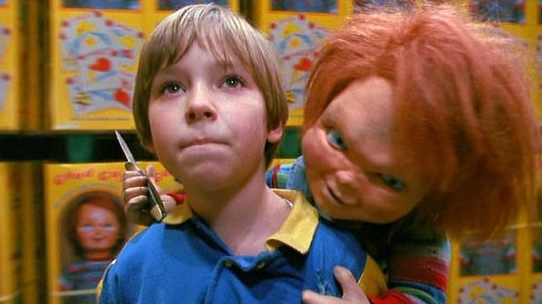
It’s ironic that the worst film in the Child’s Play series was the one that gained the most notoriety. After the horrible killing of two-year-old James Bulger in1992, The Sun newspaper decided to pin the blame on Child’s Play 3, claiming that the young boys who murdered Bulger had seen the film numerous times. While police would later confirm that this was completely untrue and they had never even seen it once, the damage had been done – Child’s Play 3 and its predecessors were removed from video shelves all over theUK, never to be seen again for at least a decade. Incredibly, The Sun continues to blame Child’s Play for all manner of killings, while still maintaining (in the face of police statements reporting otherwise) that it was responsible for the Bulger killings.

Mick Hucknall tried to explain that his love child looked nothing like him

Regardless, let’s move on before I go off on a rant. I’ll discuss the Bulger incident further in the future (I wrote my university dissertation on it) but for now let’s look at the “offending” article itself. Child’s Play 3 is set eight years after the second movie (even though it was only released a year later). Now aged 16, Andy has been sent to a military training camp after failing to settle in any of the foster homes he’s been to. Meanwhile, the company responsible for the Good Guy dolls has decided enough time has passed to start the production of Good Guys again, so the toy factory is re-opened and Chucky’s corpse is disposed of – but not before some of his blood drips onto the production line, causing Chucky’s soul to pass into a brand new doll. D’oh, you pesky toy makers and your piss-poor security measures.

"What? You aged eight years in twelve months? Bollocks you did"

After finding out where Andy’s based, Chucky mails himself (somehow) to the military camp so he can finally do what he’s been trying to do for so long – take over Andy’s body. When he gets there though he’s first found by Tyler, a young boy also at the camp. Since the voodoo rules state that he can only take over the body of the first person he reveals himself to, Chucky decides to take over Tyler instead. As luck would have it though, Andy finds out about Chucky’s surprise appearance and so he tries to put an end to the killer doll once and for all.

"What do you mean you don't have jam? I can't eat my toast without it"

Rather than breathing new life into the series, the military camp setting is actually detrimental to Child’s Play 3’s quality. It’s packed with tired clichés – bossy drill sergeants, “yes” “yes what” “yes sir” chat and the old “drop and give me 20” bollocks – not to mention a few lines ripped completely from Full Metal Jacket. The result feels less like an original slasher film and more like an unoriginal war movie that happens to have a killer doll wandering around.

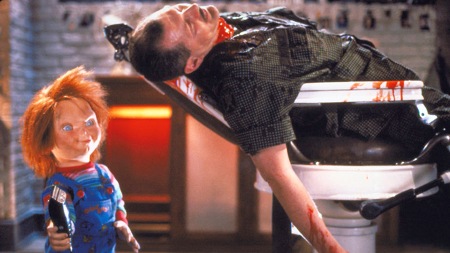
Well, that gives a whole new meaning to the phrase "cut-throat razor"

Despite this, Child’s Play 3 is actually superior to its predecessors in one aspect – the inventiveness of its kills. Whether it’s the garbage truck scene, the part where Chucky substitutes paintball pellets for live rounds or the amusing moment when Chucky doesn’t even have to do anything to cause one chap’s death, it’s certainly the most creative film in the series to date in that respect.

Child’s Play 3 is an average sequel at best. While kudos have to go to the filmmakers for at least trying something different by placing the movie in a military camp and aging Andy eight years so it’s not following the same old “doll chases young boy” routine again, the film messes up by regurgitating tired boot camp clichés and, um, following the same old “doll chases young boy” routine again with the introduction of the Tyler character. It’s a reasonable way to pass an hour and half, but of the five Chucky films to date this is the weakest of the bunch.

WHERE CAN I GET IT?
Child’s Play 3 is fairly cheap on DVD. If you live in the UK you should be able to get it for a few quid by clicking here. If you live in the US, you can get the Region 1 DVD by clicking here or get it in a box set with Child’s Play 2, Bride Of Chucky and Seed Of Chucky by clicking here.

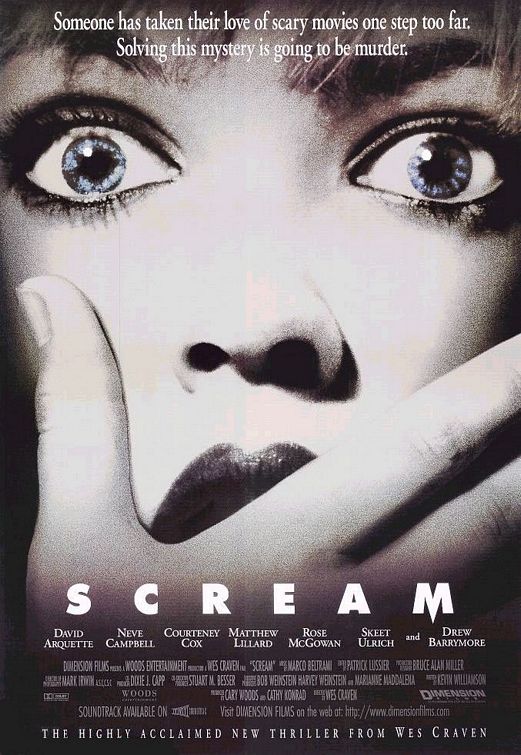
Scream (1996)

Director: Wes Craven

Starring: Neve Campbell, Jamie Kennedy, Matthew Lillard, Rose McGowan, Drew Barrymore, David Arquette, Courteney Cox

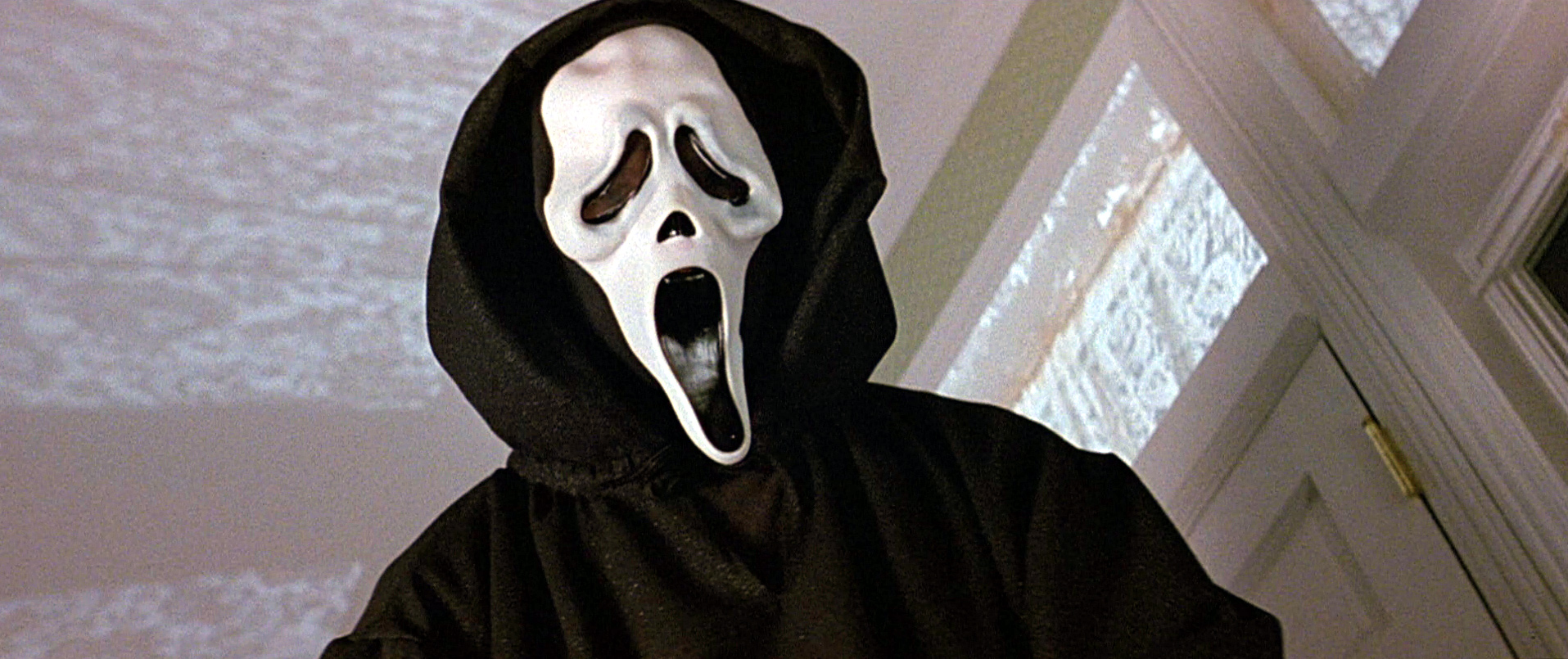
“Never say ‘who’s there’. Don’t you watch scary movies? It’s a death wish. You might as well come out to investigate a strange noise or something. ” (Ghostface, Scream)

Scream is to modern horror films what the Beatles were to rock music. Look at it now and it’s easy to forget the impact it’s had on so many of the films we’ve seen since. Nowadays almost every slasher movie has some sort of “clever” post-modern fourth wall-breaking scene where the black guy says he knows he’s going to die first, a hysterical teen screams that their situation’s “like something out of a Jason film” or someone says “we shouldn’t split up, that’s how people die in the movies”. Scream did it first, and while it’s been imitated countless times since it’s somewhat telling that Scream still does it better than most, 15 years since its release.

Mary-Kate Olsen was looking a bit rough

The film centres around Sydney Prescott (Campbell), a teenager still trying to come to terms with the murder of her mother a year ago. Her boyfriend is trying to pressure her into having sex, which doesn’t help matters, and if that wasn’t bad enough some or her fellow classmates have started turning up dead. Sydney soon realises she’s the killer’s next target, and that her mother’s murder may in some way have something to do with it. She has to find out who’s committing the murders and stop them before she ends up giving the local gravedigger overtime work.

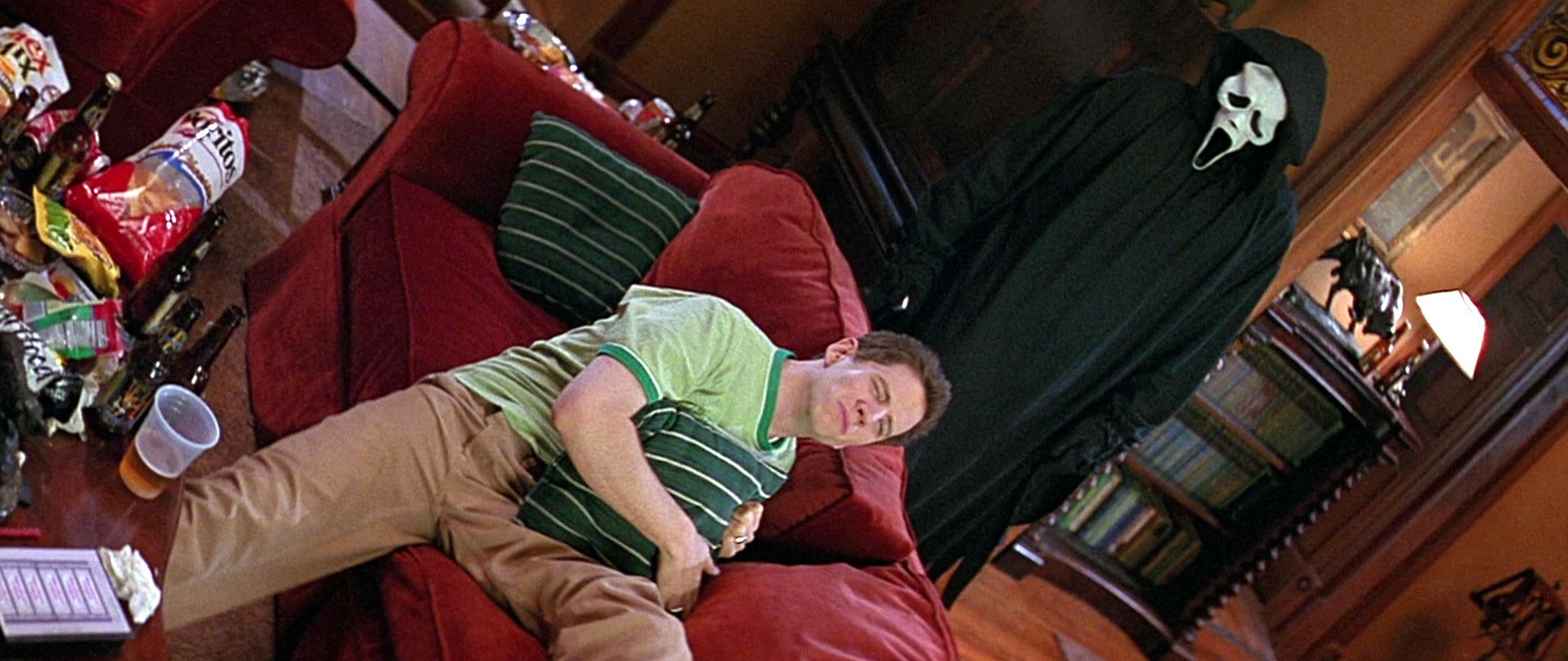
Randy didn't realise his cushion wouldn't adequately shield him from knives

The real genius of Scream lies in the character of Randy (played by the otherwise irritating Jamie Kennedy). A die-hard slasher film fan, Randy knows all the “rules” to surviving a horror film – if you have sex you die, if you say “I’ll be right back” you won’t be – and spends a good part of the film discussing with other characters who the killer may be if they were going by horror convention. While primarily paying tribute to the countless slashers that paved the way for Scream, these horror “rules” are also in a way mocking the genre for its lack of originality.

It’s perhaps no surprise then that Scream sets about breaking a lot of these rules. The girl who has sex doesn’t always die, the villain doesn’t necessarily come back to life for one final showdown and the identity of who’s doing the killings can’t really be worked out due to the numerous red herrings and double-bluffs the film chucks at the viewer throughout. While making fun of the predictability of the slasher genre, in the same breath Scream provides something truly unpredictable.

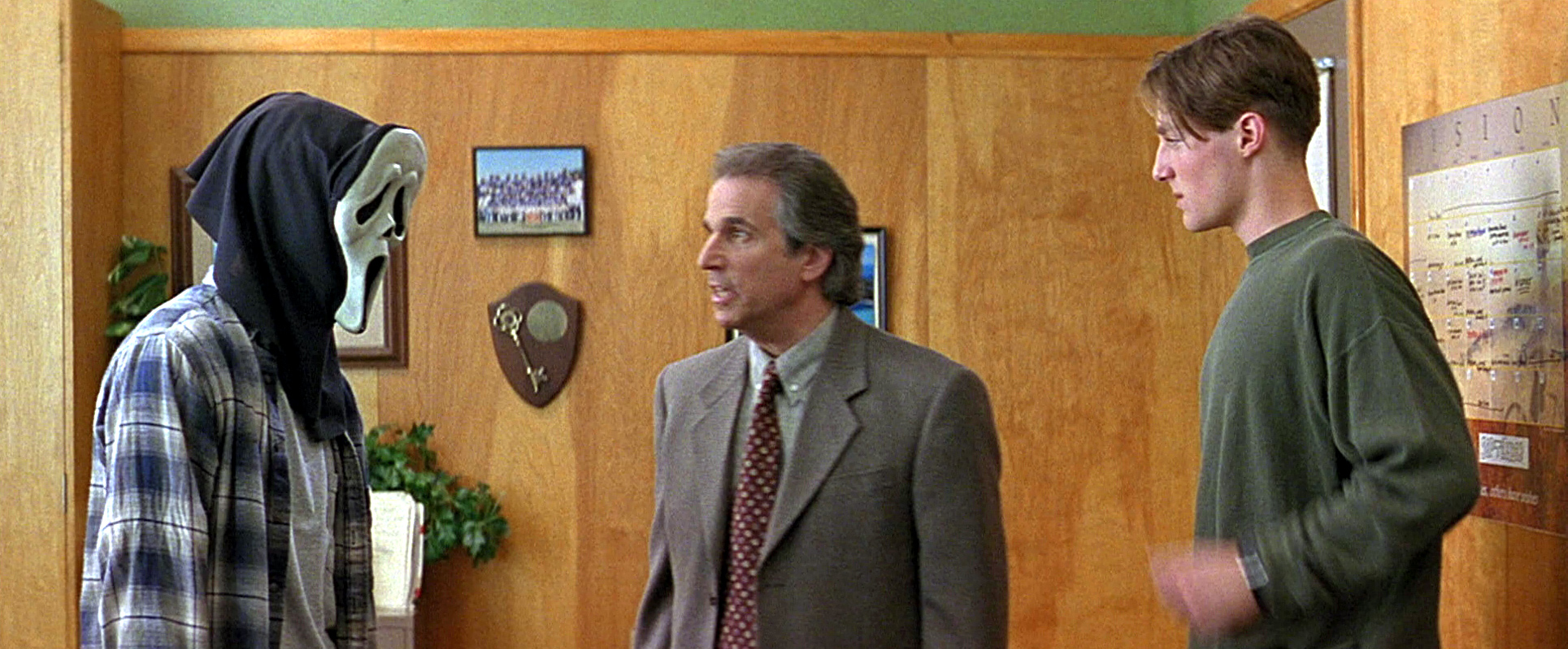
The latest Gillette advert was a tad strong

There’s no way of guessing who’s killing everyone or what their motive is, and with the death of top star Drew Barrymore right at the start of the film (a nod to Hitchcock’s Psycho, which also killed off its star early on to throw audiences) it’s difficult to know for a fact who’s going to survive either.

Drew’s death isn’t the only knowing wink to the horror classics. John Carpenter’s Halloween constantly plays on a TV in one house during the film’s final half-hour, with many of the goings-on in the house mirroring the action on the telly.

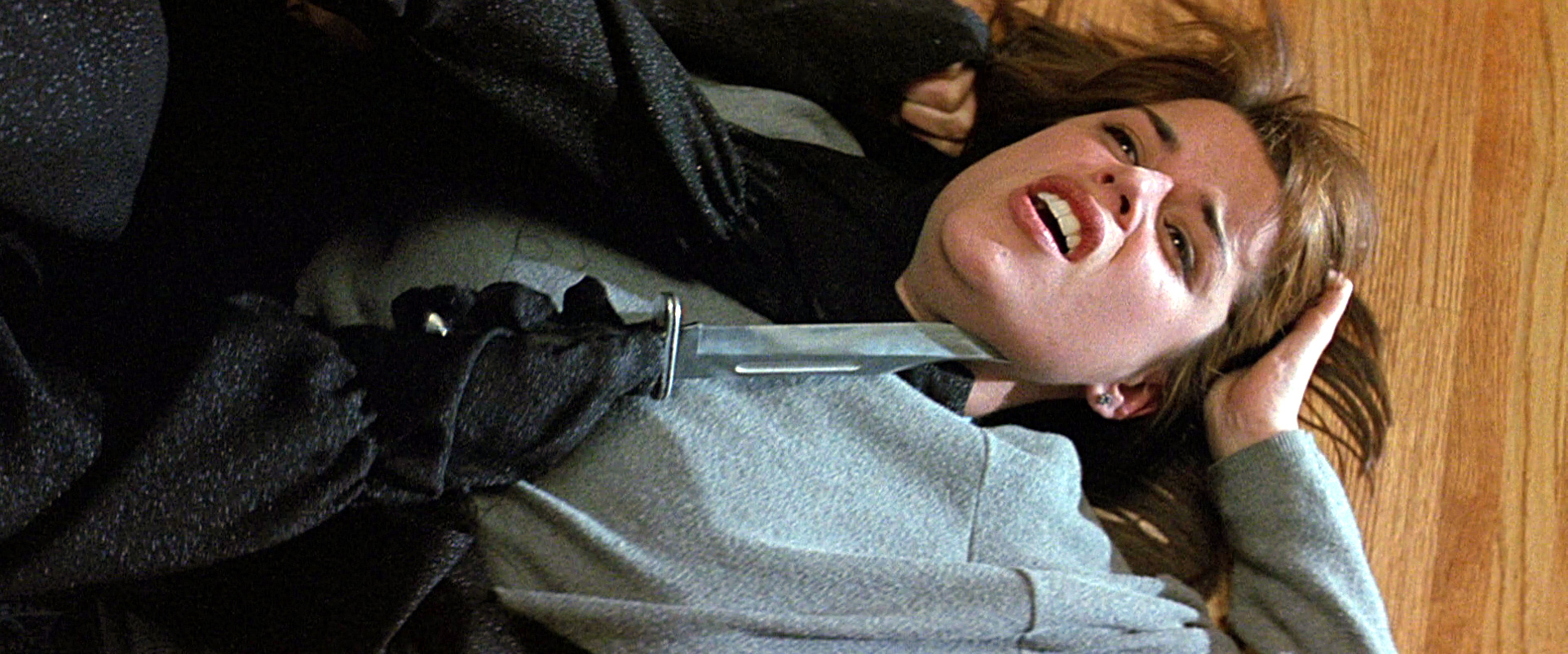
"Miss Olsen, we're taking you to rehab. Eyyy"

More subtle moments include a brief cameo from director Wes Craven as Fred, the school janitor with a striped sweater that’s oddly familiar. Another short scene sees Sydney getting hassle from a news reporter played by none other than Linda Blair (Regan from The Exorcist), complete with huge crucifix earrings. They’re cheeky little moments that, while unnoticed by mainstream audiences, reassure horror fans that Scream is really a love letter to their favourite genre.

While it may not necessarily be the case nowadays thanks to its many imitators, at the time of its release Scream was a breath of fresh air in a genre suffocating itself with a plastic bag of predictability. It may have lost some of that impact 15 years later but it’s still a great slasher film that should entertain from start to finish.

WHERE CAN I BUY IT?
If you live in the UK you can get Scream on DVD here or on Blu-ray here, or if you want to go the whole hog you can get the Scream trilogy on DVD here or on Blu-ray here. Americans, you can get the DVD here, the Blu-ray here, the DVD boxset here and the Blu-ray boxset here. Phew.

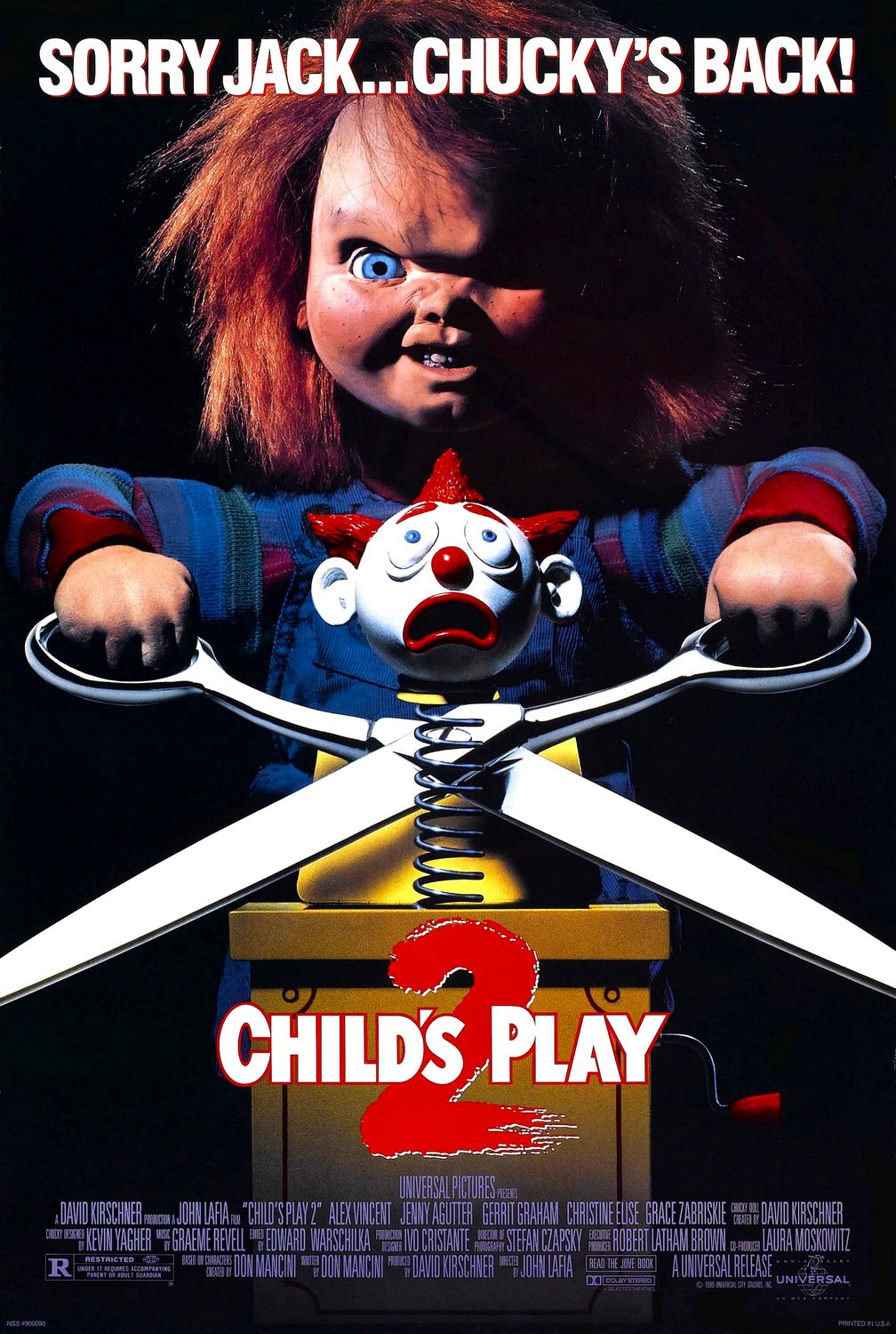
Child’s Play 2 (1990)

Director: John Lafia

Starring: Alex Vincent, Jenny Agutter, Christine Elise, voice of Brad Dourif

“Why fight it, Andy? We’re going to be very close. In fact, we’re gonna be fucking inseparable. ” (Chucky, Child’s Play 2)

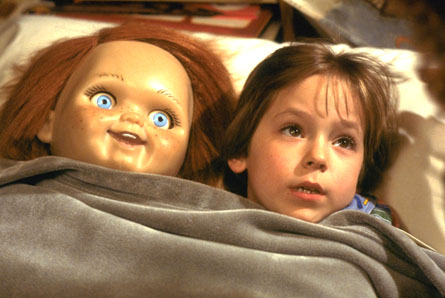
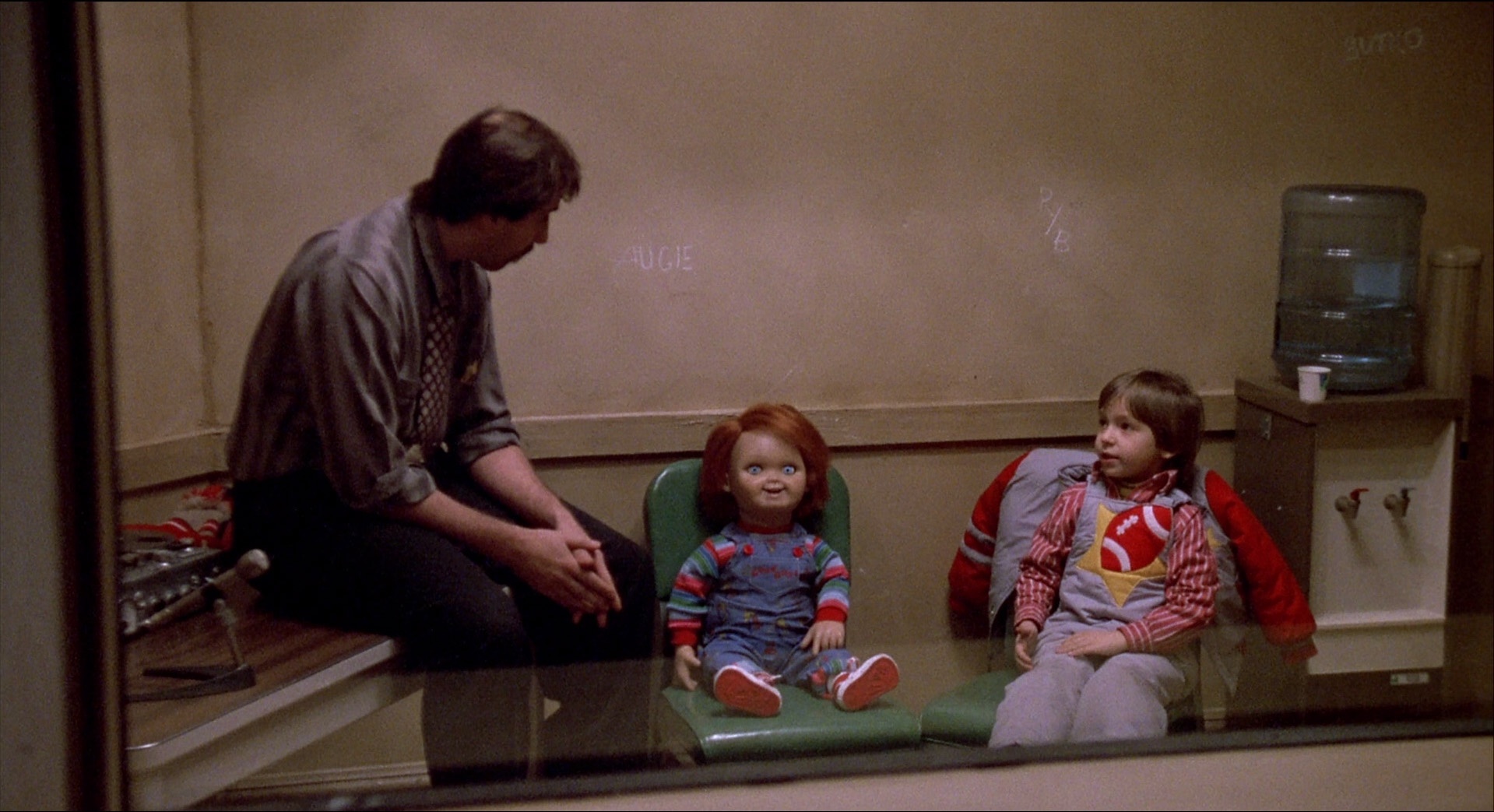
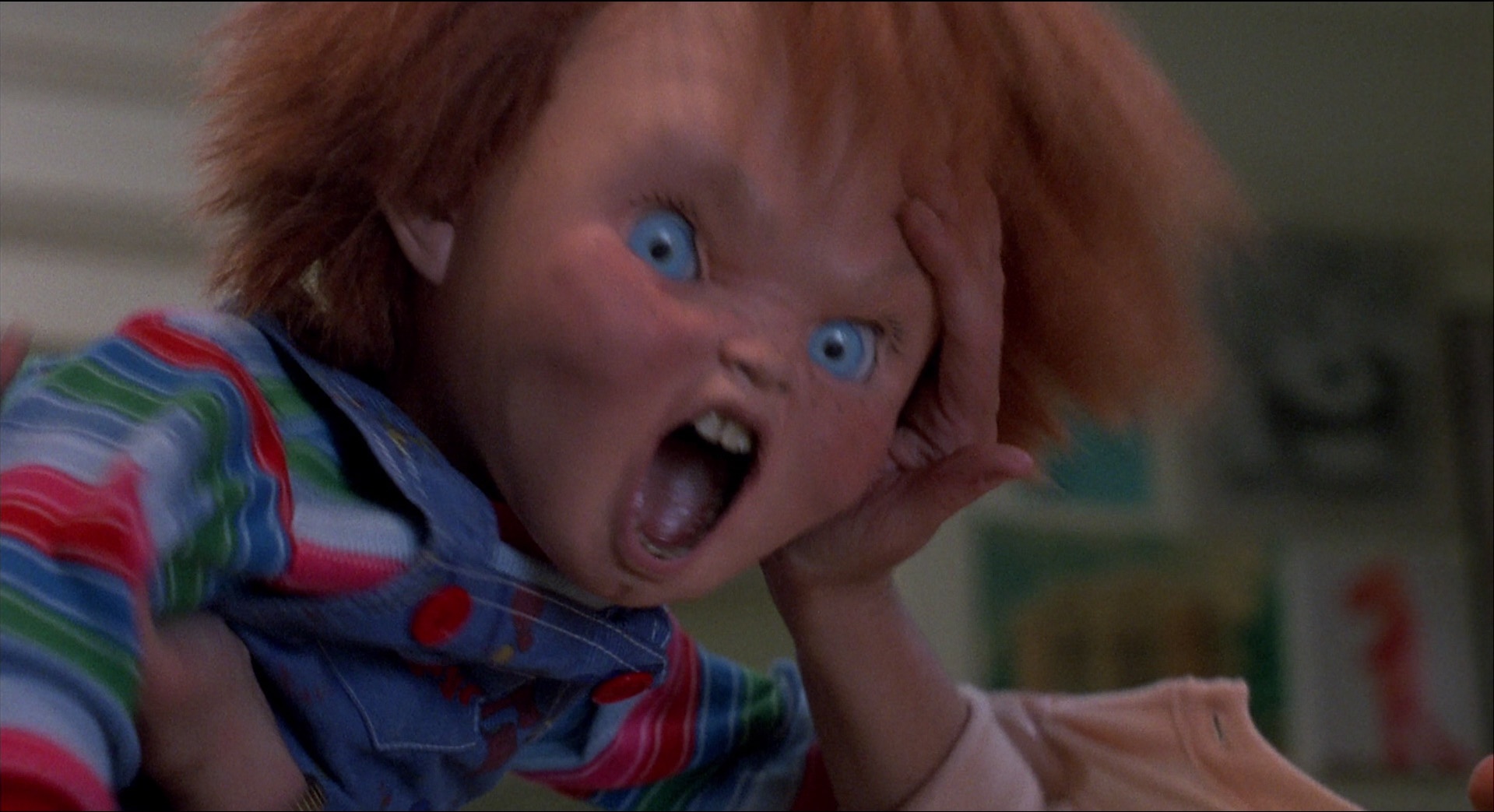
You just can’t keep a bad doll down. Even though it seemed fairly clear Chucky was dead at the end of the original Child’s Play, it turns out while the body was weak the spirit was still willing. So when the company responsible for Good Guy dolls gets hold of Chucky’s remains and sets about cleaning the doll up as a publicity stunt to show it wasn’t cursed, Chucky’s soul awakens again and shit goes down. He then sets about finding Andy, the kid from the first film (who’s now staying with a foster family after his mum was deemed… well, a bit mental), to finally take over his body.

Mick Hucknall resorted to extreme measures to get youngsters to attend his gigs

In a way, Child’s Play 2 is faced with the same dilemma as Jaws 2 – when you know who the killer is and you’ve already had a good look at them at the end of the previous film you can’t spend another 50 minutes playing it all mysterious. Half the original Child’s Play was spent trying to guess if Andy’s doll really was the one doing the killings, or whether it was just Andy using the doll as an excuse. Now we all know it’s Chucky, that whodunit angle goes right out the window for the sequel, which is why this time Chucky springs into life and starts the bodycount before your arse has even started to warm the seat.

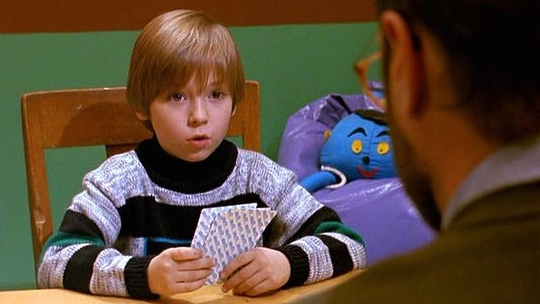
"Of course you're winning, you've got Mr Blue reading my cards, you fucking crook"

Andy’s foster home provides a refreshing change of scenery while still keeping the story grounded in reality a little – his foster parents understandably think all the events from the first film were in Andy’s head and so they aren’t having any of it when Chucky finally tracks him down and he tries to convince them to kill it. Instead they think it’s Tommy, a different Good Guy doll they bought which, unknown to them, Chucky has already buried in the back garden. Having Andy trapped in an unfamiliar house with his would-be killer with no way of convincing anyone to help him creates an interesting tension which at least brings back the whodunit angle in some form, even though we’re all in on it this time.

"This head scratcher is marvellous"

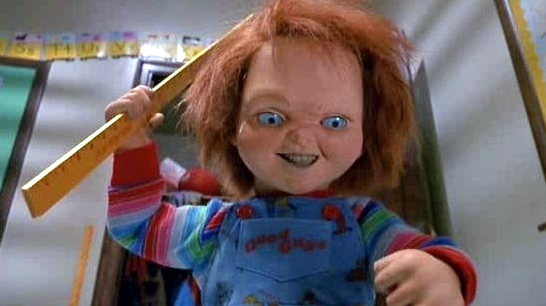
A few unconvincing kills later (it’s hard to imagine a small doll can effectively beat someone to death with a ruler or be strong enough to suffocate someone with a plastic bag) the film finds itself in its final location, a huge toy factory where the Good Guys are manufactured. It’s a fun setting for the typical fifteen minutes of “killer stalking the heroes” shenanigans you’d expect from an early ‘90s slasher, with loads of conveyor belts and dangerous equipment lying around to keep things lively.

It all has to end eventually though, and Chucky’s demise this time is even more decisive than it was in the first movie, leaving absolutely no chance that they could put him together for a third film… or could they?

Although its predecessor was a stronger film when it was first released, now we all know Chucky is the killer these days Child’s Play 2 is the more entertaining movie. It’s got more action, more tension and more Chucky quips. It’s still not exactly a classic, but if you’re looking for one Chucky film to watch from the pre-comedy trilogy this is the one to go for.

WHERE CAN I BUY IT?
Brits can get the UK DVD version here fairly cheap. Americans, meanwhile, can get either the the US DVD here or get it as part of the Chucky Killer DVD Collection, which contains Child’s Play 2, Child’s Play 3,  Bride Of Chucky and Seed Of Chucky.

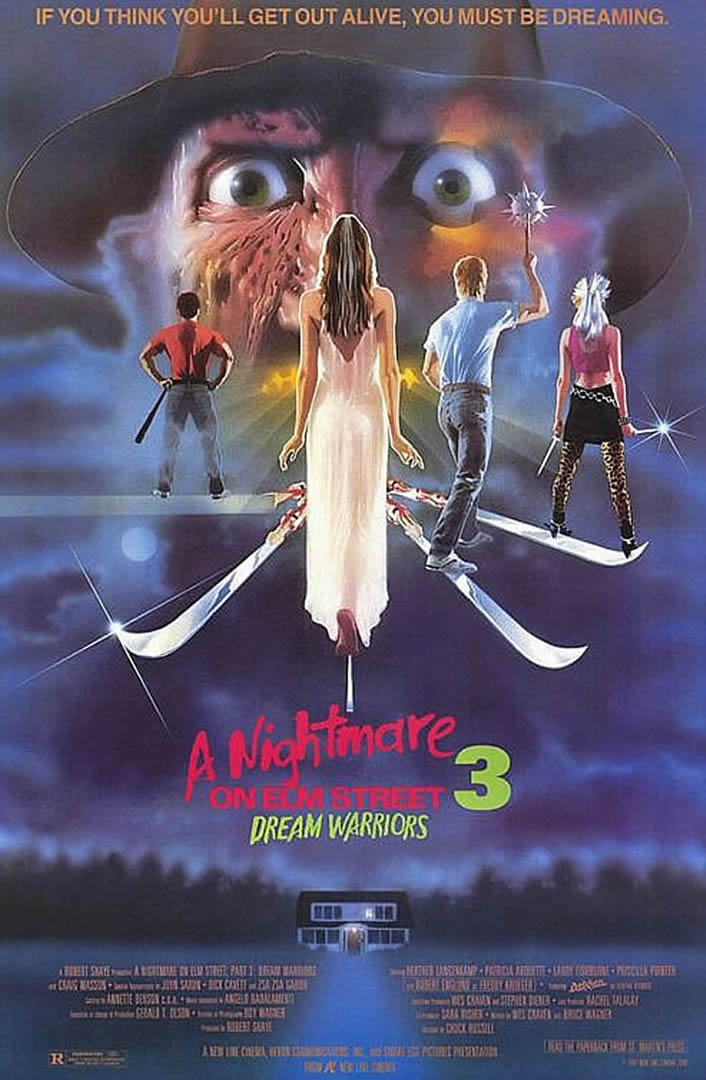
A Nightmare On Elm Street 3: Dream Warriors (1987)

Director: Chuck Russell

Starring: Robert Englund, Heather Langenkamp, Patricia Arquette, Laurence Fishburne, John Saxon

“Let’s go kick the motherfucker’s ass all over dreamland.” (Kincaid, A Nightmare On Elm Street 3)

After New Line Cinema ballsed up the sequel to its biggest-grossing hit with an unintentionally homo-erotic film that tore apart the mythology the original took great pains to create, it was decided that the third Nightmare movie would right the wrongs of Freddy’s Revenge and provide the true sequel Freddy fans wanted the first time around.

Back came Wes Craven, then, who had been shunned for the second film. Craven wrote a first draft of the script then moved on to a different project, but not before also convincing Heather Langenkamp, who played Nancy in the original film, to return. The combination of Craven’s story and Nancy’s return laid the groundwork for what would ultimately prove to be the best of the Nightmare On Elm Street sequels.

This was Patricia Arquette's first big film role. A film where she's eaten by a big snake.

With Elm Street exhausted of teenagers, Dream Warriors moves its setting to a psychiatric hospital where a fresh batch of potential teenage victims are housed. While each of these teens is in the nuthouse for their own personal reasons – one doesn’t talk, one self-harms, another is a drug addict – they also share a common problem: they’re all being stalked in their sleep by Freddy Krueger.

Naturally, the staff aren’t having any of it, and the kids are getting annoyed that their pleas are going unnoticed – that is, until Nancy joins the hospital as a group therapist.

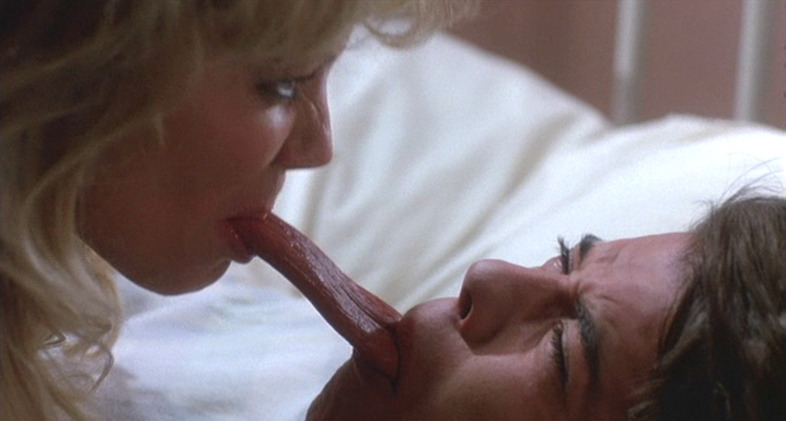
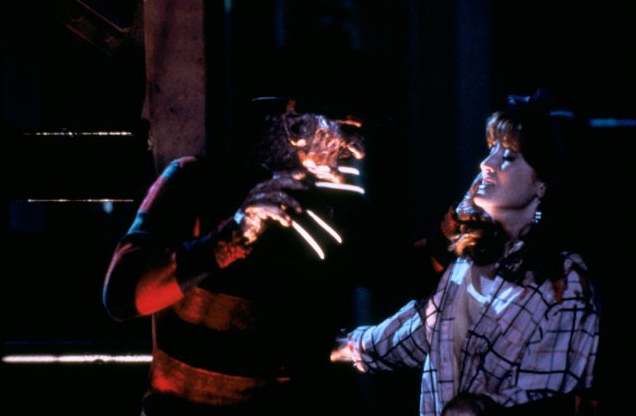
Some said Britney Spears' kissing technique was a little severe

After finding out what they’re all going through, Nancy explains to the teens that they’re the last of the Elm Street children – the kids of the parents that burned Freddy alive – and that he wants to kill them so he can finally get his revenge once and for all. Nancy teaches the group that they’re in control of their own dreams, and that as long as they keep that control they can give themselves any special powers they want to help them defeat Freddy. And so they set about preparing to take on Freddy in the dream world.

The reason Dream Warriors is the best of the Nightmare sequels is because it marks the final high point of the series just before Freddy’s popularity exploded and the Nightmare movies descended into self-parody and MTV jokes. This is the first film where Freddy starts wisecracking as he offs his victims but the actual plot is still somewhat serious – the backstory telling how his mother, a nun at an asylum, conceived him after she was accidentally locked in a room with a hundred maniac inmates and raped over and over verges on the obscene – and ensures the film remains a firm member of the horror genre as opposed to the black comedies its sequels essentially were.

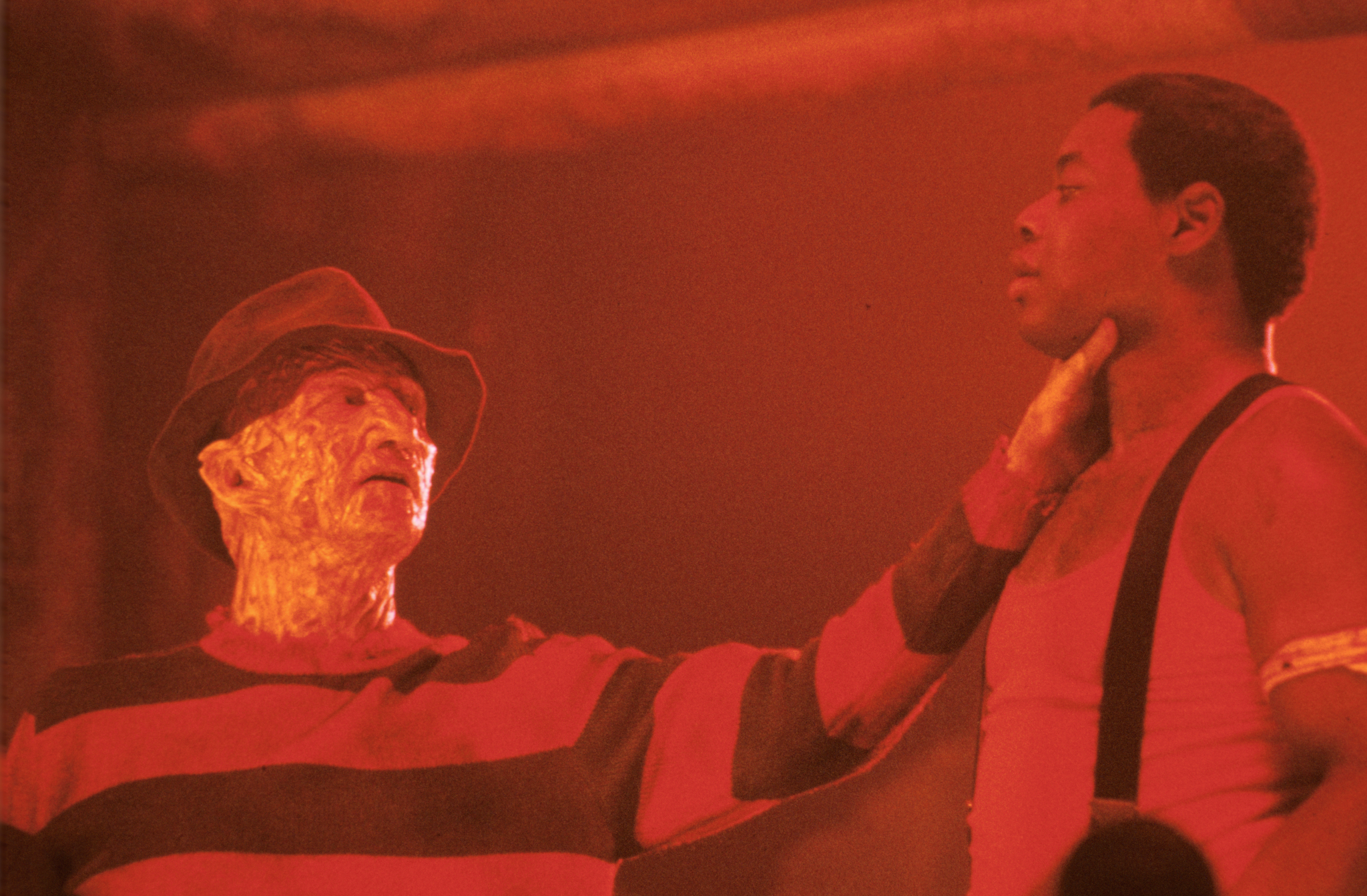
"For the last time, it was a shaving accident"

The deaths are also among the most varied and memorable in Nightmare lore. One telly-addicted victim pegs it when her TV sprouts a Freddy head and arms, picks her up and slams her head into the screen, while another nearly meets her end at the hands (well, gums) of a giant Freddy snake which looks not unlike a huge penis. Not that I noticed, I’m just saying.

By far the most talked-about scene in the film however is the puppet suicide. One of the patients builds puppets as a hobby and so Freddy uses this against him by ripping his veins out of his wrists and feet and turning him into a giant puppet, using the veins as strings and operating him from above. To everyone else it looks like he’s just sleepwalking, but in his dream Freddy is in control, leading him to the top floor and chucking him out the window in what appears in the real world to be a suicide.

Even the film’s ending is effective, as some characters you expect to live don’t make it and Freddy’s demise actually makes some sense given his religious bloodline. It’s an appropriate end, and had the series finished there it would have been a fitting way to draw a line under things and atone for the poor second film. Of course, it didn’t quite happen like that, but that’s for another time.

If you want to watch only the best films in the Nightmare On Elm Street series then watch the first, skip the second and definitely check out Dream Warriors. It’s second only to the original movie in terms of plot and creativity while also presenting a Freddy that, while more charismatic, is still somewhat scary. In short, it was the last truly fantastic film in the main Nightmare On Elm Street series.

Usually I end my reviews with the film’s trailer but the Nightmare On Elm Street 3 one was only a sort of teaser trailer, effective though it may be:

So to give a better idea of the movie I found this fan-made trailer which is actually really well-made and gives a fantastic sense of what the film’s all about. I really recommend it because it goes some way to explaining why I love this film so much. Enjoy!

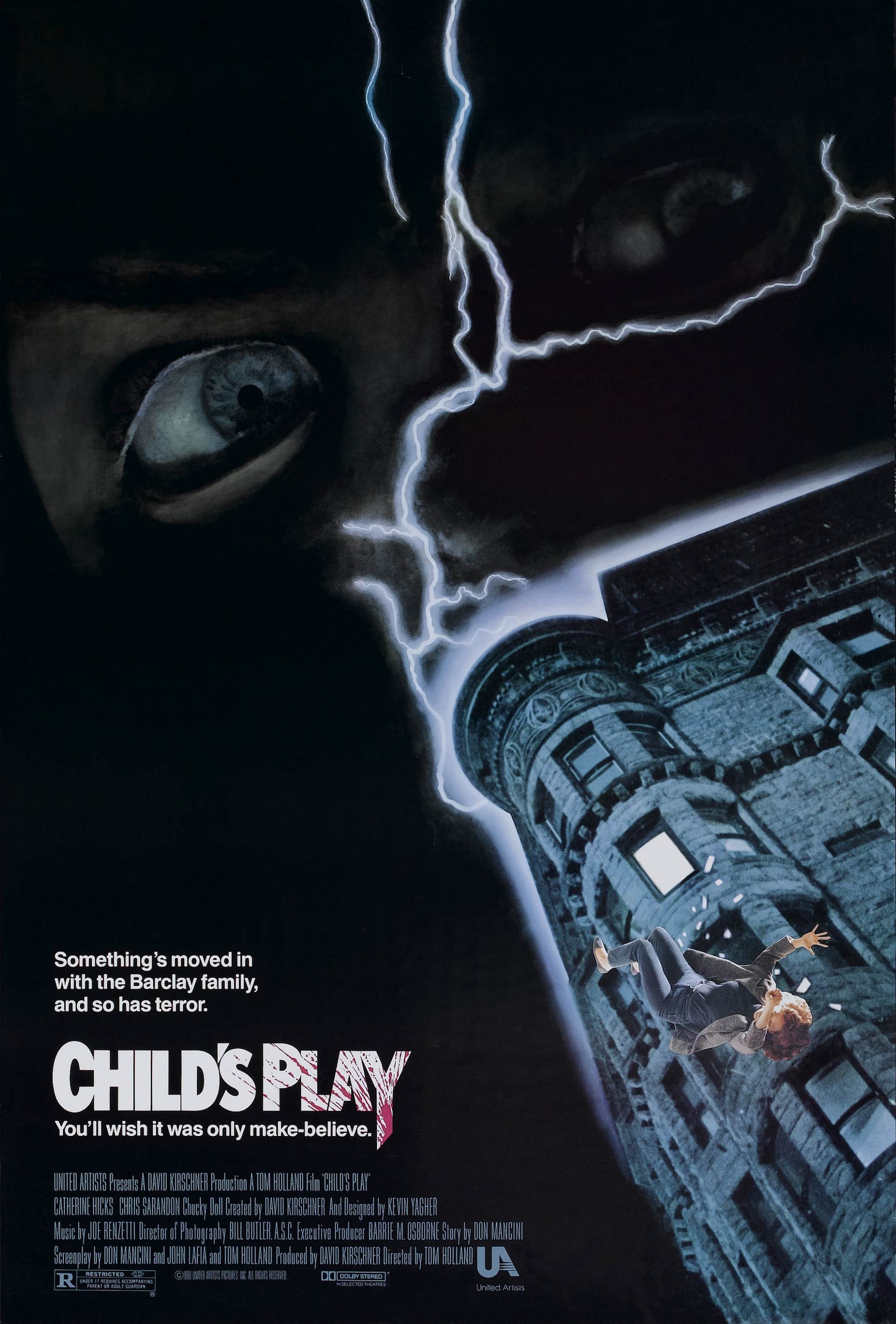
Child’s Play (1988)

Director: David Kirschner

Starring: Brad Dourif, Catherine Hicks, Alex Vincent, Chris Sarandon

“Hi, I’m Chucky. Wanna play?” (Chucky, Child’s Play)

It’s hard to truly appreciate Child’s Play nowadays, since the first 40 minutes of the film are completely ruined. When it was first released it was genuinely chilling, a gripping whodunnit with a paranormal twist. Of course, nowadays everyone already knows ‘whodunnit’ and so the first half of the movie is spent waiting for the film’s characters to catch up and find out what the rest of the world already knows – that the killer is a doll.

Poor little Andy (the adorable Alex Barclay) wanted a Good Guy doll for his birthday, but his mum couldn’t afford one so she just got him clothes and a shitty Good Guys tool kit instead. Noticing his disappointment, Andy’s mum thinks she’s struck it lucky later that day when a peddler near her work is selling knock-off Good Guy dolls stolen from a burnt-out toy shop. She buys one for $30 and is suddenly the greatest mum in the world again.

"And you're sure this operation will work doctor? I really don't want to be a Siamese twin any more"

This doesn’t last, because it soon emerges that this particular doll is possessed by Charles Lee Ray (Brad Dourif), a serial killer and voodoo nut who transforms his soul into the doll just before he’s killed by a police officer. The doll, Chucky, sets about killing Andy’s babysitter as well as the other criminal chaps who screwed him over before his ‘death’. Cue various explosions and voodoo doll stabbings.

Since it’s the first film, the audience isn’t supposed to know Chucky is the killer. There are plenty of moments where it’s suggested (he leaves footprints on a table, seemingly blows up a building and so forth), but every time someone’s killed Andy’s close by, leaving some doubt in the audience’s mind – isn’t it just Andy doing the killing and blaming it on his doll?

Chucky was amused at the dog licking its balls in the room opposite

The special effects used to create the Chucky doll vary in quality throughout the film. In some scenes where Chucky speaks – most notably when he talks at length with his former voodoo mentor – the lip-syncing doesn’t really work too well due to the limitations of the robotics in the face and as such the illusion is shattered a bit. Other shots, particularly the far ones where Chucky is instead a midget actor wearing a Chucky mask, are far more effective and much creepier because the realistic movement makes it look more like a human in a doll’s body.

Child’s Play shouldn’t really have taken off the way it did. While the cast all put in great performances the kills are fairly dull and the two “he’s dead, or is he” endings are just silly to watch. The reason it was a success, and rightly so, is that Chucky is a fantastic movie monster. He’s a child’s best friend one minute, a foul-mouthed strangler the next and since his target victim is a six-year-old boy there’s something very sinister to him.

"Stop checking my ruddy temperature Margaret, I said I'm fine woman"

In a way, it was Child’s Play‘s own success that ultimately ruined the first movie’s impact. Once Chucky became a household name and every knew Child’s Play as “the film with the killer doll”, it instantly rendered the film’s first 40 minutes useless. Nowadays even the DVD cover has a big photo of Chucky brandishing a knife, making sure you definitely know what the surprise is just in case you’ve managed to avoid it.

If you’re able to forget for a while that Chucky’s the killer and can try to watch the film in its original context, Child’s Play is good fun. Otherwise, the sequels are better because they kick off with the Chucky action right from the start and don’t spend half the movie trying to make you guess what you already know.

A Nightmare On Elm Street Part 2: Freddy’s Revenge (1985)

Director: Jack Sholder

Starring: Robert Englund, Mark Patton, Kim Myers

JESSE – “Grady, do you ever remember your dreams?”
GRADY – “Only the wet ones.”

At the time, Jack Sholder didn’t know he was making a gay movie. As far as he was aware, he was simply making a sequel to A Nightmare On Elm Street, which had been a huge box office success the previous year. It was only when the film started getting recognition and critical praise from the gay media that he slowly realised he may have unwittingly created the greatest homosexual film of the early ’80s.

Freddy’s Revenge tells the tale of Jesse (Mark Patton), an effeminate young chap who’s new in town and already trying to win over his new high school lady friend Lisa (Kim Myers, looking remarkably like a young Bette Midler). The problem is, Jesse’s family have unwittingly moved into1428 Elm Street, the house where Nancy lived in the previous movie, and in doing so have provided Freddy with new victims to stalk.

"Haven't you heard, Toots? I'm a metaphor for Jesse's gay side. Ain't got no time for adequate pieces of tail like you"

As Jesse sleeps at night, he dreams about Freddy. Rather than killing him though, Freddy wants to take over Jesse’s body so he can come into the real world and kill all the teenagers in Elm Street. Jesse tries to resist, but finds himself unable to control his body. He goes into his little sister’s room wearing a Freddy glove and only just manages to stop himself attacking her. He sprouts a huge demon tongue while he’s getting down and dirty with Lisa but manages to hide it and leave without her seeing. Freddy’s taking over his body and there’s not much he can do about it.

Ah. Right. Well, I'm not touching this one, you can draw your own conclusions

Of course, as far as the cast and crew of the movie were concerned (well, most of them at least – nowadays Mark Patton, himself a gay actor, claims he knew all along what was happening), this was nothing more than a straight sequel (in every sense of the word) to the previous year’s big horror blockbuster. That wasn’t how the gay community saw it, however. In their eyes, Freddy’s Revenge was a film about a young man struggling to accept his own sexuality and trying to fight it. The funny thing is, if you watch the film with the assumption that Freddy is supposed to be Jesse’s gay side, it’s hard to argue with them.

Everything Freddy does to Jesse can be interpreted as an attempt to bring out his gay side. The aforementioned tongue scene is Freddy’s attempt to stop him being intimate with a woman. At one point, Jesse runs to a male friend’s house, climbs through his bedroom window and tells him there’s someone inside of him he’s trying to get out. Every time Jesse kills someone (while under Freddy’s control), he lets out an incredibly high-pitched scream. When Freddy finally completely takes over Jesse’s body, the only way Jesse can be freed is for Lisa to kiss Freddy, essentially killing off his homosexual side.

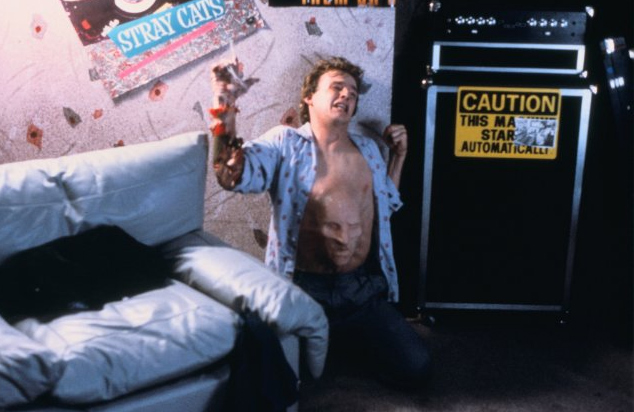
The pivotal coming out scene, where Freddy literally "comes out" of Jesse while he's in another lad's bedroom

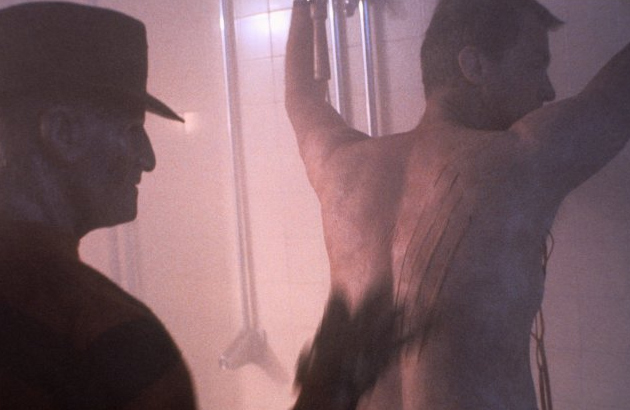
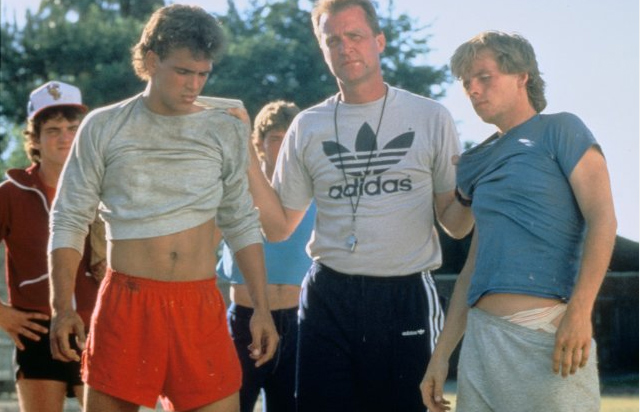
All these are mere foreplay, however, compared to the scene in which a sleeping Jesse, under Freddy’s control, walks to the nearest gay S&M club and finds his gym teacher there wearing a tight leather outfit. The teacher takes Jesse back to the school and makes him run laps in the gym, but afterwards Jesse, as Freddy, ties him up with skipping ropes in the shower, strips him, whips his bare arse with a towel then gives him the old fingerknives in the back (penetrating him from behind, if you will). If the cast and crew genuinely weren’t trying to make a gay movie, you have to wonder what the hell they were thinking here. I’m not just making this up, you know, here’s an entertaining behind-the-scenes video with the film’s cast admitting they had no clue. They’re incredibly honest and stunned at how gay they made the film. It’s a must-watch!

Either way, the homosexual subtext is neither here nor there – Freddy’s Revenge is simply an odd film however you take it (so to speak). Odd, unexplainable things happen throughout the film, each doing their bit to undo the “rules” and mythology laid out by Wes Craven in the wonderful first film. Jesse’s house suddenly becomes incredibly hot for some reason, to the extent that his pet budgie goes mental, attacking Jesse’s sister and then spontaneously combusting into a tiny explosion of flames and feathers.

"Sorry lads, you don't look gay enough. This film has to be fucking blatant. Back to the locker room"

Then there’s the part where Freddy freely comes into the real world, something that was a big no-no in Craven’s original (only Nancy could bring him out of her dream). This leads to a ridiculous scene at a pool party where Freddy confronts 50 or so teens, most of whom are taller than him and could probably kick his arse.

In a series famous for its bizarre moments and bending of reality, for Freddy’s Revenge to somehow feel a bit off is something of an achievement. It’s entertaining enough however you choose to interpret it, but it’s by no means one of the better entries in the Nightmare saga.

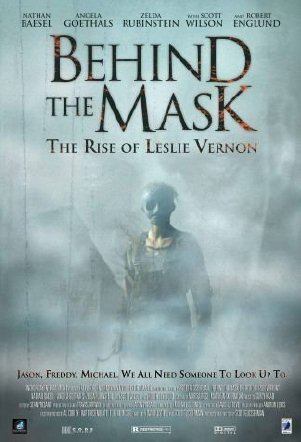
Behind The Mask: The Rise Of Leslie Vernon (2006)

Director: Scott Glosserman

Starring: Nathan Baesel, Angela Goethals, Robert Englund

“Never hang out with a virgin. You got a virgin in your crew, either get somebody in her pants or get the hell away from her.” (Jamie, Behind The Mask)

Behind The Mask is a clever movie. It fools you into thinking it’s only pretty clever, then completely turns things upside down in the final act to show you that, in fact, it’s more than just pretty clever. It’s actually very clever, maybe even ruddy clever.

At first it’s a fly-on-the-wall documentary, with a crew following Leslie Vernon (the oddly appealing Nathan Baesel), an up-and-coming slasher villain who one day dreams of being as famous as Freddy Krueger or Jason Voorhees. Leslie takes the crew round his local haunts, introduces them to his parents and shows them his target girl, the one he’s chosen to stalk serial killer-style.

Yes, it's the wee woman from Poltergeist. She's a bit of a legend

Leslie plans to attack this “hero girl” in typical slasher style, by breaking into the house during the party she’s set to throw with her friends and killing them off one by one. He’ll use every trick in the slasher book to get them, from cutting the power off so one of them goes into the basement, to hiding the bodies in a way that they’re found at just the right time.

Every scene had me smiling with its constant nods to previous horror films and its overall attention to horror cliche detail. Leslie shows how many of the typical horror set-pieces are really done – when a girl’s on her own and the door slam shuts behind her, it’s because the killer has already set up the door and pulled it shut with some fishing wire, and so forth.

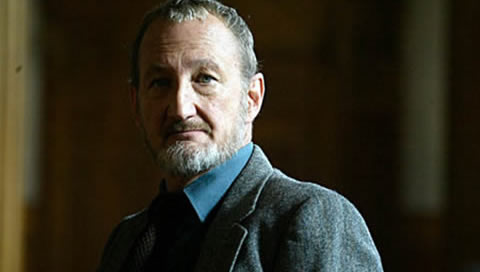
You can always rely on Robert Englund to put in a good performance

It’s all entertaining until the night of the party, when the camera crew and presenter are forced with a moral dilemma – do they allow Leslie to go ahead with his plan and actually kill all these kids, or do they try to interfere and risk pissing him off? The resulting final act is gripping stuff with a fantastic twist that, while one you’re likely to figure out five minutes before the characters do, is still smartly handled.

Behind The Mask is a surprisingly original movie with a strong cast. A notable mention should go to Robert Englund as he performs his best professor-who-knows-the-killer impression in the style of Donald Pleasance in Halloween, while the rest of the cast is similarly appealing. I strongly recommend this if you fancy something different.

Return To Sleepaway Camp (2008)

Director: Robert Hiltzik

Starring: Paul DeAngelo, Vincent Pastore, Isaac Hayes, Michael Gibney

RANDY: “Are you really that stupid?”

ALAN: “Not as stupid as you, you big penis!”

Although the cult classic horror Sleepaway Camp has had a couple of sequels, neither were really seen as true spiritual successors since none of the original cast and crew were involved. With the first film’s director, writer and key cast members making a comeback for Return To Sleepaway Camp though, it could probably be considered the first ‘canon’ sequel to the original movie.

(Heads up – there are some spoilers for the original Sleepaway Camp below)

Isaac Hayes quit as Chef in South Park, then played a chef in this instead. D’oh

Taking place 25 years after Sleepaway Camp, Return is set in Camp Manabe, a new summer camp part-run by Ronnie, the head counselor in the original film’s Camp Arawak. Ronnie (played once again by Paul DeAngelo, who seemingly hasn’t learned any new acting tricks in the past two and a half decades) gets suspicious when kids at the camp start dying in gruesome ways, just like they did back at Camp Arawak.

Ronnie’s certain that Angela is to blame for the killings, even though her cousin Ricky (who is also played by the original actor, now in his mid-30s and more camp than Butlins) assures them that she’s still locked up in an asylum and has been since her rather awkward public display of nudity.

This police guy looks and sounds a bit weird. Wonder why…

This makes the prime suspect Alan – a big fat simple lad who’s constantly bullied by the other campers. Throughout the film this gets to Alan and he snaps on a regular basis, often screaming at his bullies and sometimes even pointing a knife at them. But is Alan upset enough to actually kill anyone? That’d be telling.

Much like the original, everything in Return To Sleepaway Camp is pleasantly bad. The acting remains as abysmal as ever, the dramatic music blares over scenes of standard dialogue for no reason at all, the script is atrocious (check the example above to see what I mean) and while the inevitable “twist” ending was clearly never going to match the original in terms of shock value, it should still please some fans of the first film.

This was the worst telescope Duncan had ever used

A slasher film generally lives and dies by the inventiveness of its death scenes, and Return To Sleepaway Camp makes a decent attempt at it. Whether it’s the wince-inducing scene involving a length of wire tied to both the manhood of a poor chap tied to a tree and a truck set to drive off, or the will-they-won’t-they moment where two kids keep looking through a hole in the ground where they can see a sharpened a broom handle lying under their cabin, the kill scenes are fun enough to keep you watching even if they’re not amazingly well-executed (pun very much intended).

Return To Sleepaway Camp isn’t trying to be the greatest film ever made, it’s a fun and sometimes tongue-in-cheek love letter to fans of the first film who continue to keep its legend alive. For this reason I’d recommend watching the original first, and only giving this a shot if you decide you want more of the same.

The Gingerdead Man (2005)

Director: Charles Band

Starring: Gary Busey, Robin Sydney, Ryan Locke

“Daddy, you’ve got to come and get me. I’m at Betty’s Bakery and we’ve got homicidal baked goods after us.” (Lorna, The Gingerdead Man)

Sometimes a film title is so great you just know in your heart that the film has to be fantastic. Often though, especially in the B-movie horror genre, the movie fails to deliver on the quality of the title. The Gingerdead Man is unfortunately a prime example of this.

The film starts off with a flashback of a killer (played by Gary Busey) shooting up a restaurant then shooting a girl called Sarah as he leaves. Sarah survives, unlike the rest of her family, and is working in her bakery later when she hears that the killer is getting the electric chair.

Susan Boyle's makeover could have gone better

As luck would have it, the killer is executed just as she’s cooking a gingerbread man. After getting into a scrap with a local beauty queen, Sarah accidentally sends a power surge into the oven, causing the killer’s soul to travel through the electricity and into the gingerbread man she’s cooking. Cue ridiculous scenes with a tiny pastry swearing at people and threatening to cut their fingers off.

Despite the admittedly ace title The Gingerdead Man is an atrocious film, with acting that verges on the level of a primary school play and special effects that look like someone spent half an hour learning how to use a Mac for the first time.

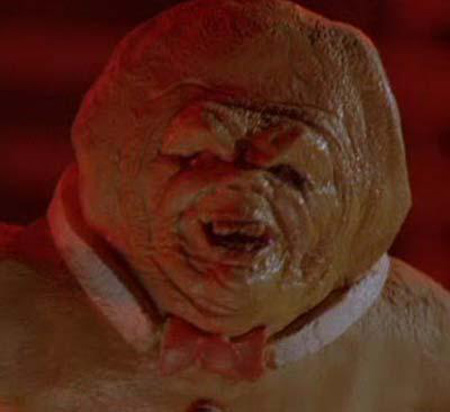
What’s more, the Gingerdead Man himself is a rubbish character. His face is boring, his dialogue is horrible (“well, I sure ain’t the Pillsbury fucking Doughboy”) and most of the time you can tell he’s just a rubbish hand puppet that someone’s working from the inside. When he fires a gun in one scene you can even make out the hand holding the gun in place at one point.

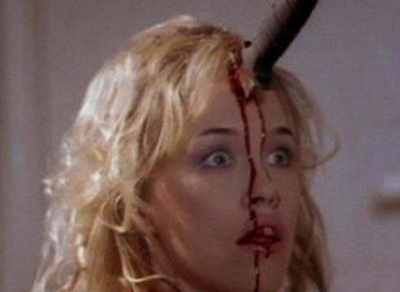
Mary had been complaining of a sharp pain in her head for a while

The characters are vapid, their mock southern accents are horrible, one guy is an absolute cock yet manages to get the wholesome girl without really doing anything, and the ‘twist’ ending is so laughably bad that I had to rewind it to make sure it was definitely meant to be a twist.

The only positive thing about The Gingerdead Man is that at just under 70 minutes long it’s mercifully short, leaving you more time afterwards to watch genuinely entertaining films. This one should have been left in the oven to burn yet, amazingly, it has two sequels (The Passion Of The Crust and Saturday Night Cleaver), which both also seem to have had more work spent on the title than the film.