Halloween III: Season Of The Witch (1982)

Director: Tommy Lee Wallace

Starring: Tom Atkins, Dan O’Herlihy, Stacey Nelkin

“Halloween, the festival of Samhain. The last great one took place 3000 years ago, when the hills ran red with the blood of animals and children.” (Conal Cochran, Halloween III)

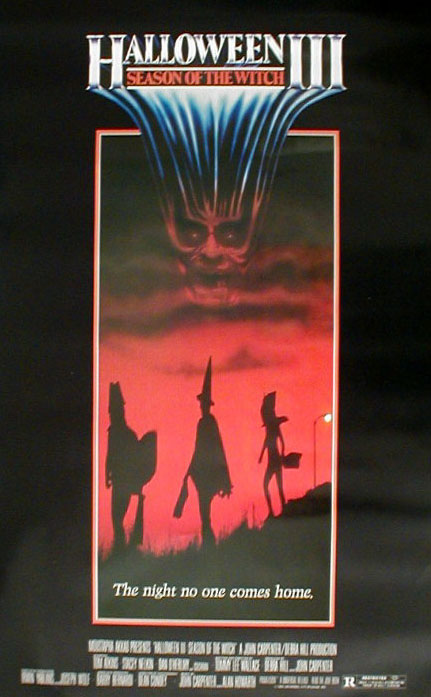
Despite the success of the first two Halloween films, rather than sticking with the same formula the third movie went in a completely direction and scrapped Michael Myers, opting instead to tell a completely different story altogther. It was a move that in my opinion paid off, even if it’s a film that’s not really remembered these days.

Indeed, had this been simply named Season Of The Witch and not contained the word ‘Halloween’ in the title, it would have probably received a much better response from horror fans. As it is however many people tend to see this as the bastard son of the series despite the fact that, lack of Myers aside, it’s one of the stronger Halloween films.
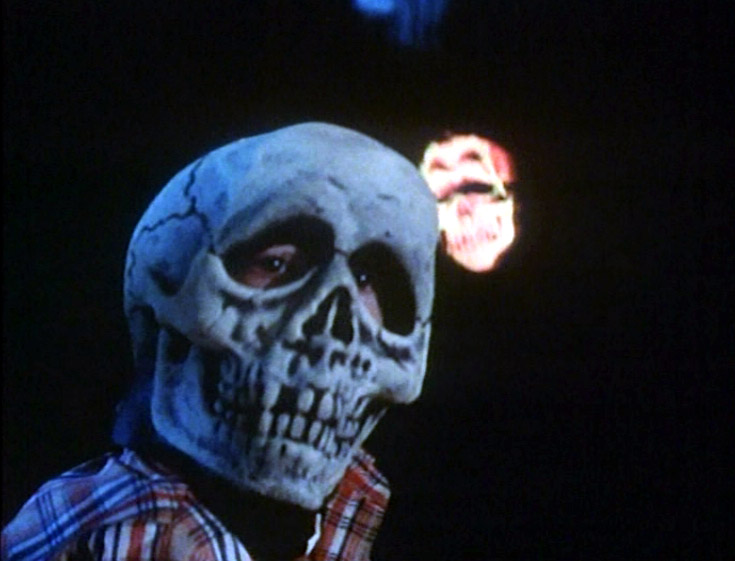
Ashley Olsen's eating disorder wasn't getting any better

A hospital patient is brutally murdered and his attacker dies soon after when his car blows up. Dr Dan Challis witnesses these events and decides to investigate, along with the daughter of the murdered man. They soon discover that Silver Shamrock (a Halloween mask-making company), led by the evil Conal Cochran, is plotting to revive the original idea of Halloween: mass murder. How does Cochran plan to do this? By triggering all the masks they’ve sold to kill whoever is wearing them at a certain time on Halloween. Now that’s a quality idea.

From the opening credits we know we’re still in Halloween territory, despite that key missing ingredient of Mr Myers. As a crude pumpkin is drawn on screen using an old computer (probably an old BBC Micro or something) the music is reminiscent of John Carpenter’s score from the first two films.
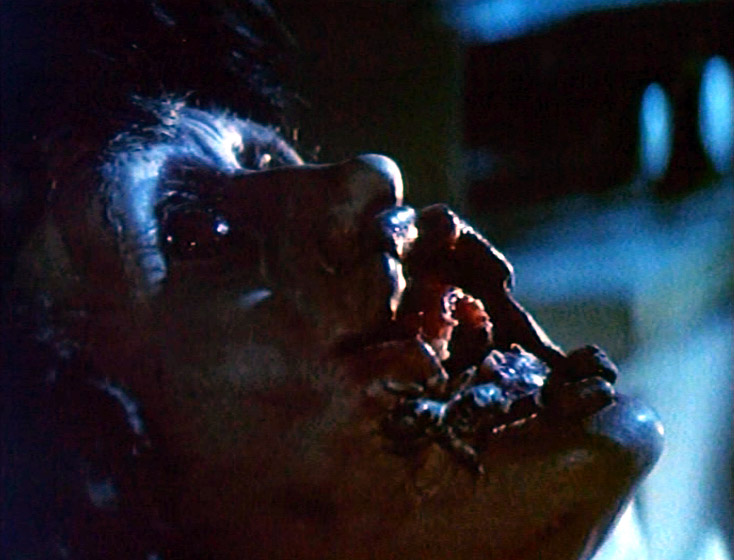
It was the hottest curry Susan had ever eaten

The idea of how Cochran plans to kill the children of America is also sheer brilliance. Using the addictive power of hype to control these impressionable children and lead them Pied Piper-like to their eventual demise is a stroke of genius which really should be used more often in films. It isn’t for the simple fact that the killing of children is still fairly taboo in cinema plots, so when Halloween III‘s most grisly death involves an eight-year-old boy it’s ruddy effective stuff.

There are some nice death scenes throughout, including a genuinely jump-inducing scene in a motel room (with a grotesque aftermath) and the infamous, aforementioned child death. Needless to say this is a very uncomfortable moment to watch, and while some may complain about it, I instead feel it’s a very powerful image and is perfectly handled.
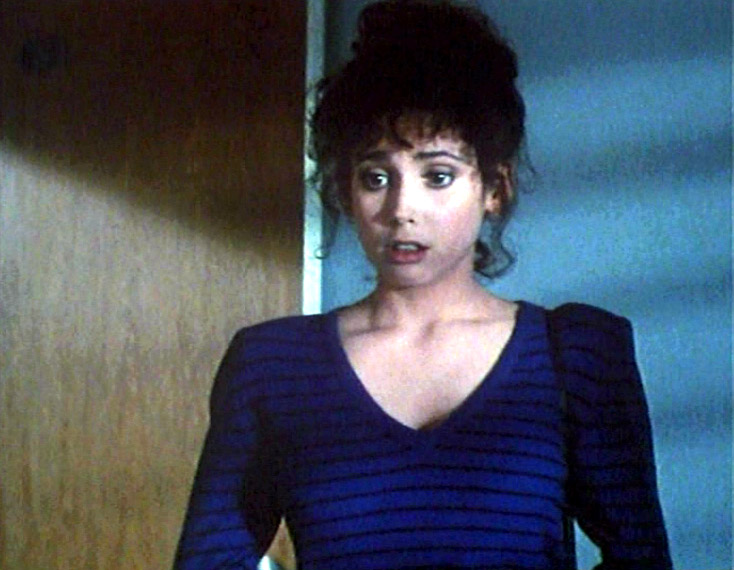
There's nothing more disturbing than walking in on your partner having sex with a Coke bottle

Tom Atkins is great in every film he appears in and here he is no different. The fact that he looks like a normal Joe and not a well-built stereotypical “hero” figure allows us to connect with him on a better level than we would with, say, Busta Rhymes in the later Halloween: Resurrection. At times his acting borders on over-theatrics, but it’s so cheesy and typically ’80s that you can’t help but love it.

As for evil super-villain Conal Cochran (well, he must be a super-villain if he plans on killing every child in the country), Dan O’Herlihy plays him as well as possible given the script he has to work with. After all, no human being on this planet could successfully manage to explain how the masks are powered with rock from Stonehenge without some hint of cheese and scenery-chewing involved.

In all, Halloween III is top class ’80s horror. As long as you go into it with an open mind you should enjoy it. This is not really a Halloween film, so don’t expect one. Block Michael Myers out of your mind for 92 minutes, settle down with some Doritos and Coke, and enjoy a good slice of ’80s terror. You won’t regret it.

Ghostwatch (1992)

Director: Lesley Manning

Starring: Michael Parkinson, Sarah Greene, Craig Charles, Michelle & Cherise Wesson

“What big eyes you have… what big eyes you have.” (Susie, Ghostwatch)

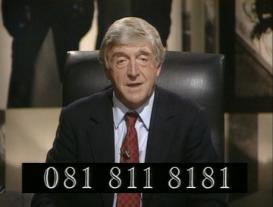
Picture the scene. It’s Halloween night, 1992, and the BBC has decided to present a live, hour-long broadcast from the most haunted house in Britain in an attempt to catch the first live, on-camera footage of ghostly events taking place. Well-respected presenter Michael Parkinson is hosting proceedings at a nearby studio, accompanied by parapsychologist Lin Pascoe (there to give an expert’s view), and TV host Mike Smith manning the call centre and taking calls from the public if they see anything odd.

But the real focus of the show is the outside broadcast live from the haunted house, as popular children’s presenter (and real-life wife of Mike Smith) Sarah Greene plans to spend the night with the Early family, who are being terrorised by a ghost going by the name of Pipes (so called because the noise he initially made sounds like old central heating pipes clanking and warming up). Finally, outside the house will be comedian and star of popular sci-fi sitcom Red Dwarf, Craig Charles, who will be interviewing witnesses and generally adding some comic relief to what should be an otherwise nervy night. They are all expecting to have a laugh with the audience and make light of the situation, but that’s until things start to go wrong. The eldest daughter’s voice is taken over by Pipes, photo frames fly off the wall and Pipes starts taking over the studio.

Except he doesn’t really. The whole thing was a fake broadcast filmed in the style of Orson Welle’s famous War Of The Worlds radio drama, presented as genuine in order to terrify the audience into thinking it’s really happening. It was perhaps too successful, because it ended up with the dubious honour of being the first TV programme to genuinely inflict post-traumatic stress symptoms in children, and caused one mentally unstable viewer to kill himself.

As a result, the BBC has never shown Ghostwatch again in the eighteen years since it was released for fear of the same thing happening again, but it’s now available on DVD and while the acting is a little less credible these days it’s still a spooky little tale.

I vaguely remember Ghostwatch’s first broadcast in 1992. I never saw it at the time (I was only 9 and still kept my distance from ‘scary’ things), but my uncle phoned up my house, convinced it was real. These days it’s fair to say that Ghostwatch is not the most convincing ‘hoax’ of all time, primarily due to the poor acting ability of the actresses playing the mother and her two daughters. Despite the generally believable performances from the actual TV presenters playing themselves, these two actresses still manage to bring you back to reality as you realise this isn’t possibly genuine, simply because nobody talks like they do. The eldest daughter and mother in particular are unconvincing.

Can you spot the ghostly figure of Pipes?

However, for those who missed the opening titles and tuned in halfway through, this could have very easily passed as a genuine piece of reality TV. Hindsight makes it difficult to determine whether people would have been gullible enough to buy it, because when I recently watched it I was fully aware that it was fake and was looking for signs of this. Perhaps it didn’t even enter the minds of people watching it at the time – bear in mind this was the early 90’s, long before the wave of both reality TV and famous hoaxes such as The Blair Witch Project, The Last Broadcast and (in my opinion) Living TV’s Most Haunted.

Nevertheless, there is no denying that regardless of its believability, it’s extremely well-produced and successfully mimics the format of real-life TV broadcasts long before Chris Morris and Armando Ianucci attempted it with spoof news shows The Day Today and Brass Eye.

The tension is well-built with the initially slight unease of members of the public phoning in and claiming they’ve seen a shadowy figure in some footage that was played earlier. This progresses to some subliminal appearances of a strange person in the background, in a number of blink-and-you’ll-miss-him shots. Eventually it all comes to a head, the audience gets the most blatant sighting of the figure, and from then on the viewers are hooked as all hell breaks loose.

To say any more would cruelly spoil things, and this truly is a DVD that has to be watched with as little knowledge of events as possible, but the internet is buzzing with those who have already seen it and are comparing sightings of the ghost, trying to get the definitive list of how many times he appears (the correct answer? Nine in total).

Ghostwatch may not be everybody’s cup of tea – the acting is occasionally dodgy, the ending is ridiculous and the whole thing smells faintly of cheese. But anyone willing to let that slide and consider that nearly two decades ago this scared the hell out of a gullible country (and unfortunately led to a suicide) will thoroughly enjoy watching this. If possible, watch it in a large group and play Spot The Ghost.

In short, Ghostwatch inspired a hell of a lot of ‘fake’ reality programmes that followed, and for this reason alone should be worth a view. At its best it’s a fantastic study in the human mind and how it deals with subliminal imagery and belief. At its worst it’s a bloody good ghost story. It’s a win-win situation!

Here’s a feature on Ghostwatch from Channel 4’s 100 Greatest Scary Moments, which helps explain why it’s so enjoyable:

Blood Feast (1963) (Video Nasty review #2)

Director: Herschell Gordon Lewis

Starring: Mal Arnold, William Kerwin

“Have you ever had… an EGYPTIAN FEAST?” (Ramses, Blood Feast)

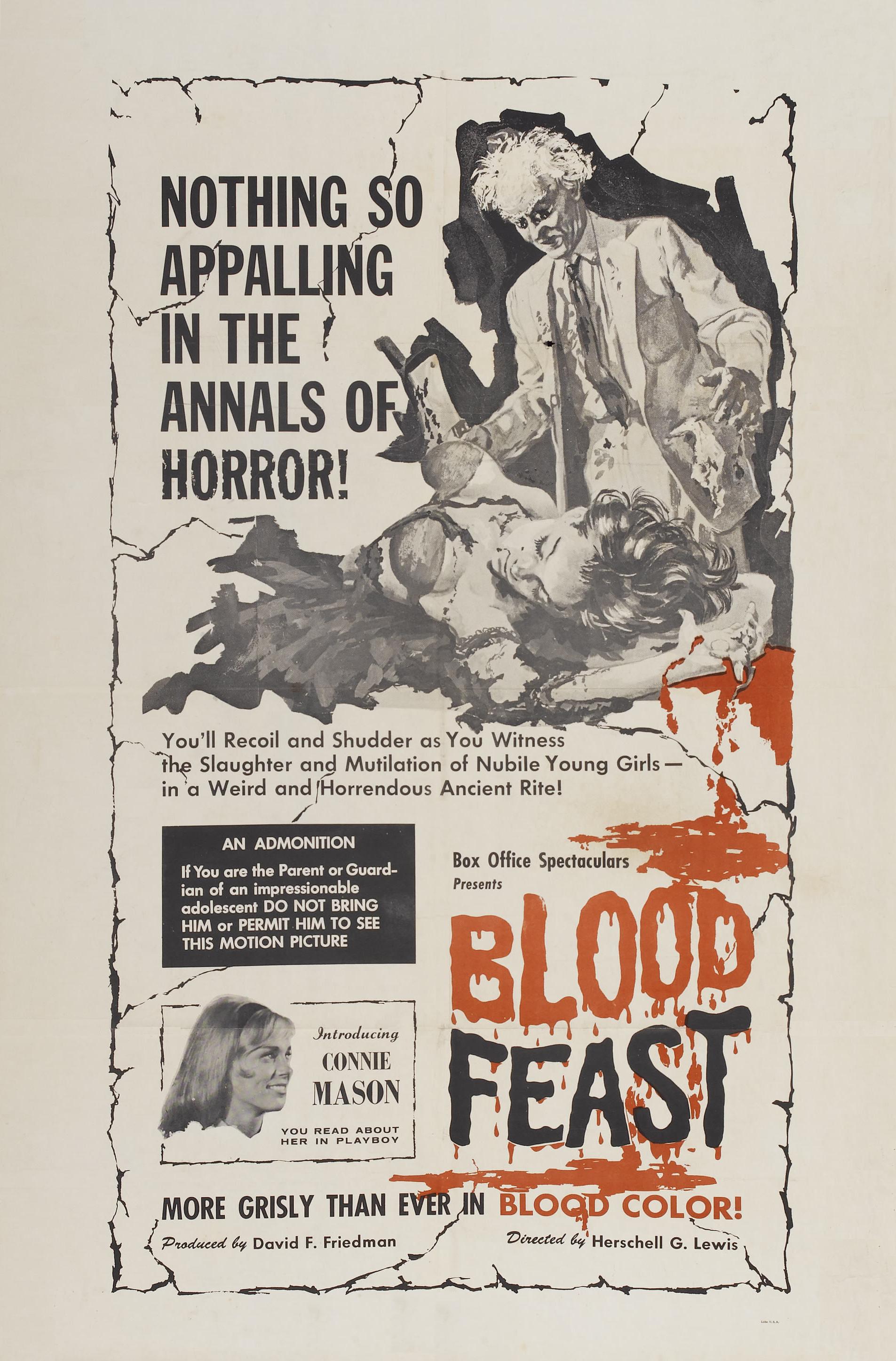
Herschell Gordon Lewis is often referred to as the Grandfather of Gore. He was the first filmmaker to make a truly bloody movie, at a time when the likes of Psycho and The Birds were shocking mainstream audiences with their relatively bloodless terror. While nowadays we’d think nothing of a horror film where someone dies a bloody death, in 1963 it was a shocking sight.

It’s surprising then to see just how far Blood Feast goes, considering many credit it as the first ever gory movie. Eyeballs are stabbed, tongues and hearts are pulled out and heads are bashed in, leaving brains scattered on the floor. The effects aren’t very convincing (the blood is the reddest thing you’ll ever see) but it’s probably a good thing because it makes the film more entertaining. Had it had the realism of something like Saw or Hostel it would have been disturbing rather than enjoyable.

That's no way to do your lipstick, you daft mare

The plot’s fairly kooky. Ramses is an Egyptian caterer who has been asked by a wealthy woman to provide an Egyptian-themed feast for her daughter’s birthday party. Ramses is happy to help, mainly because he’s been killing lasses left, right and centre to prepare for an ancient Egyptian ritual in which he wants to bring an Egyptian goddess to life, and he reckons the party will be a great time to do it.

Despite the gore effects, the most entertaining aspect of Blood Feast is the bad acting. And when I say it’s bad I mean it’s absolutely atrocious. From the killer’s terrible accent and seeming inability to say a sentence properly (not to mention his laughably bizarre silver hair and eyebrows) to the mother of one victim who sound like she’s laughing when she cries, the performances are incredibly terrible. By far the worst/best of the bunch though is the chap playing one victim’s boyfriend, whose abysmal attempt at showing grief makes him possibly the worst actor I’ve ever seen. Here, see for yourself (if you think he’s bad at the start, wait until you see him when the police turn up):

The script’s great too. From the unfortunate euphemisms (talking about the murder case, one detective tells his partner “well Frank, it looks like one of those long, hard ones”) to some truly bizarre reactions (“Ramses was the killer we’ve been looking for, Mrs Fremont.” “Oh dear, the guests will have to eat hamburgers for dinner”) there are plenty of chuckles to be had.

Blood Feast is well worth seeing for a laugh, and at a brisk 68 minutes it won’t take up too much of your time. The gore is satisfying if unrealistic, but the acting is so bad that you’ll be laughing too much to care.

HOW NASTY IS IT? – I can understand how it would have been considered nasty back in the day but given how horrifiying the likes of Saw are these days this is laughably tame by comparison now.

AVAILABILITY – It’s now available uncut in the UK, but it’s out of print. There’s an uncut American disc which is region-free (so it plays on UK players), is cheap (about a fiver) and has good extras. If you fancy it then you can click here to buy it from Amazon UK and I’ll get 40p or something for recommending it. So not only can you enjoy a laughably bad film, you can also help me rob Amazon of some of the profit. Finally, as ever, here’s the trailer:

The Ring Virus (1999)

Director: Dong-Bin Kim

Starring: Eun-Kyung Shin, Doonah Bae

“The time has passed! We are winner the game!” (Choi, The Ring Virus)

You’re probably aware of The Ring, the American remake of the Japanese blockbuster Ringu, but before that Korea had a crack at it with The Ring Virus, a film that is interesting if a little disappointing.

The plot is similar to that of the original version of the film. A female journalist decides to investigate the deaths of four teenagers who mysteriously died at the same time. It emerges that they all watched a strange video tape exactly seven days before their deaths. Intrigued, the journalist watches the tape (as does her ex-lover and her daughter) and thus begins a race against time to solve the tape’s hidden secret.

Obviously being a Korean film the character names have changed. Female Journalist Reiko Asakawa/Rachel Keller is now Sun-ju, her ex-husband Ryuji/Noah is now Choi Yeol and the creepy Sadako/Samara has been renamed Eun-suh. Replace the annoying too-smart-for-his-own-good son with an annoying too-smart-for-her-own-good daughter and your Korean remake is complete.

Bob wasn't a fan of Vanessa Feltz's Playboy photoshoot.

The whole film gives off a strangely calm vibe, as if your death at the end of your seven-day deadline isn’t actually that bad. Whereas Ringu/The Ring had corpses with faces displaying either sheer terror or grotesquely warped features, the dead folk in The Ring Virus seem to just sit there bored.

The characters are also ultimately unlikeable. In Ringu, Ryuji (the main male character) doubted the existence of the tape but took little persuasion to be convinced, and in The Ring, Noah didn’t believe it until he saw himself smudged in a security camera, The Ring Virus has Choi Yeol, the most annoying prick in the history of film. I don’t care if he is the hero male, I will never like this man.

A trick like this will make you the life and soul of any party.

The Korean version of the cursed tape looks like shit (however the accompanying sound effects are excellent, much better than the “bees” sound from the Ringu tape and the sound of Samara singing in the US remake tape. It also stays faithful to the book by providing a message at the end that says “if you watch this tape, seven days later you will die. To prevent the curse you must…” with the end taped over by a TV programme. While that happened in the book, the Japanese and US film versions left it out.

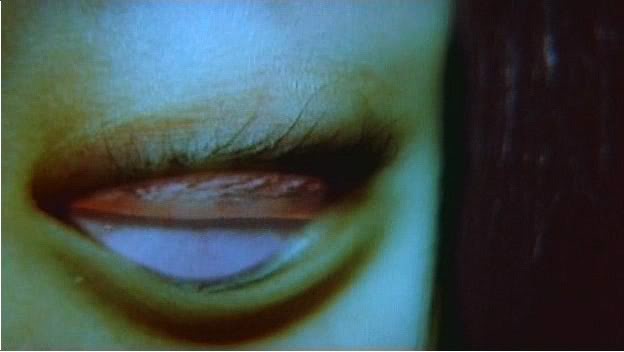
The ending of the Japanese film is also intact, and is actually handled slightly better until the bit where the ghost shows the “eye”. You know that trick where someone turns their eyelid inside out? That’s all they’ve really done here. It really isn’t horrific in anyway and instead of being a great ending to a interesting film it ends up as a weak ending to a boring film that’s badly acted on top of it.

"Don't worry, I'm sure they'll make another Alvin & The Chipmunks film".

Basically, the whole film lacks emotion. Even as the final famous death takes place, the victim does not look scared for his life. Instead, he seems somewhat bored with the whole thing and is probably imagining what his next TV or movie role will be (and judging by the quality of his acting throughout, he’d be lucky to star in a tampon commercial).

In all, The Ring Virus is an adequate and by-the-books attempt at adapting the Ringu storyline, but when you have a book and two films out there that do the same job infinitely better, this really isn’t worth wasting your time with. It’s worth a watch if you’re interested in seeing a different take on the source material, but of the three versions of The Ring this is by far the weakest.

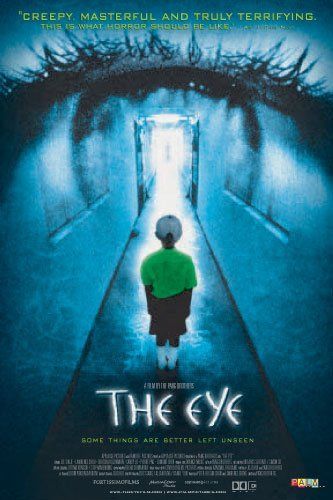
The Eye (2002)

Directors: Oxide & Danny Pang

Starring: Angelica Lee, Lawrence Chou

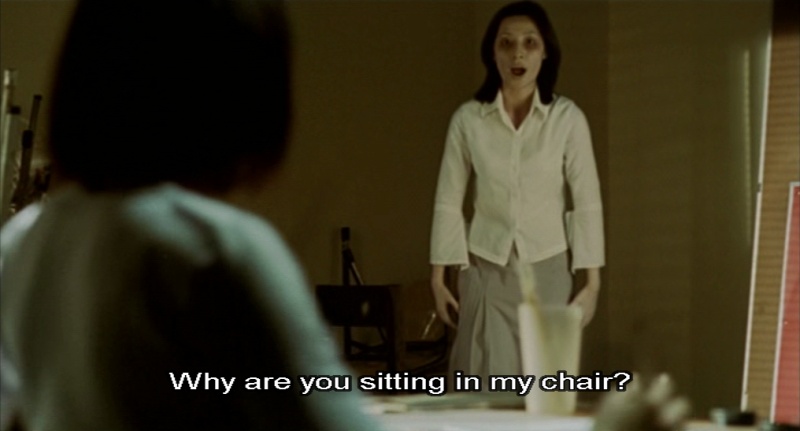
“Why are you sitting in my chair?” (mental scary ghost, The Eye)

Poor old Mun, she’s blind as a fucking bat. Her luck soon changes though when she’s given a cornea transplant, finally allowing her to see the world. Problem is, she’s seeing it through the eyes of some psycho bint who claimed she could see ghosts, then hung herself because nobody liked her. Cue a lot of scary set-pieces as Mun tries to figure out exactly what’s going on and learn a bit more about the nutter whose eyes she’s been lumbered with while being mercilessly abused by numerous ghosts.

Forget an eye transplant, it’s a new arsehole you’ll be wanting after you’ve seen this. There are a number of memorable scenes in this film that are so pant-crappingly creepy I couldn’t even begin to describe without thinking about them and instinctively tightening the old bumcheeks. And even if I could describe them safely without fear, I wouldn’t dare for fear of wasting the surprise. Needless to say, if you’ve already seen the film, all I need to do is give a list of words and each one should send a chill down your spine.

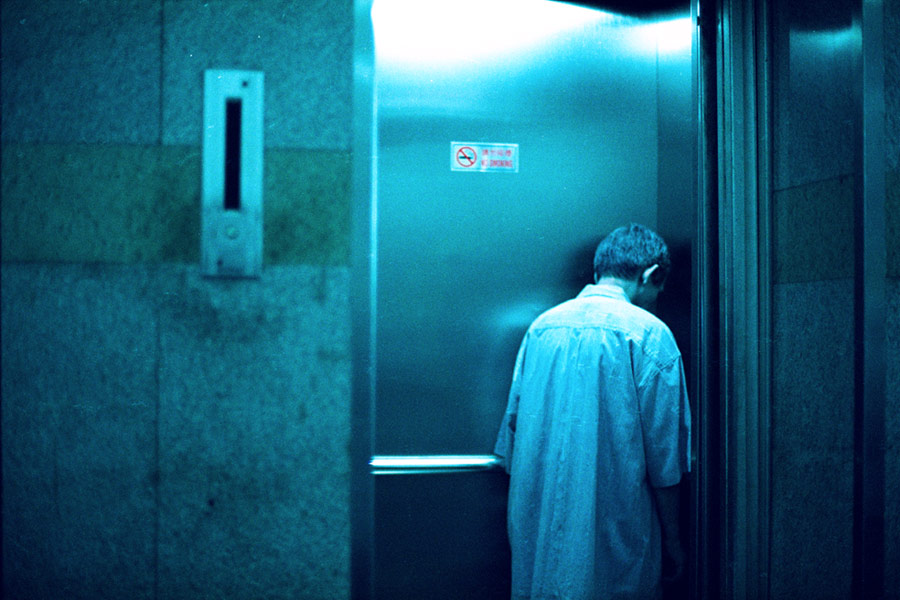
Elevator. Meat. Calligraphy. Report Card. And, if you’re perceptive and noticed it, train.

Similarly, a number of sentences that would sound normal under any other circumstances now have different connotations after seeing The Eye. Nobody can say to me “I’m freezing” or “why are you sitting in my chair” any more without me going crazy and wildly swinging a stool at them. Let’s not beat about the bush – assuming you’re using the correct horror-viewing formula of “no lights + maximum sound”, The Eye is one extremely scary film.

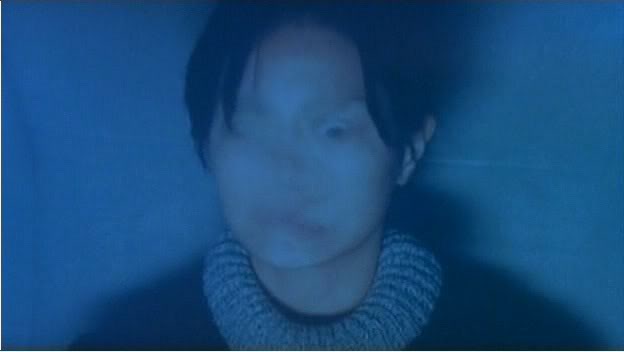
It’s got quite a few jumpy moments, two of which happen before the film even starts (the intro burns out as if the projector has broken, then there’s a loud bang and you see a faceless version of the heroine. Then there’s a loud scream and an evil red face booms onto the screen followed by the warning “SIT TIGHT”). The majority of the frights, however, take place in the first half of the film. Once Mun realises what’s going on, the rest of the film becomes more of a mystery story as she and the hapless geek Dr Wah run all over Asia trying to find out about her eye donor. This is a shame because it’s this second half where the film starts to fall apart a little. The final fifteen minutes then try to go more for a big action-packed finale, but it doesn’t really suit the mood of the film.

Mere seconds later in this scene something happens that makes you shit yourself.

That aside, The Eye contains one of the scariest scenes I’ve seen in a very long time. Many people reviewing this film online have referred to the now famous elevator scene, which is certainly very tense, but by far the scariest scene, especially when watched at a deafening volume with the lights out as I first watched it, is the scene in which Mun, having recently regained her sight, takes a calligraphy lesson to learn how to write properly. I won’t say any more about it but needless to say, I have not been terrified like that for quite some time.

Do not, under any circumstances, go into a lift if you see this chap.

The soundtrack is a bit of a mixed bag, because there are some moments when it’s absolutely terrible (such as the scene where Dr Wah thinks Mun’s sister is hitting on her), but whenever a ghost turns up and the tension builds there’s a little musical sting which also builds in tension and volume as the ghost approaches (check out the scene with the woman and child ghost entering the restaurant with the meat to see what I mean… as she approaches, the music swells). So while the music is great at some points, it’s ridiculously cheesy and shite at others.

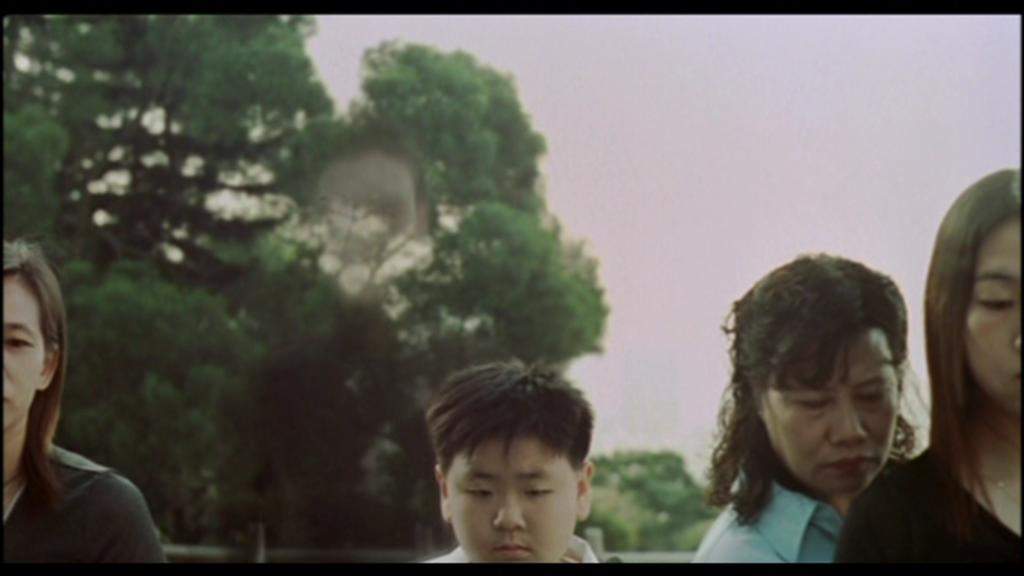
By far the cleverest thing about The Eye however is its biggest secret, something that the film doesn’t even address. There are actually ghosts hidden throughout the film. Some of them are pretty obvious as they’re part of the plot (the woman in the hospital, the calligraphy ghost etc), but others you won’t see unless you look for them. They’re tucked away in the background and you may only acknowledge them on a subliminal level.

Awww, here's a lovely scene in WAIT A FUCKING MINUTE WHAT'S THAT FACE IN THE WINDOW

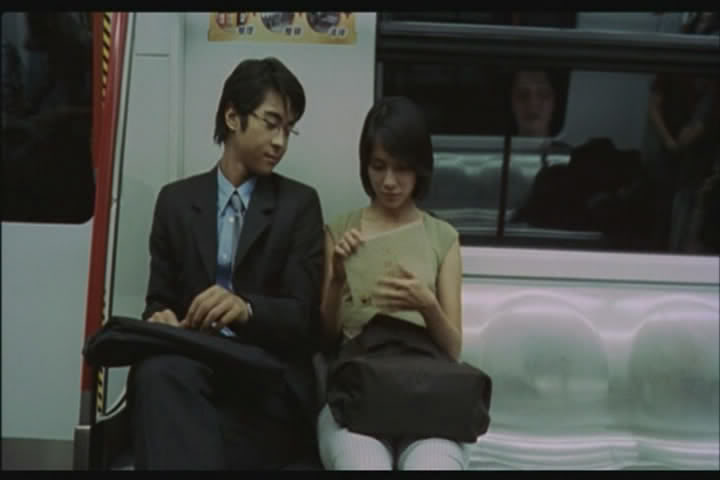
Perhaps the most effective example of this, and one that will send a shiver down your fucking SOUL should you happen to spot it unexpectedly like I did, is during the scene where Mun and Dr Wah are sitting on a train (the scene where Mun looks at the photo of her and Ying Ying). When the train enters a tunnel the face of a ghost can be seen in the window.

Since the ghost isn’t mentioned again and there isn’t a big deal made about it, it’s perhaps the most chilling moment of the film for me. It’s particularly effective when you watch the film with a group of friends and they didn’t notice it. Just rewind the film after you’ve watched it and freak the shite out of them.

The Eye is a great film that I’d thoroughly recommended. While the final act fails to live up to the rest of the film, the use of some terrifying scare scenes, a lot of good ghost appearances and a plot that can actually be followed (something that is often lost in translation with Asian films) make for an excellent fright flick that you really should see now.

Battle Royale II: Requiem (2003)

Directors: Kinji Fukasaku, Kenta Fukasaku

Starring: Tatsuya Fujiwara, Ai Maeda, Riki Takeuchi

“The thing people fear most isn’t dying, it’s being forgotten.” (Kitano, Battle Royale II)

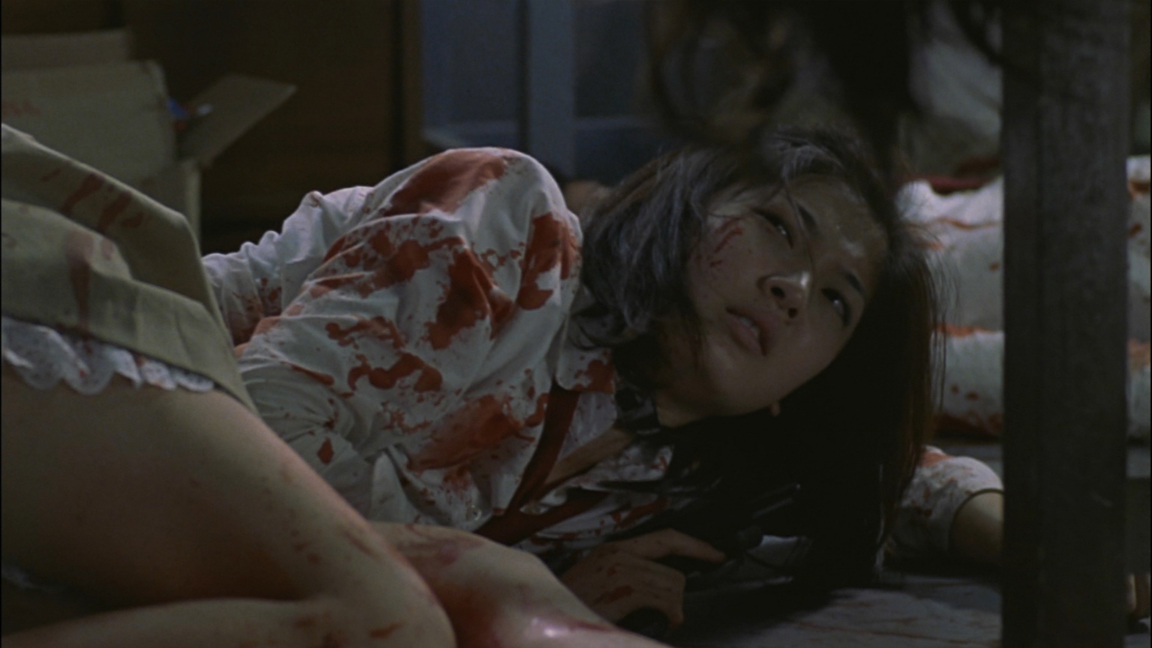
I went into Battle Royale II desperately worried that I wouldn’t like it. All I’d heard from the (limited) number of reviews from the lucky people who had seen it at film festivals and the like was that it was a terrible film that embarrassed the honour of the original. As I love the original film to death, therefore, a shit sequel would have devastated me. As it was however, there was no need to worry: while it’ll never be as good as the original, Battle Royale II is an enjoyable film from start to finish.

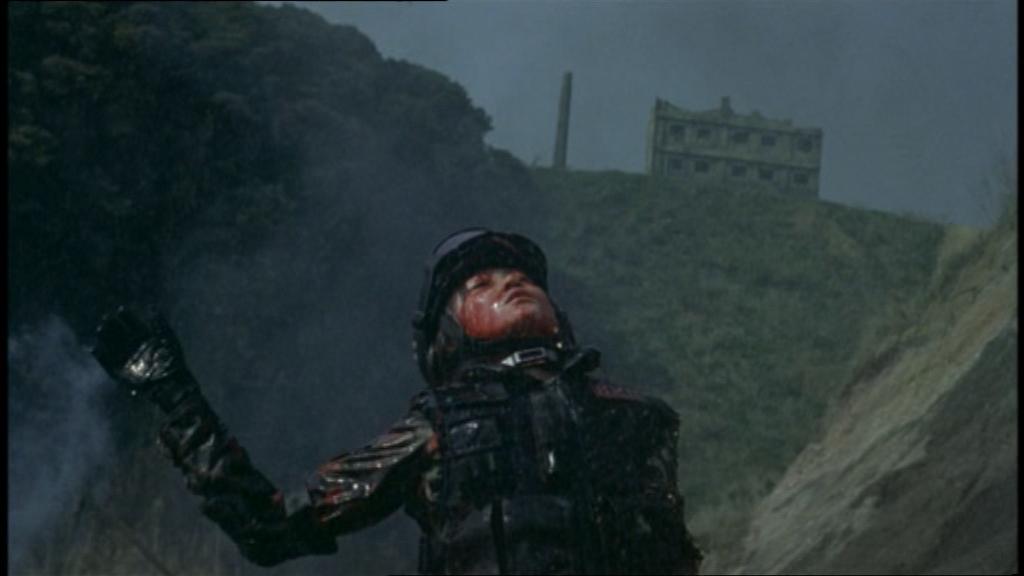
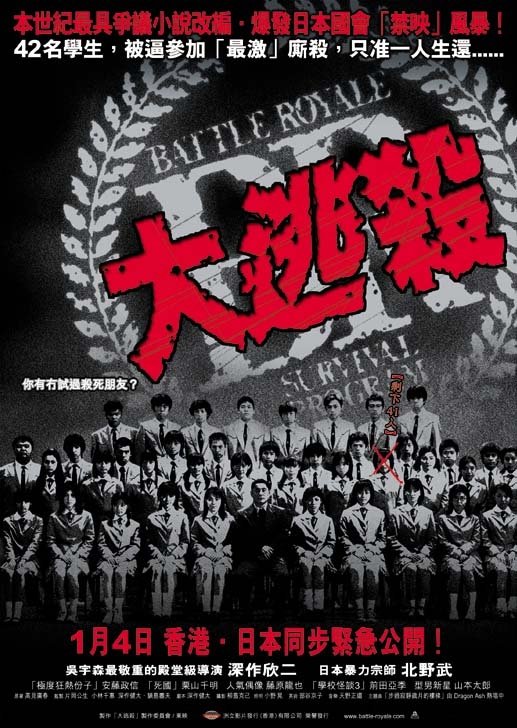
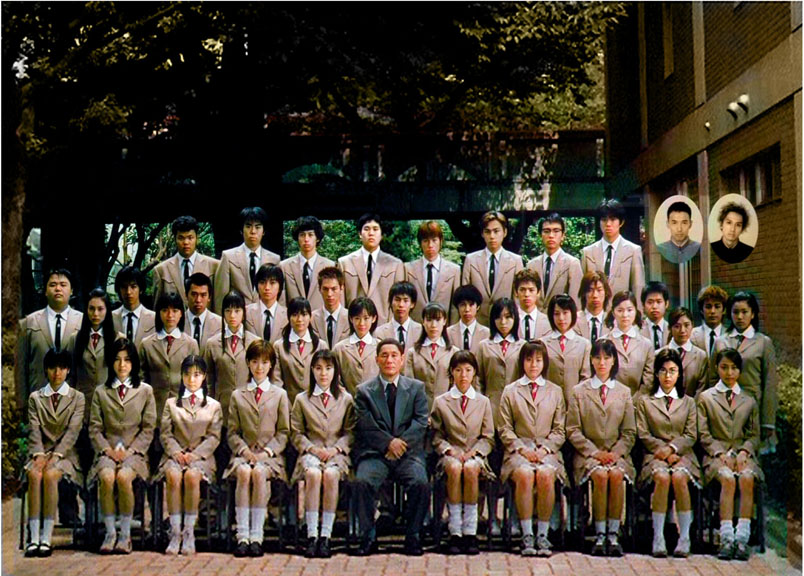
Set three years after the first movie, the survivor (I won’t spoil who it is in case you haven’t seen it) has set up the terrorist group Wild Seven, in an attempt to bring down the adults of Japan. Wanted for a large-scale terrorist attack (suspiciously reminiscent of September 11) in which two towers in Japan are blown up, the Wild Seven terrorist group escape and take refuge in an offshore island. The Japanese government quickly passes the “Battle Royale II” Act, and another class of ninth graders is randomly selected to take part. This time the rules are different: instead of killing each other, the class of 42 must travel to the island where Wild Seven are hiding and kill the previous survivor. Once he dies, the game is over.

I was glad that they kept a number of key qualities and properties from the first film that made it so appealing: the dramatic orchestral soundtrack, the innocence of the children, the evil teacher that explains the rules while killing some slackers at the start to show it’s not a game, and the famous death count (the message at the bottom that comes up after a death saying, for example, “Boy #7 Yoshitoki Kuninobu dead. 41 to go”).

Instead of taking away many of the original’s qualities then, Battle Royale II instead builds on them with new rules. The boys are now paired with their correspondingly-numbered female classmates on the class register, and their explosive collars are linked. So if Boy #1 (Aoi Takuma) dies, Girl #1 (Asakura Nao) will find her collar is beeping. After 30 seconds or so it will explode, as in the first film, and you can forget all about her. This also happens when partners stray 50 metres from each other so if you and your partner don’t stick together you’ll be sticking to the walls instead.

This addition to the rules is cleverer than you would initially think. Not only does it allow for spectacular set pieces and forced teamwork, it also kills the “nameless” characters twice as quickly, leaving us with the important ones earlier on in the film, therefore giving us more time to relate to them and find out more about their personalities. While the original film had a wide variety of interesting characters, most of the pupils in the sequel are fairly generic so their quick removal is no big loss.

Despite the similarities to the original however this is a very different film, which becomes clear about 25 minutes in when the pupils storm an island on a boat Omaha Beach style, at which point 12 of them are killed in one go. There’s no methodical one-at-a-time chipping away of the pupil list here, and by about the half-way point of the film the whole concept of the Battle Royale game has been practically abandoned and it becomes more of a war movie with the students teaming up with the Wild Seven terrorist group and swarms of adult special forces soldiers coming in and getting gunned down in huge numbers. The whole second half therefore has a feel very different from that of the original film, and though it may not be to everyone’s tastes, it cannot be denied that Battle Royale II is far more action-packed than its predecessor.

Many were worried by the death of director Fukasaku shortly after production began and the decision to hand the rest of the film over to his inexperienced son. However, much as I hate to say it (because I respected Fukasaku’s work) this film blows the original out of the water in terms of visual style and camera work. The battle scenes are fantastic, with the erratic camera movements perfectly conveying the unpredictability and confusion of war. These scenes have a gritty, almost documentary-like feeling to the action, making it much easier to believe the students’ fear.

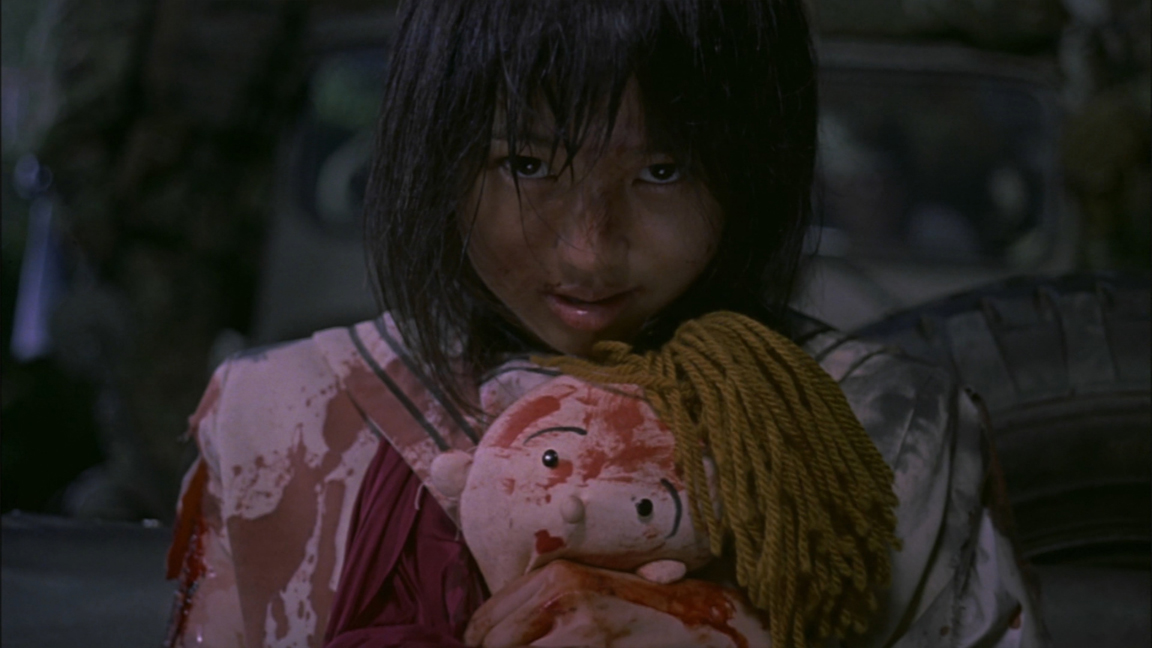
It even outdoes the original in the ‘mental school teacher’ role, thanks to Takeuchi Riki and his over-the-top performance. In any other film this guy would be considered ridiculous (see Takashi Miike’s gangster film Dead Or Alive, in which he pulls a gem out of his chest and causes the world to explode, to see what I mean), but in this he seems suited to the role as a teacher gone mad. Add to that cameo appearances from Takeshi Kitano (the original teacher), the girl who played Noriko from the first film and even the little smiley girl with the doll from the original and you’ve got a fantastic film for fans and Battle Royale virgins alike.

I warn you though that, from what I can tell by online opinion, I’m very much in the minority when it comes to this sequel. Many others think this is a dismal film and a rubbish follow-up to a classic original. Whether that’s because they were expecting more of the same or it just didn’t click with them isn’t known, but it’s worth bearing in mind that just because I like it doesn’t mean it’s any good. I do like some proper shite, after all. All I’m saying is watch it, but don’t spend a lot of money to do so.

(Note: the trailer below spoils who survived in the original film)

Battle Royale (2000)

Director: Kinji Fukusaku

Starring: Tatsuya Fujiwara, Aki Maeda, Takeshi Kitano, Chiaki Kuriyama

“There’s a way out of this game. Kill yourselves together, here, now. If you can’t do that, then don’t trust anyone. Just run.” (Kawada, Battle Royale)

Teenagers are pricks. That’s what Japan thinks in Battle Royale, and that’s why the film starts with the passing of the Millennium Educational Reform Act. A tricky piece of legislature, it basically sees one class of fifteen year-old pupils (chosen by random lottery) being taken to a remote island each year and made to kill each other. And to think we Brits rioted over tuition fees.

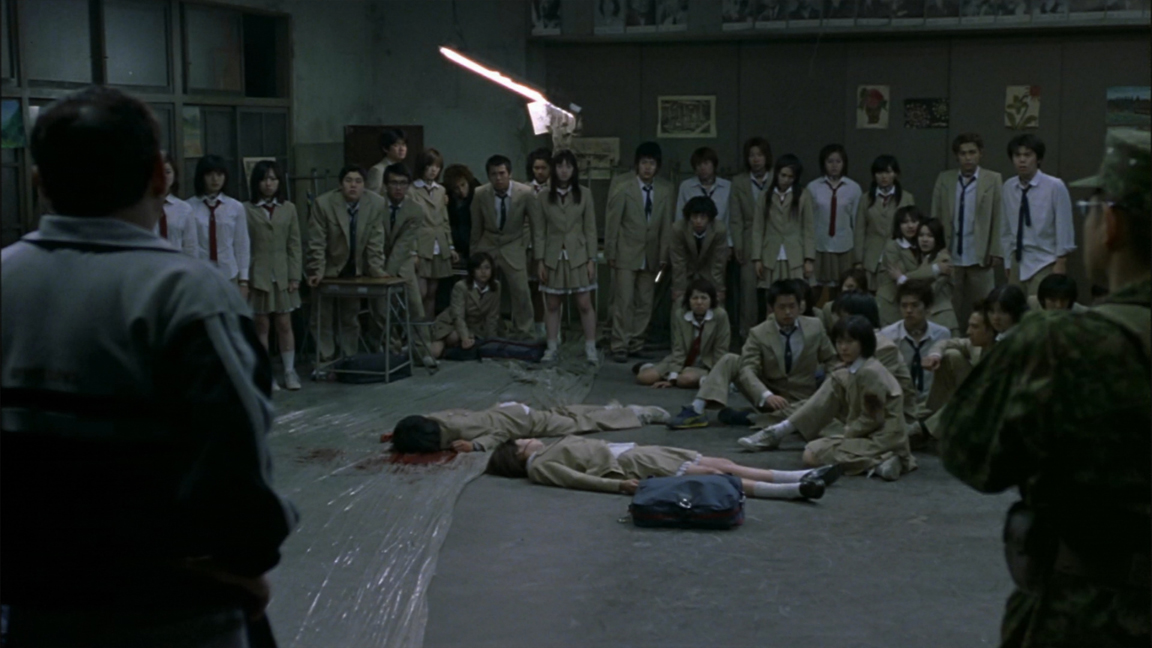
This year it’s the turn of Nanahara Shuya’s class, so as he and the rest of his unwitting fellow students set off on what they think is a class trip they don’t realise the bus is actually heading to Clusterfuck Island (which is unfortunately my name for it, not the film’s). Naturally, they’re a bit shocked to find out they’re all marked for death, and are equally surprised when their old school teacher, Kitano (of Takeshi’s Castle and a million other Japanese films fame) turns up to tell them the rules.

Kitano essentially tells the pupils that because the nation’s teenagers are arseholes they’re being taught a lesson. Each kid will be given a bag with supplies and a random weapon. It could be something really handy (like a crossbow or an Uzi) or it could be a load of pish (a frying pan, which might as well just be a shovel so they can dig their own grave in advance). They have to kill each other until one child remains, at which point that child will get to go back home.

The natural reaction in a situation like this would be to think of ways to get out of having to kill your mates, so Kitano goes on to explain (via an incredibly darkly comic instructional video) that they can’t pull a fast one because of the steel collars around their necks. These collars track the students and monitor their pulse rates (so the organisers can tell if they’re dead). More importantly though, they’re also armed with powerful explosives which can be triggered at any time causing the wearer’s neck to explode, killing them.

These collars are a genius plot device because they explain away all the “what if they do this” questions with the simple answer “their neck will explode”. What if they try to remove the collar? Their neck will explode. What if they try to leave the island? The collar’s tracking them, so their neck will explode. What if everyone decides to call a truce and spend the rest of their lives on the island? Bit pointless, because the game has a time limit of three days, after which point everyone’s neck will explode. Basically, they can’t get out of it.

Considering Battle Royale has the difficult task of introducing a huge cast of 42 characters and trying to make them all interesting, it actually does a very good job of this. While some pupils only get a few seconds of screen time or are already found dead, the vast majority (even the bit-part characters) still feel like individual characters with their own personalities, which keeps things interesting as each pupil tries to play the game their own way.

The classroom slut uses her sexuality to seducing male pupils until they drop their guards and she can kill them, while deep down she just wants attention. The loving couple decide they can’t take it and jump off a cliff hand-in-hand. The virgin, in an act of desperation, threatens to rape the athletic girl (played by Chiyaki Kuriyama who later played GoGo in Kill Bill), but gets what he deserves. The shy girls try to call a truce but only draw attention to themselves from the more dangerous pupils. The geeks try to hack the military network to bring the system down. The constant sideplots and different methods make the film immensely engaging and while you think you know who’s going to survive at the end, you’re never really sure until the film’s conclusion.

Everything about Battle Royale oozes class. The music is a powerful mix of classical music and dramatic “DA DA DA DUM” stings when something shocking happens. The occasional appearances by Kitano keep a vein of dark humour flowing throughout the film. The death scenes are realistic enough to shock, but not too gory to disgust. And the ending, while a little ludicrous (featuring one of the oddest death scenes you’ll ever see), is still fitting.

Battle Royale is a film you really should see. It makes you consider an interesting question (could you kill all your friends if it was the only way to stay alive?) and is handled with a surprising degree of tact given the subject matter. If you’ve never seen it before, watch the trailer below and try to tell me it doesn’t look like a powerful movie.

Children Of The Corn II: The Final Sacrifice (1992)

Director: David Price

Starring: Terence Knox, Ryan Bollman, Ned Romero

REDBEAR: “My ancestors would have told you that man should be at one with the Earth, the sky, the water. But the white man has never understood this. He only knows how to take. And after a while there’s nothing left to take, so everything’s out of balance and we all fall down.

GARRETT: “Wait a minute. So that’s what happened here in Gatlin?”

REDBEAR: “No. What happened in Gatlin was those kids went apeshit and killed everybody.”

How can a film be so good yet have a sequel so achingly bad? Many will tell you this has always been the case (Freddy’s Dead and “The Exorcist II” spring to mind). But Children Of The Corn II is so terrible compared to the first film that your soul will weep.

Seemingly taking place soon after the events of the first film, news teams have arrived to cover the story (presumably the survivors of the first film notified authorities). Meanwhile Garrett, a reporter, is driving through the countryside for a job interview in New York with his son Danny coming along for the ride (against his wishes). Hearing of the story in the small village of Gatlin, they decide to check it out. Horrific hijinks ensue.

Children Of The Corn II is rare in that you’ll probably enjoy it more if you haven’t seen the original first. If you already know the story so far, your brain will be overloaded with questions for the first 40 or 50 minutes. “How long is this after the first film?” “Are those two corpses at the start meant to be the couple at the end of the first film?” “How come Malachai looks so different?” and “Where did that new kid come from, and how did he become the leader so quickly?”.

This was the shittest barbecue ever

Put simply, this film makes no attempt to connect with the original. The first scene after the credits (a terribly-acted news broadcast) tries to explain its own version of what happened, deciding to totally ignore the characters played by Linda Hamilton and Peter Horton in the first film. One of the most important characters, Malachai, has been replaced by someone who looks absolutely nothing like him and has no emotion whatsoever (unlike the original actor who, as mentioned in the previous film’s review, made the part his own by being a wanker). Naturally the actor could not be called upon to play the role again because this was filmed eight years after the original and going by the story he would already have been sacrificed because he’d be well into his twenties.

The whole thing reeks of shoddy filmmaking in general. Two elderly sisters are played by the same person and are never seen in the same scene; a Native American character stereotypically called Red Bear is introduced and quickly gets into character by talking about how foolish “the white man” is; and the quality of the acting reminds me of a girl from my Drama class in High School (she failed).

It’s not all bad news however. There are some interesting death scenes (one in particular involving a windscreen and a bale of corn, reminiscent of Final Destination 2) and the actor playing Micah, the new cult leader, is curiously strange (as the role demands, after all). He’s certainly one of the more interesting characters and fits into the “Isaac” role of the first film quite neatly.

Humour is also scattered throughout the film, a move that is unwelcome in my opinion. The original film was straight horror and nothing else; an attempt to add comedic elements is out of place (except for the excellent quote at the top of this review, of course). A death in which an electric wheelchair is taken over by one of the kids is a prime example of humour ruining the tone of the film.

The only real area in which this film is on an equal ground with the original is unfortunately that both have a weak ending. Again we are treated to what seems to be a giant mole tunnelling underground, followed by poor CGI effects in an attempt to add an unnecessary supernatural element to the film. Of course, the sequel takes it too far before this point anyway, with pointless Predator-style ‘body-heat’ POV shots that affect the film in no way at all other than adding to the shitness factor.

Children Of The Corn II would have received only one skull out of five had it not been for the pleasant addition of Christie Clark, a fine actress who sadly didn’t do many films after this. To give a film an extra half a mark based on the appearance of a minor character alone however speaks volumes on the overall shoddiness of the entire production.

Do yourself a favour and watch this awesome seven-minute version of the film, which cuts out all the boring shit and leaves you with the weird shit.

Children Of The Corn (1984)

Director: Fritz Kiersch

Starring: Linda Hamilton, Peter Horton, Courtney Gains

“Our time of tribulation has come. A test is at hand. A final test.” (Isaac, Children Of The Corn)

Films based on Stephen King books are a mixed bunch. You have your great films that are unfortunately not much to do with the book (The Shining), your great films that stick nearly 100% to the book (Pet Sematary), your non-horror films (Stand By Me) and your pieces of shit (Dreamcatcher). Having not read the short story Children Of The Corn is based on I am not at liberty to suggest which category this film falls into, but needless to say it’s sure to be one of the first two because this is a fantastic flick.

A doctor and his girlfriend are moving to the big city so he can set up a surgery. Whilst driving past a cornfield they hit a boy who steps onto the road. Realising he had already been stabbed, the doctor puts the body in his trunk and drives to the nearest town to get some help. Trouble is, the nearest town is Gatlin, a small countryside village much like any other you’d care to name. As long as you’re naming one in which the children have killed all the adults and are members of a religious cult.

This is Isaac. He's weird.

There must be something about Stephen King books that makes their film translations scarier than usual. I can personally sit through 95% of most 80’s horrors without batting an eyelid. ‘Tense’ chase scenes don’t usually affect me and I can work out when the big scares are coming in most of the films, as they were more predictable back then. However, of the countless ’80s horror films that attempt to scare the viewer, only two I’ve seen so far succeed in making me feel extremely uneasy: Pet Sematary and Children Of The Corn.

The film opens with a flashback of events that took place three years before the film is set, and right away the audience is thrown into the mix with a number of ‘scythe n’ knife’-related killings and a freaky looking Amish lad who looks as if he hasn’t slept for 7 months. In time however, you may grow to feel sorry for him. Maybe.

The thing that really wins me over with Children Of The Corn is the imperfection of the two lead characters. Whereas in most films the hero is the virgin who never smokes, always does the right thing and collects injured birds off the road and gives them baths, Children Of The Corn forces you to question your feelings on the heroes. This kicks off right from the first scene, where Burt refuses to propose to his girlfriend Vicky and doesn’t seem to have time for her. Meanwhile, when Burt suggests they take the injured kid’s body into town to get help Vicky at first refuses, showing a coldness not many ‘hero’ characters demonstrate. While this could have so easily resulted in a film with characters that the audience feels no sympathy for when they get involved in later events, the excellent performances by Peter Horton and Linda Hamilton coupled with the effective script only make the characters more believable, bringing the audience closer and making it easier for them to relate to Burt and Vicky (after all, nobody’s perfect).

This is Malachai. He's a twat.

The real stars are the children, though. There are good kids, bad kids (the nameless ones who always seem to be there whenever someone pegs it) and batshit mental kids (Isaac, the leader of the cult). And then there’s Malachai. Never before have I hated a character more than I hated Malachai. Perhaps the young actor playing him (Courtney Gains) was tapping into the years of mockery he received for having a girl’s name, or perhaps he’s actually like the character, but this boy’s sneer makes you want to punch his head off and you really want him to get what’s coming to him (which, at the end of the day, is what the filmmakers intended). I’d love to have been at that casting meeting: “I think we should give the role of Malachai to young Courtney Gains, because he’s a complete prick”.

Although for the most part Children Of The Corn isn’t too dodgy, it does contain one of film’s biggest taboos: the brutal killing of children. Some of the adults get theirs too, especially at the start, but when you’ve got a town full of kids and they’re all a bit mental, some of them are going to have to take a kicking.

This film would have received a full 5/5 if it hadn’t been for one disappointing aspect; the ending. Perhaps this is how it ends in the book, but as soon as the dirt started moving Tremors-style and getting a little out there I was disappointed. Had the film stayed away from special effects at the end and kept to the idea of a religious cult it would have been a far more satisfying ending. As it is, it gives the impression that the kids actually knew something we didn’t and maybe weren’t so mental after all… a pretty weak end to a fantastic story.

This is also true for the last scene. The last 30 seconds are so underwhelming that when you see the words “The End” you can’t help but think that ending was just thought up at the end of shooting in order to get a final scare in there (and I use the word ‘scare’ loosely). Don’t let that put you off however. Children Of The Corn is 88 minutes long. Of these 88 minutes, 80 are fantastic. It’s just a shame those last eight were so disappointing.

28 Days Later (2002)

Director: Danny Boyle

Starring: Cillian Murphy, Naomie Harris, Christopher Eccleston

“No, no, see, this is a really shit idea. Know why? Because it’s really obviously a shit idea.” (Jim, 28 Days Later)

I went to see 28 Days Later on its day of release in the UK (way back in November 2002) and as a result was not privy to the excessive hype it soon gathered afterwards. The first time I saw it I came out slightly disappointed, but after repeated viewings I warmed to it.

I think the main reason I was initially let down was because I was expecting a zombie film. The trailer gave the impression it was a zombie film, it was being billed as a zombie film, and as a result I was ready to see a zombie film. Let me get this straight, however: 28 Days Later is not a zombie film. The “infected” (as they shall be known) are fast as fuck. Yes, they may portray zombie-like symptoms (such as scarred flesh and the need to destroy humans… we do not necessarily know if any are eaten), but the red eyes and occasional violent vomiting of blood suggest that they are indeed infected with a virus.

Jim (Cillian Murphy) awakens from a coma to find that it’s been 28 days since Britain has been exposed to a highly infectious virus known as Rage. He doesn’t know it yet but because he’s been lying in a hospital he’s become one of the last remaining people in Britain. The first 15 minutes are amazing for anyone who has been to London before and knows the surroundings. The shots of Jim walking through a deserted Piccadilly Circus are a sight to behold, and it makes you wonder exactly how they managed it (unless you watch the DVD, in which it’s revealed in the extra that they did it by filming the scenes just as day broke and just off-camera was the film crew trying to stop drunken clubbers wandering into the frame as they stumbled home).

Before long Jim begins to encounter the infected and meets up with a small number of other survivors including Selena, the other main character. He is told of the country’s mass exposure to the Rage virus and its subsequent evacuation. More infected appear. Jim and Selena get running and eventually they meet up with Hannah and her father. Unfortunately for any chairs looking to get their big break in acting, it appears that the young actress playing Hannah is more wooden than they could ever hope to be.

The rest of the film is a take-off of sorts on both Dawn Of The Dead (the group raid some shops, have a laugh then make some thoughtful, deep comments on the future of the human race) and Day Of The Dead (the group end up at a military base full of arsehole soldiers who keep some of the infected locked up). Even though it’s not a zombie film, honest guv.

Generally the acting is of a very high standard (with the exception of the aformentioned girl of wood, of course). Christopher Eccleston appears near the end of the movie as the leader of a military group and more or less steals the show with his performance, which is just as well because the rest of this final act is a bit rubbish. What was before a thought-provoking film about survival and what exactly the end of the world would mean (“you’ll never be able to read a new book or see a new film”), becomes a “men with guns versus zombies” blastfest, which seems somewhat out of place in a film that has for the most part been human-free.

You see, what makes the “infected” scenes so scary is the fact that the film’s locales are quiet and tranquil for the the vast majority of the time (since the towns and motorways are deserted), so when the infected arrive, there’s a clear change in atmosphere – what was once calm and peaceful has been flipped onto its arse, and shit’s about to go down (this is best demonstrated in the excellent tunnel scene). Once at the military base however, there are too many people we have to get to know (there are at least 4 or 5 new characters with distinct personalities), and by the time we’re used to these new, busier surroundings after being treated to sparsely populated scenery for 70 minutes, the film’s over.

Despite this, 28 Days Later is an outstanding horror film that is thoroughly recommended. The soundtrack is superb, the direction is gritty and it’s just a very well-made British horror.